From the scene
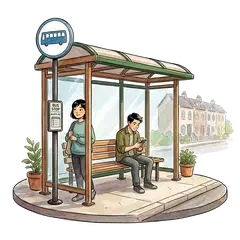
la paradafem.
stop (bus stop)
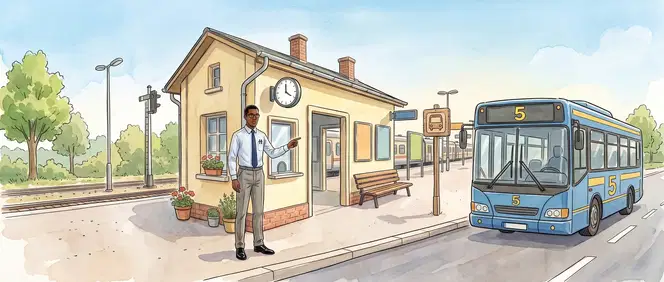
Plan B. Vamos en autobús. El cinco. Sale de esta parada.Plan B. We go by bus. Number five. It leaves from this stop.
seguro / segura
sure, real
Seguro. Está en mi lista.Sure. It is on my list.
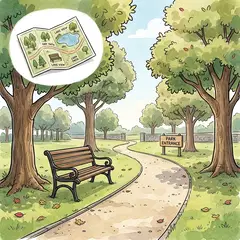
el parquemasc.
park
¿Un parque? No está en mi lista.A park? It is not on my list.
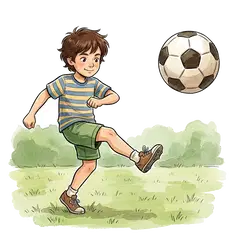
jugar
play (a game, a sport)
Pero es bonito. Hay gente paseando y jugando al fútbol.But it is nice. There are people walking and playing football.
Pero es bonito. Hay gente paseando y jugando al fútbol.But it is nice. There are people walking and playing football.

el fútbolmasc.
football
Pero es bonito. Hay gente paseando y jugando al fútbol.But it is nice. There are people walking and playing football.
Pero es bonito. Hay gente paseando y jugando al fútbol.But it is nice. There are people walking and playing football.
New in this unit
el paísmasc.
country
visitar
visit

el bancomasc.
bank

la farmaciafem.
pharmacy

entre
between
enfrente de
opposite
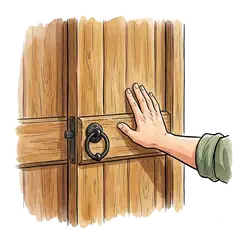
cerrar
close / closed
Practice 1/6 · Pictures
Pictures and words
Match the words to the pictures.
Practice 2/6 · Listening
Listen and choose
Listen and choose the word you hear.
jugar: play (a game, a sport)
enfrente de: opposite
el banco: bank
entre: between
visitar: visit
Practice 3/6 · Meanings
What does it mean?
cerrar
el parque
enfrente de
jugar
el país
la parada
Practice 4/6 · Fill the gaps
Use the words in context
Fill the gaps with the words from the box.
El autobús sale de esta .
The bus leaves from this stop.
Nora es de .
Nora is from Canada.
Hay gente jugando al .
There are people playing football.
Practice 5/6 · Comic strip
The neighbours in a small comic
Fill the speech bubbles.
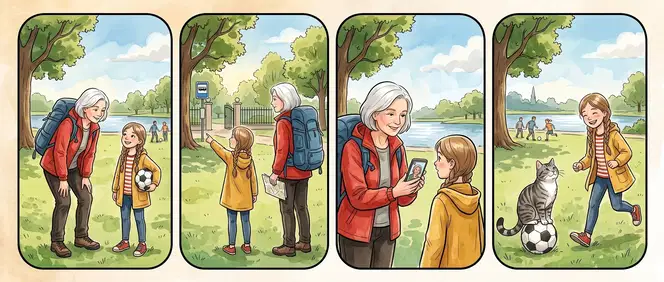 1 Nora
¿Dónde está la ?
Where is the stop?
2 LucíaJunto al . ¿De dónde eres?
By the park. Where are you from?
3 NoraDe Canadá. Visito a una .
From Canada. I am visiting a female friend.
4 Lucía¡Michi tiene el !
Michi has the ball!
Practice 6/6 · Matching
Connect the meanings
Match the pairs.
Unit complete