Scene 38 of 50
En la consulta
At the doctor’s
Your goalI can say what hurts, understand a doctor's instructions and ask how to say a word.

Tap a word to see what it means.
 Marta
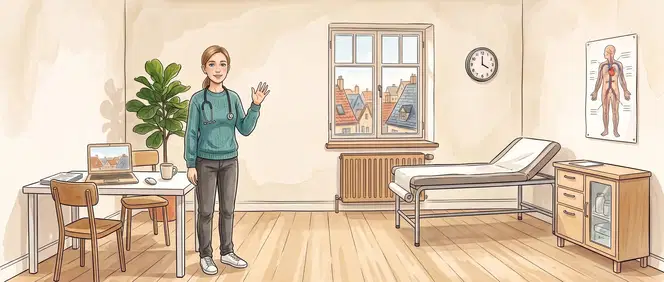
MartaHola. Pasa y siéntate.
Hello. Come in and sit down.
- Marta
¿Qué te duele?
What hurts?
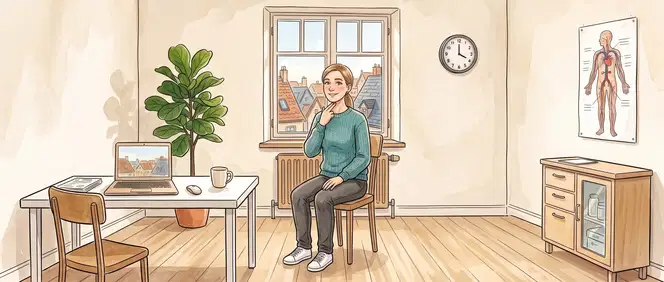
You point at your throat. She touches hers, slowly.
Aquí. ¿Cómo se llama esto en español?
Here. What is this called in Spanish?
Aquí. ¿Cómo se llama esto en español?
Here. What is this called in Spanish?
- Marta
La garganta. ¿Te duele la garganta?
The throat. Does your throat hurt?
Sí. Y la cabeza.
Yes. And my head.
Sí. Y la cabeza.
Yes. And my head.
- Marta
¿Desde cuándo?
Since when?
Desde el sábado. Después del ensayo del viernes, bajo la lluvia.
Since Saturday. After Friday’s rehearsal, in the rain.
Desde el sábado. Después del ensayo del viernes, bajo la lluvia.
Since Saturday. After Friday’s rehearsal, in the rain.
 Marta
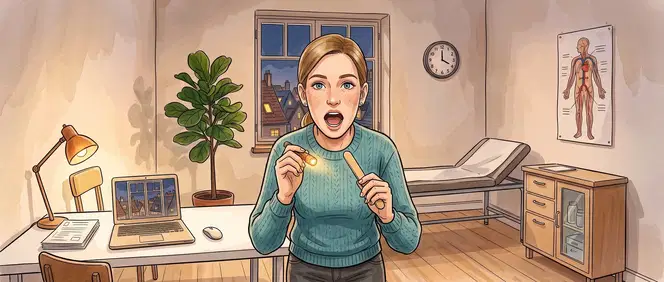
MartaAbre la boca. Di aaa.
Open your mouth. Say ah.
Aaa.
Ah.
Aaa.
Ah.
- Marta
Ahora respira hondo. Otra vez, por favor.
Now breathe deeply. Again, please.
- Marta
¿Te duele la espalda? ¿O los oídos?
Does your back hurt? Or your ears?
La espalda no. Un oído, un poco.
Not my back. One ear, a little.
La espalda no. Un oído, un poco.
Not my back. One ear, a little.
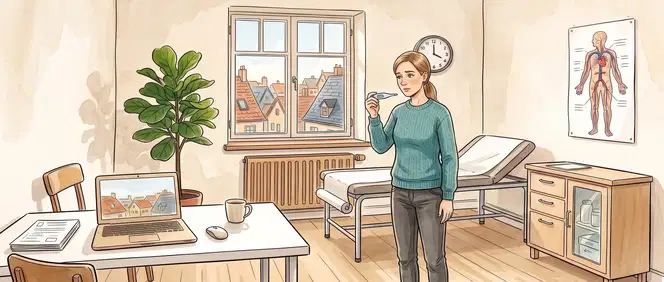
She reads a thermometer and raises her eyebrows.
- Marta
Treinta y siete con cinco. Un poco de fiebre.
Thirty-seven point five. A slightly high temperature.
¿Es grave?
Is it serious?
¿Es grave?
Is it serious?
- Marta
De momento, no. ¿Cuánto duermes?
Not at the moment. How much do you sleep?
Poco. Por la noche siempre oigo una trompeta.
Little. I always hear a trumpet at night.
Poco. Por la noche siempre oigo una trompeta.
Little. I always hear a trumpet at night.
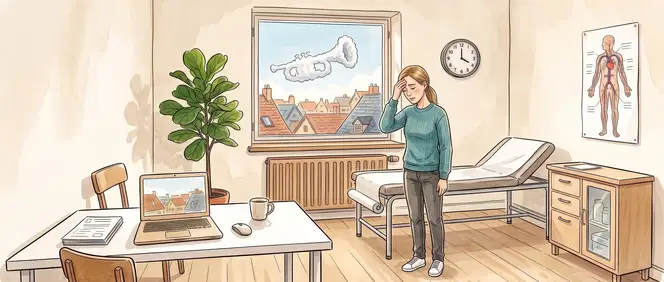
She sighs. Outside the window, a cloud looks like a trumpet.
- Marta
Conozco esa trompeta.
I know that trumpet.
- Marta
Necesitas descansar. Y comer algo.
You need to rest. And eat something.
Lucía dice algo parecido de Michi: no es malo, solo tiene hambre.
Lucía says something similar about Michi: he is not naughty, just hungry.
Lucía dice algo parecido de Michi: no es malo, solo tiene hambre.
Lucía says something similar about Michi: he is not naughty, just hungry.
- Marta
Sí. Mi hija sabe mucho.
Yes. My daughter knows a lot.
- Marta
Descansa y bebe suficiente. Té, por ejemplo.
Rest and drink enough. Tea, for example.
- Marta
Y come algo. En la farmacia pueden ayudarte con la garganta.
And eat something. The pharmacy can help with your throat.
Gracias, Marta. ¿Puedo ir a la fiesta el sábado?
Thank you, Marta. Can I go to the festival on Saturday?
Gracias, Marta. ¿Puedo ir a la fiesta el sábado?
Thank you, Marta. Can I go to the festival on Saturday?
- Marta
Solo si no tienes fiebre y te encuentras bien. Hasta entonces, descanso.
Only if you have no fever and feel well. Until then, rest.
Words from the scene
Every new word from this scene, grouped with its family.
Doing things Acciones
- respirarbreathe
The body The body
- la orejaear
- el oídoear (hearing organ)
- la espaldaback
- abre la bocaopen your mouth
- la fiebrefever
Food Comida
- la frutafruit
- las verdurasvegetables
What things and people are like Descripciones
- profundo / profundadeep
Who says this?
Hola. Pasa y siéntate.
Hola. Pasa y siéntate.
What does it mean?
La garganta. ¿Te duele la garganta?
Which line do you hear?
Open your mouth. Say ah.
Put the words in order.
Now breathe deeply. Again, please.
Who says this?
Treinta y siete con cinco. Un poco de fiebre.
Treinta y siete con cinco. Un poco de fiebre.
What does it mean?
Poco. Por la noche siempre oigo una trompeta.
Poco. Por la noche siempre oigo una trompeta.
Which line do you hear?
Yes. My daughter knows a lot.
Put the words in order.
Here. What is this called in Spanish?
Here. What is this called in Spanish?
What happens first?
Put the lines in the order they come in the scene.
Scene complete
En la consulta
Goal reachedI can say what hurts, understand a doctor's instructions and ask how to say a word.