Meeting a neighbour
Use (I am), (you are, familiar), (he/she is). With adults and staff, use polite . Polite takes plural verb forms even when speaking to one person.
A noun has grammatical gender: masculine , feminine , neuter . An adjective agrees with its noun. A male learner is , a female learner . Croatian has no article like English a/the.
A case is a form showing the job of a noun. The nominative names a person or thing. Learn as a whole: introduces a genitive form. , , and are greeting and courtesy chunks.
| Pattern | Example | Meaning |
|---|---|---|
| I am the new neighbour. | ||
| I am the new neighbour. | ||
| You are the new neighbour. (polite) | ||
| You are the new neighbour. (polite) | ||
| You are the neighbour. (familiar) | ||
| You are the neighbour. (familiar) | ||
| This is the new neighbour. | ||
| This is the new neighbour. | ||
Ja sam novi susjed.I am the new neighbour.
Ja sam nova susjeda.I am the new neighbour.
Vi ste novi susjed.You are the new neighbour. (polite)
Vi ste nova susjeda.You are the new neighbour. (polite)
Ti si susjed.You are the neighbour. (familiar)
Ti si susjeda.You are the neighbour. (familiar)
Ovo je novi susjed.This is the new neighbour.
Ovo je nova susjeda.This is the new neighbour.
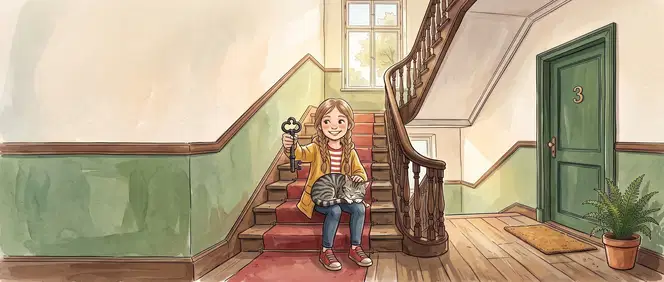
Ovo je moj ključ.This is my key.
Ovo je moja kuća.This is my house.
On je Miki.He is Miki.
Dobra večer!Good evening!
A pronoun names a person or thing in place of its noun: , , , . Singular means one; plural means more than one. Polite still takes plural grammatical agreement.
Practice 1/6 · Finding words
Notice the useful pattern
Tap the form practised in this unit.
.
I am the new neighbour.
.
I am the new neighbour.
.
You are the new neighbour. (polite)
.
You are the new neighbour. (polite)
.
You are the neighbour. (familiar)
.
You are the neighbour. (familiar)
.
This is the new neighbour.
.
This is the new neighbour.
Practice 2/6 · The right form
Choose the form
Use the English meaning and the pattern in this unit.
Ja novi susjed.
I am the new neighbour.
Ja nova susjeda.
I am the new neighbour.
Vi novi susjed.
You are the new neighbour. (polite)
Vi nova susjeda.
You are the new neighbour. (polite)
Ti susjed.
You are the neighbour. (familiar)
Ti susjeda.
You are the neighbour. (familiar)
Ovo je novi .
This is the new neighbour.
Ovo je nova .
This is the new neighbour.
Ovo je ključ.
This is my key.
Ovo je kuća.
This is my house.
On Miki.
He is Miki.
Dobra !
Good evening!
Practice 3/6 · Fill the gaps
Complete the messages
Fill the gaps with the words from the box.
Ti susjed.
You are the neighbour. (familiar)
Ti susjeda.
You are the neighbour. (familiar)
Ovo je novi .
This is the new neighbour.
Ovo je nova .
This is the new neighbour.
Ovo je ključ.
This is my key.
Ovo je kuća.
This is my house.
On Miki.
He is Miki.
Dobra !
Good evening!
Practice 4/6 · Building sentences
Build a sentence
Put the words in order.
I am the new neighbour.
I am the new neighbour.
You are the new neighbour. (polite)
You are the new neighbour. (polite)
You are the neighbour. (familiar)
You are the neighbour. (familiar)
This is the new neighbour.
This is the new neighbour.
This is my key.
This is my house.
Practice 5/6 · In situations
What would you say?
Choose the right words for the situation.
I am the new neighbour.
You say:
Use the meaning and Croatian pattern explained in this unit.
I am the new neighbour.
You say:
Use the meaning and Croatian pattern explained in this unit.
You are the new neighbour. (polite)
You say:
Use the meaning and Croatian pattern explained in this unit.
You are the new neighbour. (polite)
You say:
Use the meaning and Croatian pattern explained in this unit.
You are the neighbour. (familiar)
You say:
Use the meaning and Croatian pattern explained in this unit.
You are the neighbour. (familiar)
You say:
Use the meaning and Croatian pattern explained in this unit.
This is the new neighbour.
You say:
Use the meaning and Croatian pattern explained in this unit.
This is the new neighbour.
You say:
Use the meaning and Croatian pattern explained in this unit.
Practice 6/6 · Matching
Connect messages and meanings
Match the pairs.
Unit complete