Questions and negative statements
Put the finite verb before the subject in a yes/no question: and In an ordinary statement, usually follows the finite verb: Do not add an English-style auxiliary to make a question.
Er du min nabo?Are you my neighbour?
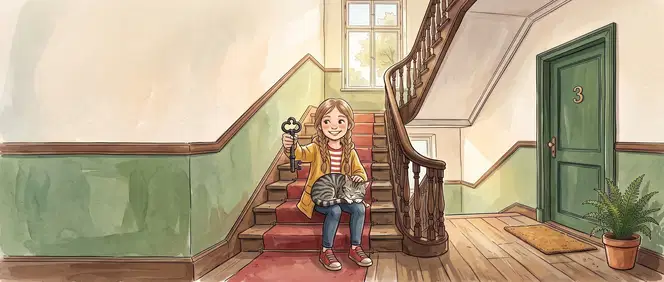
Har du min nøgle?Do you have my key?
Han er ikke slem.He is not bad.
Jeg er også sulten.I am hungry too.
Hvad hedder du?What is your name?
Hvor er caféen?Where is the café?
Practice 1/6 · Finding words
Notice the pattern
Tap the form practised in this unit.
?
Are you my neighbour?
?
Do you have my key?
.
He is not bad.
.
I am hungry too.
Practice 2/6 · The right form
Choose the Danish form
Choose the right word for the gap.
du min nabo?
Are you my neighbour?
du min nøgle?
Do you have my key?
Han er slem.
He is not bad.
Jeg er sulten.
I am hungry too.
Hvad du?
What is your name?
Hvor caféen?
Where is the café?
Practice 3/6 · Fill the gaps
Complete a message
Fill the gaps with the words from the box.
du min nabo?
Are you my neighbour?
du min nøgle?
Do you have my key?
Han er slem.
He is not bad.
Jeg er sulten.
I am hungry too.
Hvad du?
What is your name?
Hvor caféen?
Where is the café?
Practice 4/6 · Building sentences
Build a sentence
Put the words in order.
Are you my neighbour?
Do you have my key?
He is not bad.
I am hungry too.
What is your name?
Where is the café?
Practice 5/6 · In situations
What would you say?
Choose the right words for the situation.
Are you my neighbour?
You say:
Use the meaning and Danish pattern explained here.
Are you my neighbour?
You say:
Use the meaning and Danish pattern explained here.
Do you have my key?
You say:
Use the meaning and Danish pattern explained here.
Do you have my key?
You say:
Use the meaning and Danish pattern explained here.
He is not bad.
You say:
Use the meaning and Danish pattern explained here.
He is not bad.
You say:
Use the meaning and Danish pattern explained here.
I am hungry too.
You say:
Use the meaning and Danish pattern explained here.
I am hungry too.
You say:
Use the meaning and Danish pattern explained here.
Practice 6/6 · Matching
Connect messages and meanings
Match the pairs.
Unit complete