Scene 47 of 50
Het gesprek
The interview
Your goalI can introduce myself fully and answer questions about my work, my languages and my past.

Prepare the wordsPremium
Meet the 5 words of this scene before you read. You can also go straight to the story.
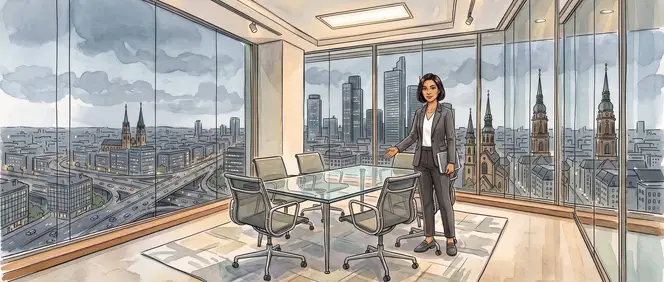
Monday, ten o'clock. The capital is big, loud and grey. A glass office on the eighth floor.
 Lucie
LucieGoedemiddag. Ik ben Lucie. Gaat u zitten, alstublieft.
Good day. I am Lucie. Please sit down.
- Lucie
Ik kom uit Spanje, maar ik woon hier al tien jaar. Dus we spreken Nederlands.
I'm Spanish, but I've lived here for ten years now. So we'll speak Dutch.
- Lucie
Vertel iets over uzelf. Waar komt u vandaan? Wat doet u?
Tell me about yourself. Where are you from? What do you do?
Ik ben Lukas Becker. Ik kom uit Duitsland, uit Hamburg. Ik ben dertig.
I'm Lukas Becker. I'm German, from Hamburg. I'm thirty.
Ik ben Lena Becker. Ik kom uit Duitsland, uit Hamburg. Ik ben dertig.
I'm Lena Becker. I'm German, from Hamburg. I'm thirty.
Ik ben ingenieur. Ik werk bij een meubelbedrijf, in een kleine stad aan de rivier.
I'm an engineer. I work at a furniture company, in a small town by the river.
Ik ben ingenieur. Ik werk bij een meubelbedrijf, in een kleine stad aan de rivier.
I'm an engineer. I work at a furniture company, in a small town by the river.
- Lucie
Welke talen spreekt u?
Which languages do you speak?
Duits, Engels en een beetje Nederlands.
German, English and a little Dutch.
Duits, Engels en een beetje Nederlands.
German, English and a little Dutch.
- Lucie
Niet een beetje. U spreekt goed.
Not a little. You speak well.
- Lucie
En wat kunt u?
And what can you do?
Ik kan meubels ontwerpen. En ik kan op een kat passen.
I can design furniture. And I can look after a cat.
Ik kan meubels ontwerpen. En ik kan op een kat passen.
I can design furniture. And I can look after a cat.

She laughs. - Lucie
Een kat?
A cat?
Dat is een lang verhaal.
It's a long story.
Dat is een lang verhaal.
It's a long story.
- Lucie
Waarom bent u naar die kleine stad gekomen?
Why did you come to that little town?
Voor het werk. Maar nu... voor de mensen.
For the job. But now... for the people.
Voor het werk. Maar nu... voor de mensen.
For the job. But now... for the people.
- Lucie
Wanneer kunt u beginnen?
When will you be able to start?
Mijn proeftijd eindigt op dertig juni.
My trial period ends on the thirtieth of June.
Mijn proeftijd eindigt op dertig juni.
My trial period ends on the thirtieth of June.

She stands up and holds out her hand. - Lucie
Prima. De baan is voor u. Kunt u op één juli beginnen?
Excellent. The job is yours. Can you start on the first of July?
Zo snel? Ik moet erover nadenken.
So soon? I need to think about it.
Zo snel? Ik moet erover nadenken.
So soon? I need to think about it.
- Lucie
Natuurlijk. Ik wacht tot vrijdag op uw antwoord.
Of course. I'll wait for your answer until Friday.

Outside the office, a grey cat sits on a wall. It is not Max. Max? Nee... Niet Max.
Max? No... Not Max.
Max? Nee... Niet Max.
Max? No... Not Max.
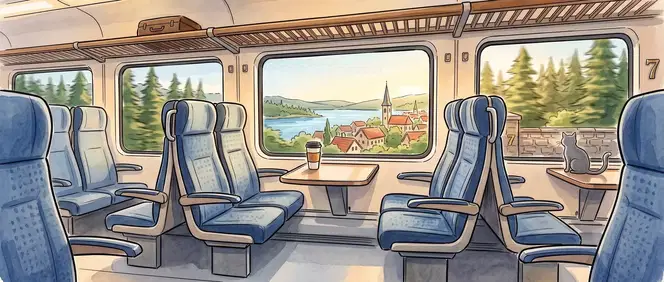
On the train back, you read flat ads on your phone.
'Appartement in het centrum. Dertig vierkante meter. Negenhonderdvijftig euro per maand.'
Flat in the centre. Thirty square metres. Nine hundred and fifty euros a month.
'Appartement in het centrum. Dertig vierkante meter. Negenhonderdvijftig euro per maand.'
Flat in the centre. Thirty square metres. Nine hundred and fifty euros a month.
Negenhonderdvijftig! En zonder kat.
Nine hundred and fifty! And without a cat.
Negenhonderdvijftig! En zonder kat.
Nine hundred and fifty! And without a cat.
Who says this?
Goedemiddag. Ik ben Lucie. Gaat u zitten, alstublieft.
Goedemiddag. Ik ben Lucie. Gaat u zitten, alstublieft.
What does it mean?
Welke talen spreekt u?
Which line do you hear?
German, English and a little Dutch.
German, English and a little Dutch.
Put the words in order.
And what can you do?
Who says this?
Waarom bent u naar die kleine stad gekomen?
Waarom bent u naar die kleine stad gekomen?
What does it mean?
Voor het werk. Maar nu... voor de mensen.
Voor het werk. Maar nu... voor de mensen.
Which line do you hear?
So soon? I need to think about it.
So soon? I need to think about it.
Put the words in order.
Max? No... Not Max.
Max? No... Not Max.
What happens first?
Put the lines in the order they come in the scene.
Scene complete
Het gesprek
Goal reachedI can introduce myself fully and answer questions about my work, my languages and my past.