Bonus storyPremium
Kell viis hommikul
Five in the morning
Module 3 · The caféGet to know the neighbours and practise what you've learned in a new story.
The storyOne day in the life of Mari, from five in the morning to the evening: who calls her before dawn, why everybody in her café gets cake, and what happens when a customer says she isn't hungry.
New words in the story
- ahi oven
- küpsetama bake
- klient customer
- ärkvel awake
- kell viis hommikul at five in the morning
- puhka rest, familiar request
- tükk piece
Tap a word to see what it means.
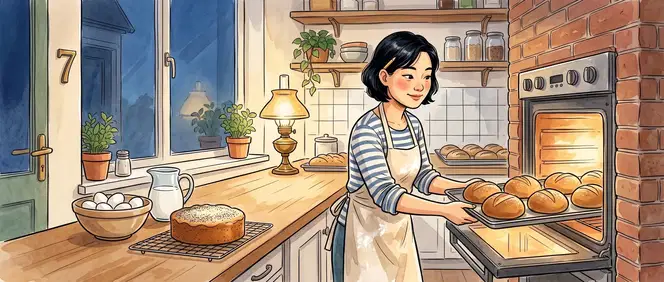
Kell on viis hommikul. Kõik magavad. Mari on kohvikus.
It’s five in the morning. Everyone sleeps. Mari is at the café.
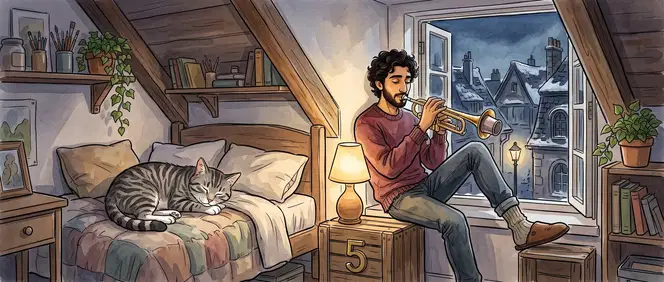
Before dawn, Jaan plays softly upstairs. At five, Mari is already at the café.
 Mari
MariTere hommikust, kohvik! Täna küpsetan jälle leiba.
Good morning, café! I’m baking bread again today.
Külmikus on kolmkümmend muna ja palju piima.
There are thirty eggs and lots of milk in the fridge.
- Mari
Kook on ahjus.
The cake is in the oven.
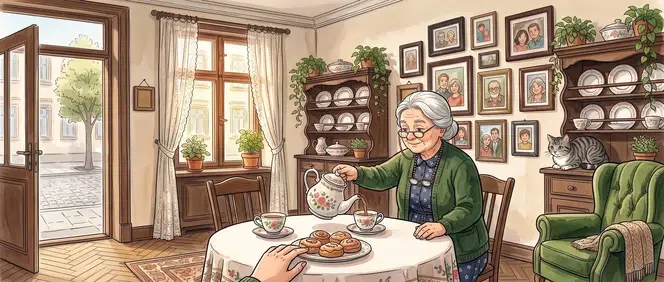
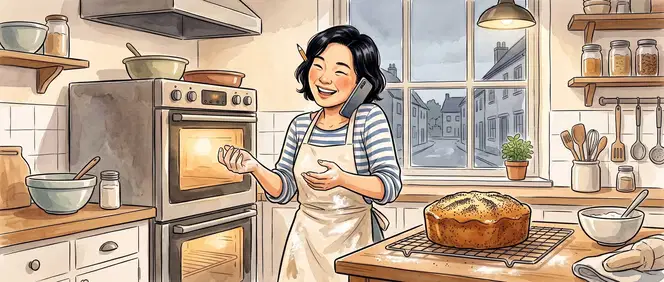
Kell on kuus. Vanaema helistab.
It’s six. Grandma calls.
- Mari
Tere, vanaema!
Hello, Grandma!
 Vanaema
Mari, kas sa juba leiba küpsetad?
Mari, are you baking bread already?
- Mari
Jah. Kas sina oled ka ärkvel?
Yes. Are you awake too?
- Vanaema
Mina ka küpsetan. Meie kaks ei maga. Me küpsetame!
I’m baking too. We two do not sleep. We bake!
- Vanaema
Kas sa sööd ka? Kas sul ei ole kõht tühi?
Are you eating too? Are you not hungry?
- Mari
Mul ei ole kõht tühi. Mul ei ole aega.
I’m not hungry. I have no time.
- Vanaema
Leiba on palju. Söö sina ka.
There’s plenty of bread. You eat too.
Kell on seitse. Mari avab kohviku.
It’s seven. Mari opens the café.
- Mari
Tere! Tule sisse!
Hello! Come in!
 Jaan
JaanAinult teed, palun. Ilma koogita.
Just tea, please. Without cake.
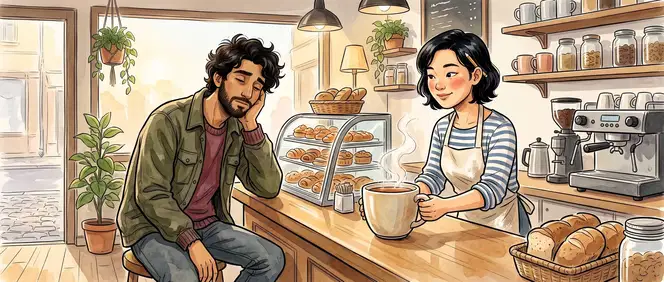 Mari
MariSuur tass. Kas sa oled väsinud?
A big cup. Are you tired?
- Jaan
Väga. Ma mängin terve öö.
Very. I play all night.
 Leena
LeenaMusta teed ilma suhkruta, palun.
Black tea without sugar, please.
 Liis
LiisKümme pannkooki, palun!
Ten pancakes, please!
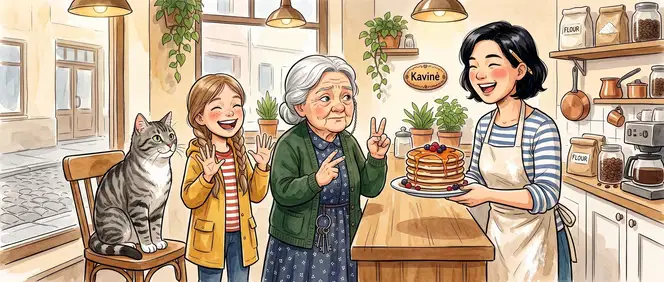 Leena
LeenaLiis! Mitte kümme. Kaks.
Liis! Not ten. Two.
- Mari
Kaks pannkooki ja piim. Ja väike pannkook Murile.
Two pancakes and milk. And a little pancake for Muri.
- Liis
Murile meeldivad pannkoogid.
Muri likes pancakes.
Kell on kaheksa. Tuleb üks klient.
It’s eight. A female customer comes.
- Klient
Kohvi, palun. Kiiresti. Mul ei ole aega.
Coffee, please. Quickly. I have no time.
- Mari
Piima? Suhkrut? Ja kooki?
Milk? Sugar? And cake?
- Klient
Ei midagi. Mul ei ole kõht tühi.
None of those. I’m not hungry.
- Mari
Kohv maksab kaks eurot ja kolmkümmend senti. Kook on minu poolt.
Coffee costs two euros thirty. The cake is on me.
- Klient
Minu jaoks? Aitäh.
For me? Thank you.
 Klient
Väga hea. Veel üks tükk, palun.
It’s very good. Another piece, please.
- Mari
Muidugi. Istuge.
Of course. Sit down.
On õhtu. Kohvik on tühi. Vanaema helistab.
It’s evening. The café is empty. Grandma calls.
- Vanaema
Mari, kas sa nüüd sööd?
Mari, are you eating now?
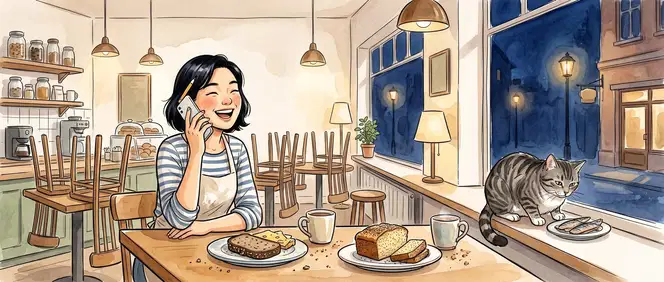 Mari
MariJah! Leiba ja juustu. Ja kooki.
Yes! Bread and cheese. And cake.
- Vanaema
Hea. Nüüd puhka.
Good. Now rest.
- Mari
Muri sööb ka. Kala.
Muri is eating too. Fish.
- Mari
Head ööd, Muri. Homme jälle kell viis.
Good night, Muri. Tomorrow at five again.
Practice 1/4 · Who says it
Who said it?
Who says it?
Tere hommikust, kohvik! Täna küpsetan jälle leiba.
Mari, kas sa juba leiba küpsetad?
Ainult teed, palun. Ilma koogita.
Practice 2/4 · True or false
Right or wrong?
True or false?
Mari töötab kell viis.
Mari works at five.
Vanaema küpsetab ka leiba.
Grandma bakes bread too.
Jaan tellib kooki.
Jaan orders cake.
Liis saab kümme pannkooki.
Liis gets ten pancakes.
Kliendile meeldib kook.
The customer likes the cake.
Practice 3/4 · What happens
What happened first?
Put what happens in order.
Practice 4/4 · Questions
Understand the story
Answer the questions.
Mis kell Mari töötab?
When does Mari start work?
The café day starts at five in the morning.
Mitu pannkooki Liis saab?
How many pancakes does Liis get?
Leena reduces the order from ten to two.
Mida Muri õhtul sööb?
What does Muri eat in the evening?
Muri eats fish while Mari has bread, cheese and cake.
Unit complete