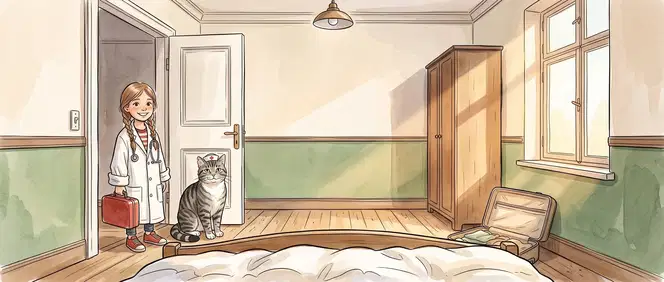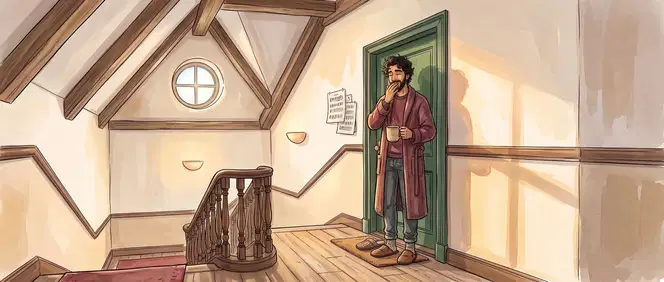
Scene 39 of 50
À la pharmacie
At the pharmacy
Your goalI can ask for medicine and understand how often to take it.


Prepare the wordsPremium
Meet the 6 words of this scene before you read. You can also go straight to the story.
 Julien
Bonjour !
Good morning!
Bonjour ? Il est six heures moins le quart du soir !
Good morning? It's a quarter to six in the evening!
Bonjour ? Il est six heures moins le quart du soir !
Good morning? It's a quarter to six in the evening!
- Julien
Pour moi, c’est le matin maintenant. Je me suis levé il y a juste un moment.
For me it's morning now. I've only just got up.
- Julien
Madame Martin dit que vous êtes malade. Comment est-ce que vous vous sentez ?
Mrs Martin says you're ill. How do you feel?
Mal. Mais un peu mieux que ce matin.
Bad. But a little better than this morning.
Mal. Mais un peu mieux que ce matin.
Bad. But a little better than this morning.
J’ai besoin d’un médicament pour la gorge. Mais la pharmacie ferme à six heures.
I need medicine for my throat. But the pharmacy closes at six.
J’ai besoin d’un médicament pour la gorge. Mais la pharmacie ferme à six heures.
I need medicine for my throat. But the pharmacy closes at six.
- Julien
Alors, allons-y, vite ! C’est à dix minutes à pied.
Then let's go, quickly! It's ten minutes on foot.
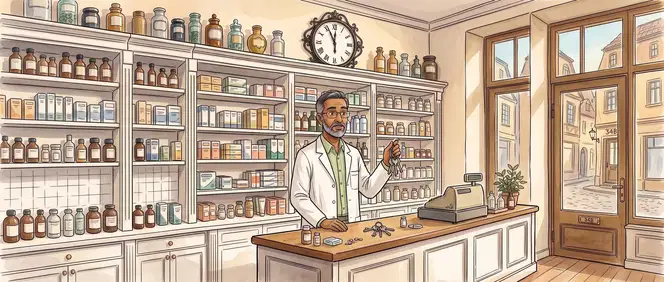
17:58. The pharmacist is already holding his keys.  Ravi
RaviBonsoir. Nous fermons dans deux minutes.
Good evening. We close in two minutes.
Pardon ! J’ai besoin de quelque chose pour la gorge.
Sorry! I need something for my throat.
Pardon ! J’ai besoin de quelque chose pour la gorge.
Sorry! I need something for my throat.
- Ravi
Mal à la gorge ? Voilà des pastilles. Elles aident très bien.
Sore throat? Here are some lozenges. They help very well.
Comment est-ce que je les prends ?
How do I take them?
Comment est-ce que je les prends ?
How do I take them?
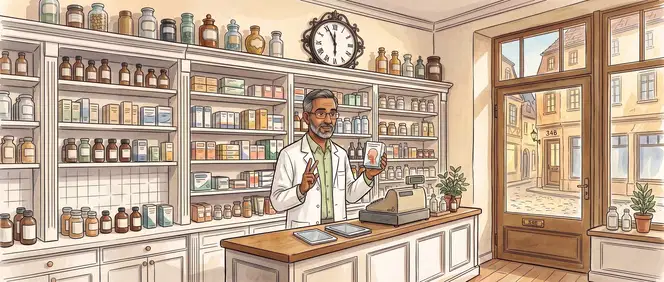 Ravi
RaviDeux pastilles à la fois, trois fois par jour. Après les repas, pas avant.
Two lozenges at a time, three times a day. After meals, not before.
Après les repas, pas avant. C’est combien ?
After meals, not before. How much is it?
Après les repas, pas avant. C’est combien ?
After meals, not before. How much is it?
- Ravi
Neuf euros quatre-vingt-dix.
Nine euros ninety cents.
- Ravi
Autre chose ?
Anything else?
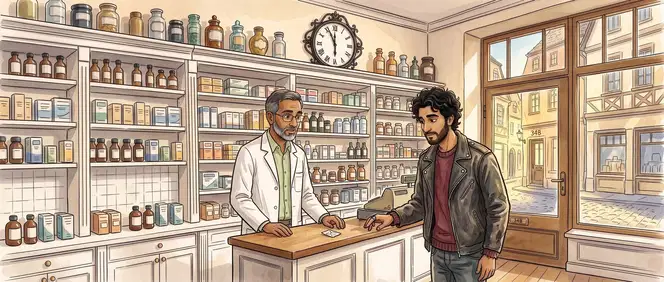
Julien quickly puts something small on the counter. - Julien
Et ça, s’il vous plaît.
And this, please.
- Ravi
Six heures. Fermé !
Six o'clock. Closed!
- Julien
C’est pour vous. Pour la nuit.
This is for you. For the night.
Des bouchons d’oreilles ?
Earplugs?
Des bouchons d’oreilles ?
Earplugs?
- Julien
Pardon pour la trompette. Je joue mieux la nuit.
Sorry about the trumpet. I play better at night.
Merci, Julien ! Maintenant, je peux dormir.
Thanks, Julien! Now I can sleep.
Merci, Julien ! Maintenant, je peux dormir.
Thanks, Julien! Now I can sleep.
- Julien
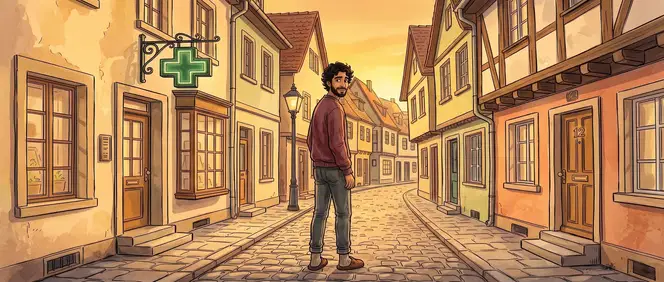
Et moi, je vais jouer. Bonne nuit !
And I'm off to play. Good night!
Who says this?
Bonsoir. Nous fermons dans deux minutes.
Bonsoir. Nous fermons dans deux minutes.
What does it mean?
Mal. Mais un peu mieux que ce matin.
Mal. Mais un peu mieux que ce matin.
Which line do you hear?
How do I take them?
How do I take them?
Put the words in order.
After meals, not before. How much is it?
After meals, not before. How much is it?
Who says this?
Neuf euros quatre-vingt-dix.
Neuf euros quatre-vingt-dix.
What does it mean?
Et ça, s’il vous plaît.
Which line do you hear?
Six o'clock. Closed!
Put the words in order.
Thanks, Julien! Now I can sleep.
Thanks, Julien! Now I can sleep.
What happens first?
Put the lines in the order they come in the scene.
Scene complete
À la pharmacie
Goal reachedI can ask for medicine and understand how often to take it.