Scene 43 of 50
Le rapport de Thomas
Thomas's report
Your goalI can tell a short story in the past with times, and ask what someone did.

Prepare the wordsPremium
Meet the 8 words of this scene before you read. You can also go straight to the story.
 Thomas
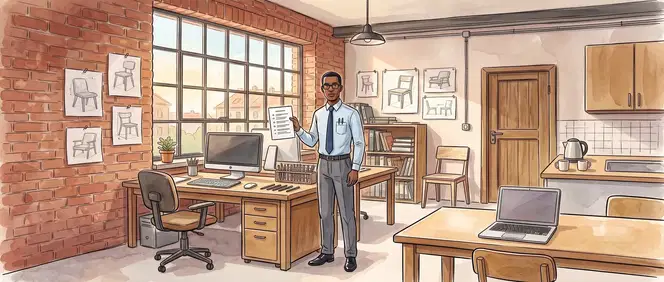
Bonjour. J’ai écrit un rapport. Sur samedi.
Good morning. I've written a report. About Saturday.
Un rapport ? Sur le festival ?
A report? About the festival?
Un rapport ? Sur le festival ?
A report? About the festival?
- Thomas
Oui. Minute par minute. J’écris toujours des rapports, même sur les festivals.
Yes. Minute by minute. I always write reports, even about festivals.
- Thomas
Écoutez.
Listen.
- Thomas
« 20 h 00 : le concert a commencé. »
'20:00: the concert started.'
- Thomas
« 20 h 14 : les lumières se sont éteintes. »
'20:14: the lights went out.'
 Thomas
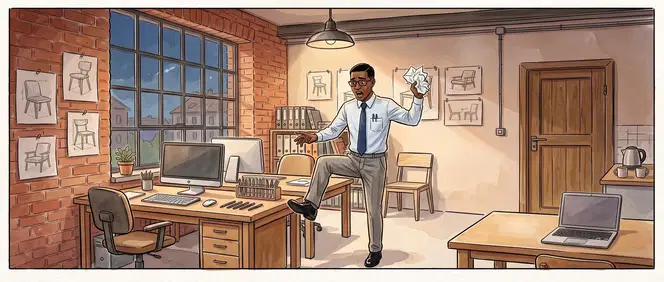
« 20 h 15 : un bruit. Quelque chose est tombé. »
'20:15: a noise. Something fell.'
Quelque chose est tombé ? Quoi ?
Something fell? What?
Quelque chose est tombé ? Quoi ?
Something fell? What?
- Thomas
Je ne sais pas. « 20 h 16 : j’ai crié. »
I don't know. '20:16: I screamed.'
Vous avez crié ? Pourquoi ?
You screamed? Why?
Vous avez crié ? Pourquoi ?
You screamed? Why?
- Thomas
Quelque chose de chaud et de doux a touché ma jambe. Dans le noir !
Something warm and soft touched my leg. In the dark!
De chaud et de doux ? C’était peut-être Félix ?
Warm and soft? Maybe it was Félix?
De chaud et de doux ? C’était peut-être Félix ?
Warm and soft? Maybe it was Félix?
- Thomas
Je ne sais pas. Je n’ai rien vu. C’était sombre.
I don't know. I didn't see anything. It was dark.
- Thomas
« 20 h 20 : les lumières sont revenues. » Et c’est tout.
'20:20: the lights came back on.' And that's all.
C’est tout ? Et qu’est-ce qui s’est passé après ?
That's all? And what happened after that?
C’est tout ? Et qu’est-ce qui s’est passé après ?
That's all? And what happened after that?
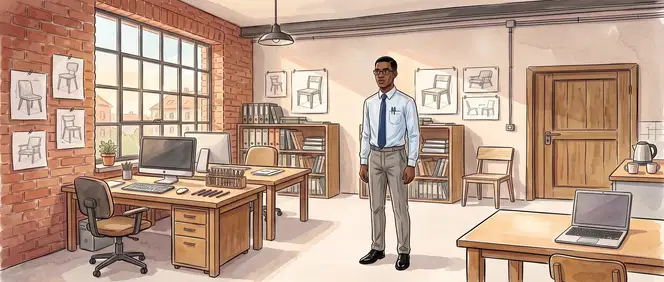
He says it very fast. - Thomas
Rien. Je suis rentré chez moi. À 20 h 30 exactement.
Nothing. I went home. At 20:30 exactly.
Vraiment ? Tout le monde dit que vous avez dansé.
Really? Everybody says you danced.
Vraiment ? Tout le monde dit que vous avez dansé.
Really? Everybody says you danced.
- Thomas
Je n’ai pas dansé.
I did not dance.
Madame Martin dit que vous avez très bien dansé.
Mrs Martin says you danced very nicely.
Madame Martin dit que vous avez très bien dansé.
Mrs Martin says you danced very nicely.
- Thomas
Madame Martin a tort.
Mrs Martin is wrong.
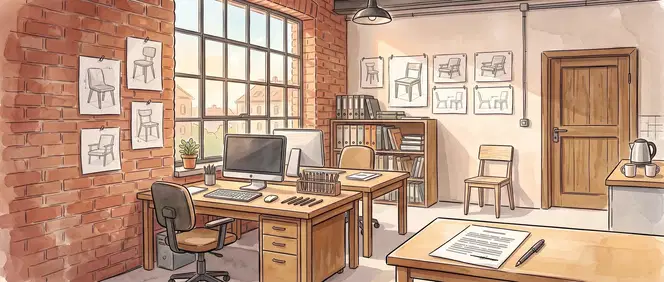
The last line of the report is crossed out, but you can still read it. Et ici ? La dernière ligne ?
And here? The last line?
Et ici ? La dernière ligne ?
And here? The last line?
« 20 h 25 : j’ai dansé. »
'20:25: I danced.'
« 20 h 25 : j’ai dansé. »
'20:25: I danced.'
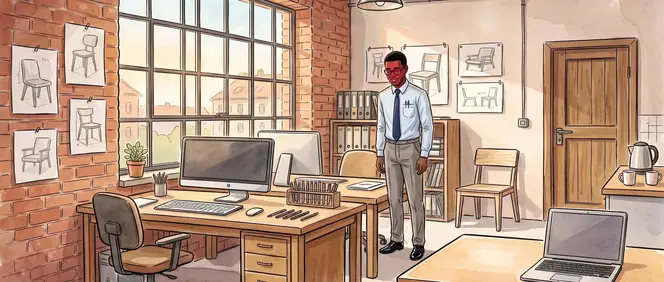
He goes red, and then he smiles. - Thomas
C’est... une erreur.
That's... a mistake.
Une erreur ?
A mistake?
Une erreur ?
A mistake?
- Thomas
Une très bonne erreur.
A very good mistake.
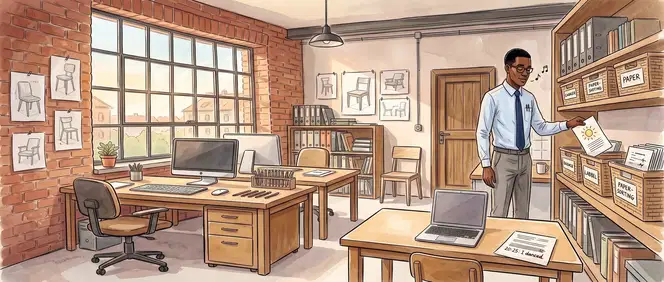
Who says this?
Bonjour. J’ai écrit un rapport. Sur samedi.
Bonjour. J’ai écrit un rapport. Sur samedi.
What does it mean?
« 20 h 00 : le concert a commencé. »
Which line do you hear?
'20:14: the lights went out.'
Put the words in order.
'20:15: a noise. Something fell.'
Who says this?
Je ne sais pas. « 20 h 16 : j’ai crié. »
Je ne sais pas. « 20 h 16 : j’ai crié. »
What does it mean?
De chaud et de doux ? C’était peut-être Félix ?
De chaud et de doux ? C’était peut-être Félix ?
Which line do you hear?
I did not dance.
Put the words in order.
Mrs Martin is wrong.
Who says this?
C’est... une erreur.
C’est... une erreur.
What does it mean?
Madame Martin dit que vous avez très bien dansé.
Madame Martin dit que vous avez très bien dansé.
Which line do you hear?
And here? The last line?
And here? The last line?
Put the words in order.
A very good mistake.
What happens first?
Put the lines in the order they come in the scene.
Scene complete
Le rapport de Thomas
Goal reachedI can tell a short story in the past with times, and ask what someone did.