The same word in another typeface
Recognise a familiar word through changes in stroke and shape.
About this unit
Another font changes strokes and spacing, not the letters.
- Look at where each letter sits: on the line, above it or below it.
- Read the whole familiar word before checking single letters.
Read the examples
Tap a card and listen. Try saying it too.
Words to read

ლომი
lionlomi
კარი
doork’ari
ყავა
coffeeq’avaReading tips
A different font can change the open space, stroke endings and line position. Read known whole words in both fonts. This is recognition practice; handwriting production is outside this course.
Reading practice
Read with support
Match the words to their pictures.
Read without a sound cue
Match the words to their pictures.
Sound to spelling
Listen. Choose the spelling.
Spelling to sound
Read the word. Choose its sound.
Sound to spelling
Listen. Choose the spelling.
Read and decide
Read the familiar word in another font.
Build the word
Listen and build the word in typing order.

Build the word
Listen and build the word in typing order.
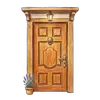
Build the word
Listen and build the word in typing order.

Recall the spelling
Listen and build the word without its picture.
Recall the spelling
Listen and build the word without its picture.
Recall the spelling
Listen and build the word without its picture.
Finish practice to save this unit.
You can read and write this
Recognise a familiar word through changes in stroke and shape.
ლომი
lionკარი
doorყავა
coffeeUse a Georgian keyboard
The guided course has on-screen letters in logical order. A Georgian keyboard, often with a phonetic Latin-key mapping, is optional. Names and sentences use ordinary Mkhedruli, not a capital first letter. Mtavruli is an all-capital style for whole headings.
 LernLaterne