Module 2Word reviewPremium
Words of module 2: The empty flat
Reviews practise both sides: wherever Lukas and Lena would say something differently, you do it once as each.
In this module you learned to
- spell my name, say where I'm from, which languages I speak and what I do, and ask someone to speak slowly
- say what is in a flat and what is not, and ask what something is
- say what colour and size things are, and where they are in a room
- ask what happened, say what is in my kitchen and whose things are, and say what I need
- ask who is there, say what is in my flat now, and thank people for their help
From this module's scenes

ausfüllen
fill in (a form)
ausfüllen: ich fülle das Formular aus.
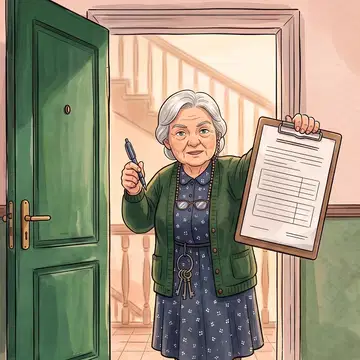
Hier ist ein Formular. Jeder neue Nachbar füllt es aus.Here is a form. Every new neighbour fills it in.
Noch ein Formular
Löffelmasc.
spoon
der Löffel. Plural: die Löffel.
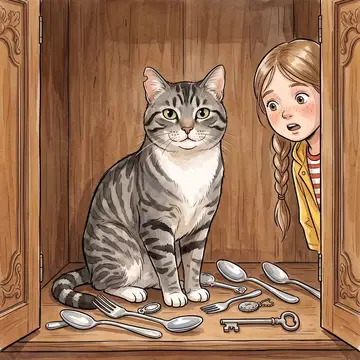
Mikesch! Und Löffel! Und ein Schlüssel! Was machst du hier?Mikesch! And spoons! And a key! What are you doing here?
Mikesch! Und Löffel! Und ein Schlüssel! Was machst du hier?Mikesch! And spoons! And a key! What are you doing here?
Hier ist fast nichts
Sesselmasc.
armchair
der Sessel. Plural: die Sessel.
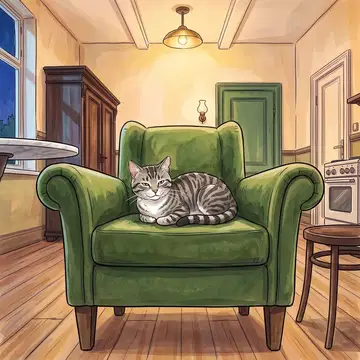
Schau! Mikesch sitzt schon im Sessel.Look! Mikesch is already sitting in the armchair.
Wer hilft hier?
Kellermasc.
cellar
der Keller. Plural: die Keller.
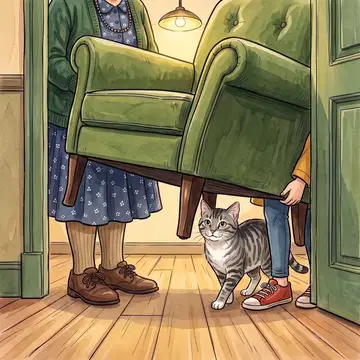
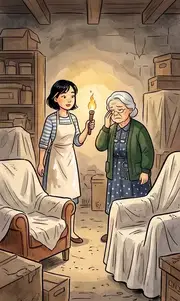
Der Sessel kommt aus Omas Keller. Da stehen noch viele Möbel.The armchair is from Grandma’s cellar. There is still lots of furniture there.
Wer hilft hier?

Formularneut.
form
das Formular. Plural: die Formulare. A document to fill in.
Ein Formular? Jetzt schon?A form? Already?
Ein Formular? Jetzt schon?A form? Already?
Noch ein Formular
schnell
fast
Ja. Nur ein paar Fragen. Das geht schnell.Yes. Just a few questions. It will be quick.
Noch ein Formular
Nachnamemasc.
surname
der Nachname. Plural: die Nachnamen. Also der Familienname.
Gut. Ganz langsam: Ihr Nachname, bitte.All right. Very slowly: your surname, please.
Noch ein Formular
aus
from
aus from a place: aus Hamburg. von from a person: von Anna.
Aus Hamburg.From Hamburg.
Aus Hamburg.From Hamburg.
Noch ein Formular
Sprachefem.
language
die Sprache. Plural: die Sprachen.
Welche Sprachen sprechen Sie?Which languages do you speak?
Noch ein Formular
sprechen
speak
sprechen: ich spreche, du sprichst, er spricht.
Welche Sprachen sprechen Sie?Which languages do you speak?
Noch ein Formular

verstehen
understand
Entschuldigung, ich verstehe Sie nicht. Können Sie bitte langsamer sprechen?Sorry, I do not understand you. Could you speak more slowly, please?
Entschuldigung, ich verstehe Sie nicht. Können Sie bitte langsamer sprechen?Sorry, I do not understand you. Could you speak more slowly, please?
Noch ein Formularlangsam
slowly
Langsamer, bitte: more slowly.
Noch einmal, bitte. Langsam.Once again, please. Slowly.
Noch ein Formular
buchstabieren
spell
buchstabieren: name the letters. schreiben is to write.
Wie schreibt man das? Können Sie den Namen buchstabieren?How do you write that? Can you spell the name?
Noch ein Formular
wieder
again
Again. Once more: noch einmal.
Noch einmal, bitte. Langsam.Once again, please. Slowly.
Noch ein Formularein bisschen
a little
ein bisschen. Also ein wenig.
Ich spreche Englisch und ein bisschen Deutsch.I speak English and a little German.
Ich spreche Englisch und ein bisschen Deutsch.I speak English and a little German.
Noch ein Formular
Deutschneut.
the language you are learning
das Deutsch. Plural: not used. Usually no article: Ich spreche Deutsch.
Ich spreche Englisch und ein bisschen Deutsch.I speak English and a little German.
Ich spreche Englisch und ein bisschen Deutsch.I speak English and a little German.
Noch ein Formularnur
only
The adverb. The only one is der einzige, not this word.
Ja. Nur ein paar Fragen. Das geht schnell.Yes. Just a few questions. It will be quick.
Noch ein Formular
das
that
Das ist der Schlüssel: that is the key. The pointing word, the same shape as the article. Not dass, which sends the verb to the end.
Noch ein Formular
Wohnungfem.
flat
die Wohnung. Plural: die Wohnungen.
Ist das deine neue Wohnung?Is that your new flat?
Hier ist fast nichts
klein
small
Ja. Sie ist klein, aber ich mag sie.Yes. It is small, but I like it.
Ja. Sie ist klein, aber ich mag sie.Yes. It is small, but I like it.
Hier ist fast nichtswas
what
Mikesch! Und Löffel! Und ein Schlüssel! Was machst du hier?Mikesch! And spoons! And a key! What are you doing here?
Mikesch! Und Löffel! Und ein Schlüssel! Was machst du hier?Mikesch! And spoons! And a key! What are you doing here?
Hier ist fast nichts
Badezimmerneut.
bathroom
das Badezimmer. Plural: die Badezimmer.
Das ist das Badezimmer.That is the bathroom.
Das ist das Badezimmer.That is the bathroom.
Hier ist fast nichts
leer
empty
Hier ist ja fast alles leer! Wo ist dein Tisch?Almost everything is empty here! Where is your table?
Hier ist fast nichts
Tischmasc.
table
der Tisch. Plural: die Tische.
Ich habe noch keinen Tisch.I do not have a table yet.
Ich habe noch keinen Tisch.I do not have a table yet.
Hier ist fast nichts
Stuhlmasc.
chair
der Stuhl. Plural: die Stühle.
Und Stühle? Und ein Sofa?And chairs? And a sofa?
Hier ist fast nichts
Sofaneut.
sofa
das Sofa. Plural: die Sofas.
Und Stühle? Und ein Sofa?And chairs? And a sofa?
Hier ist fast nichts
Bettneut.
bed
das Bett. Plural: die Betten.
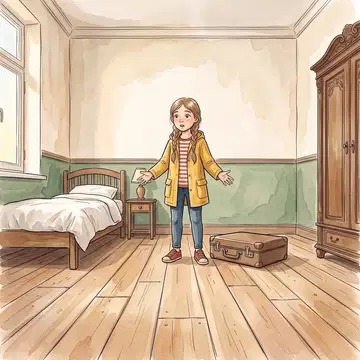
Es gibt keine Stühle und kein Sofa. Nur ein Bett, eine Lampe und einen Koffer.There are no chairs and no sofa. Just a bed, a lamp and a suitcase.
Es gibt keine Stühle und kein Sofa. Nur ein Bett, eine Lampe und einen Koffer.There are no chairs and no sofa. Just a bed, a lamp and a suitcase.
Hier ist fast nichts
Lampefem.
lamp
die Lampe. Plural: die Lampen.
Es gibt keine Stühle und kein Sofa. Nur ein Bett, eine Lampe und einen Koffer.There are no chairs and no sofa. Just a bed, a lamp and a suitcase.
Es gibt keine Stühle und kein Sofa. Nur ein Bett, eine Lampe und einen Koffer.There are no chairs and no sofa. Just a bed, a lamp and a suitcase.
Hier ist fast nichts
Koffermasc.
suitcase
der Koffer. Plural: die Koffer.
Alles in einem Koffer?Everything in one suitcase?
Hier ist fast nichts
eins
one
eins when counting alone. Before a noun: ein or eine (ein Kaffee, eine Tasse).
Alles in einem Koffer?Everything in one suitcase?
Hier ist fast nichts

groß
big
Der Schrank ist aber groß. Gehört er dir?But the wardrobe is big. Does it belong to you?
Hier ist fast nichts
alt
old (of things)
alt of a thing. The same word as for a person.
Nein, der gehört zur Wohnung. Er ist ziemlich alt.No. It comes with the flat. It is quite old.
Nein, der gehört zur Wohnung. Er ist ziemlich alt.No. It comes with the flat. It is quite old.
Hier ist fast nichts
schauen
look / watch
schauen. gucken is the same in speech. Watching something is zuschauen.
Hier ist fast nichts
Zimmerneut.
room
das Zimmer. Plural: die Zimmer. A normal room. Eine Kammer is a storeroom.
Und das Zimmer da?And that room over there?
Hier ist fast nichts
gelb
yellow
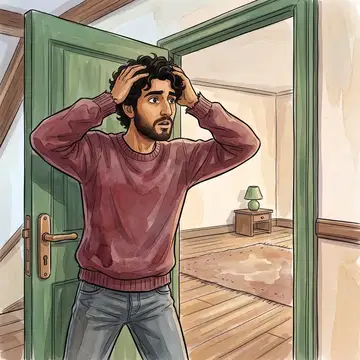
Hast du ein gelbes Sofa?Do you have a yellow sofa?
Hast du ein gelbes Sofa?Do you have a yellow sofa?
Ein Sofa im Badezimmer
rot
red
Und diese rote Lampe? Gehört sie auch dir?And this red lamp? Is it yours too?
Und diese rote Lampe? Gehört sie auch dir?And this red lamp? Is it yours too?
Ein Sofa im Badezimmer


Fensterneut.
window
das Fenster. Plural: die Fenster.
Die Tür ist klein. Und das Fenster auch.The door is small. And so is the window.
Die Tür ist klein. Und das Fenster auch.The door is small. And so is the window.
Ein Sofa im Badezimmer
Türfem.
door
die Tür. Plural: die Türen.
Die Tür ist klein. Und das Fenster auch.The door is small. And so is the window.
Die Tür ist klein. Und das Fenster auch.The door is small. And so is the window.
Ein Sofa im Badezimmer

Küchefem.
kitchen
die Küche. Plural: die Küchen.
Bei mir steht ein weißer Tisch in der Küche.There is a white table in my kitchen.
Bei mir steht ein weißer Tisch in der Küche.There is a white table in my kitchen.
Der Tisch aus dem Café
weiß
white
Bei mir steht ein weißer Tisch in der Küche.There is a white table in my kitchen.
Bei mir steht ein weißer Tisch in der Küche.There is a white table in my kitchen.
Der Tisch aus dem Café
warten
wait
warten auf: ich warte auf den Zug.
Moment! Wo ist mein Sofa?Wait! Where is my sofa?
Der Tisch aus dem Café
Tassefem.
cup
die Tasse. Plural: die Tassen. A cup with a handle, for tea or coffee. A drinking glass is ein Glas.
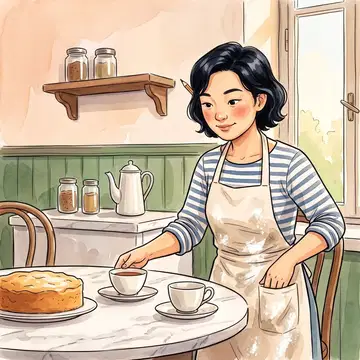
Ich habe nur eine Tasse.I only have one cup.
Ich habe nur eine Tasse.I only have one cup.
Der Tisch aus dem Café
Frühstückneut.
breakfast
das Frühstück. Plural: die Frühstücke.
Und das Frühstück habe ich auch dabei. Wo sind deine Tassen?And I have breakfast with me too. Where are your cups?
Der Tisch aus dem Café
brauchen
need
brauchen: ich brauche Milch.
Dort gibt es noch genug Tische. Du brauchst einen.There are still enough tables there. You need one.
Der Tisch aus dem Café
öffnen
open
öffnen. The shop is open: das Café ist offen.
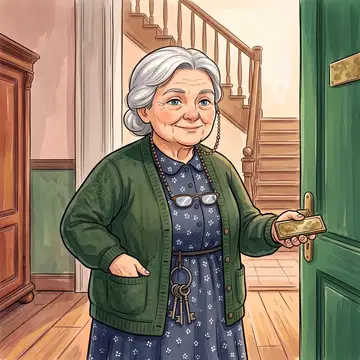
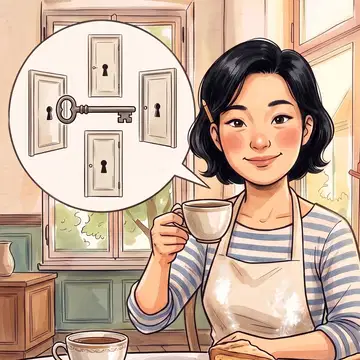
Hildes Schlüssel öffnet jede Tür im Haus.Hilde’s key opens every door in the house.
Der Tisch aus dem Caféalle
all (all the doors)
alle Türen: all the doors.
Mein Tisch ist weg! Und die Stühle auch. Hier ist jetzt alles leer.My table is gone! And the chairs too. Everything here is empty now.
Der Tisch aus dem Cafénoch
yet / not yet
noch nicht: not yet. noch is also still. Not trotzdem, which is nevertheless.
Kein Problem. Hier ist noch eine, aus dem Café.No problem. Here is another one, from the café.
Der Tisch aus dem Café
sitzen
sit (be sitting)
sitzen: be sitting. To sit down is sich setzen.
Schau! Mikesch sitzt schon im Sessel.Look! Mikesch is already sitting in the armchair.
Wer hilft hier?
helfen
help
helfen: ich helfe dir. du hilfst, er hilft.
Sie helfen? Um Mitternacht? Warum denn?Helping? At midnight? Why?
Sie helfen? Um Mitternacht? Warum denn?Helping? At midnight? Why?
Wer hilft hier?
Mitternachtfem.
midnight
die Mitternacht. Plural: die Mitternächte.
Sie helfen? Um Mitternacht? Warum denn?Helping? At midnight? Why?
Sie helfen? Um Mitternacht? Warum denn?Helping? At midnight? Why?
Wer hilft hier?jemand
somebody / someone
jemand. As an object, often jemanden.
Es ist Mitternacht. Jemand öffnet leise die Tür.It is midnight. Someone quietly opens the door.
Wer hilft hier?
Zeitfem.
time
die Zeit. Plural: die Zeiten. An amount of time. The time on the clock is die Uhrzeit.
Tagsüber habe ich keine Zeit.I do not have time during the day.
Wer hilft hier?
Additional words

Lehrermasc.
teacher
der Lehrer. Plural: die Lehrer. A woman: die Lehrerin. After sein, no article: Ich bin Lehrer. Ich bin Lehrerin.
Noch ein Formular (P)
Studentmasc.
student
der Student. Plural: die Studenten. A woman: die Studentin. After sein, no article: Ich bin Student. Ich bin Studentin. At a university. At school: der Schüler, die Schülerin.
Noch ein Formular (P)
Kochmasc.
cook
der Koch. Plural: die Köche. A woman: die Köchin. After sein, no article: Ich bin Koch. Ich bin Köchin.
Noch ein Formular (P)
Bäckermasc.
baker
der Bäcker. Plural: die Bäcker. A woman: die Bäckerin. After sein, no article: Ich bin Bäcker. Ich bin Bäckerin.
Noch ein Formular (P)
Verkäufermasc.
shop assistant
der Verkäufer. Plural: die Verkäufer. A woman: die Verkäuferin. After sein, no article: Ich bin Verkäufer. Ich bin Verkäuferin.
Noch ein Formular (P)


Practice 1/6 · Pictures
Pictures and words
Match the words to the pictures.
Practice 2/6 · Replies
Answer the moment
Drag each reply onto the moment it answers.

Practice 3/6 · In situations
What do you say?
Listen, then choose your reply.
As Lukas
 Hilde
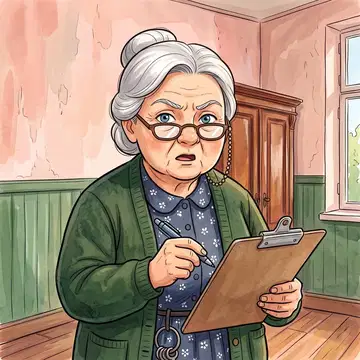
Woher kommen Sie?
Where do you come from?
You say:
*Woher* asks where you come from: *aus* and a town.
As Lena
HildeWoher kommen Sie?
Where do you come from?
You say:
*Woher* asks where you come from: *aus* and a town.
As Lukas
 Hilde
Und was machen Sie beruflich?
And what do you do for work?
You say:
*beruflich* asks about your job: the job word comes after *sein*, with no article.
As Lena
HildeUnd was machen Sie beruflich?
And what do you do for work?
You say:
*beruflich* asks about your job: the job word comes after *sein*, with no article.
 Lotte
Wo ist denn dein Tisch?
Where is your table?
You say:
Lotte asks about the table, and there is none yet.
LotteWo ist denn dein Tisch?
Where is your table?
You say:
Lotte asks about the table, and there is none yet.
 Jonas
Hast du mein Sofa? Es ist gelb.
Have you got my sofa? It is yellow.
You say:
The yellow sofa is in your bathroom, not in the kitchen.
JonasHast du mein Sofa? Es ist gelb.
Have you got my sofa? It is yellow.
You say:
The yellow sofa is in your bathroom, not in the kitchen.
 Greta
Hast du Tassen?
Do you have cups?
You say:
Greta asks about cups, and you only have one.
GretaHast du Tassen?
Do you have cups?
You say:
Greta asks about cups, and you only have one.
 Greta
Hilde hat einen Schlüssel für jede Tür im Haus.
Hilde has a key for every door in the house.
You say:
A key for every door means a key for your flat too.
GretaHilde hat einen Schlüssel für jede Tür im Haus.
Hilde has a key for every door in the house.
You say:
A key for every door means a key for your flat too.
 Hilde
Wir bringen Ihnen einen Sessel. Aus dem Keller.
We are bringing you an armchair. From the cellar.
You say:
It is midnight, not morning, and the cellar is Frau Brandt's.
HildeWir bringen Ihnen einen Sessel. Aus dem Keller.
We are bringing you an armchair. From the cellar.
You say:
It is midnight, not morning, and the cellar is Frau Brandt's.
Practice 4/6 · Matching
Say it back
Match each line to its reply.
Practice 5/6 · Comic strip
Wo sind meine Löffel?
Fill the speech bubbles.
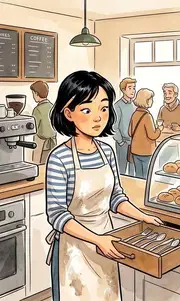 1 Greta
Wo sind meine ? Hier ist nichts!
Where are my spoons? There is nothing here!
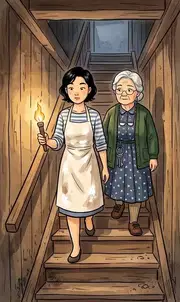 2 Lukas
Vielleicht sind sie im ?
Perhaps they are in the cellar?
 3 Hilde
Nein. Im Keller stehen nur .
No. There are only armchairs in the cellar.
 4 Greta
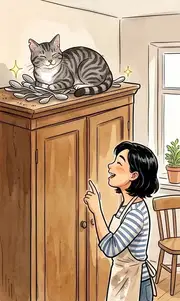
Mikesch! Da oben! Das ist Löffel!
Mikesch! Up there! That is my spoon!
1 GretaWo sind meine ? Hier ist nichts!
Where are my spoons? There is nothing here!
2 LenaVielleicht sind sie im ?
Perhaps they are in the cellar?
3 HildeNein. Im Keller stehen nur .
No. There are only armchairs in the cellar.
4 GretaMikesch! Da oben! Das ist Löffel!
Mikesch! Up there! That is my spoon!
Practice 6/6 · Fill the gaps
A busy week at number 7
Fill the gaps with the words from the box.
Guten Morgen, Jonas! Du bist nicht hier, ich weiß. Aber hier ist ein , auch für dich. Dein ? Weber, ja. Kannst du den Namen ? Danke. Und welche sprichst du? Und dein ? Musiker. Das weiß ich schon!
Good morning, Jonas! You are not new here, I know. But here is a form, for you too. Your surname? Weber, yes. Can you spell the name? Thank you. And which languages do you speak? And your job? Musician. I know that already!
As Lukas
Ich bin und komme aus Hamburg. Meine ist jetzt nicht leer. In der Küche steht Gretas , und im steht Jonas' Sofa. Es ist groß und . Mikesch schläft im . Und wer bringt die ? Frau Brandt und Lotte, um Mitternacht!
I am an engineer and I come from Hamburg. My flat is not empty now. Greta's table is in the kitchen, and Jonas's sofa is in the bathroom. It is big and yellow. Mikesch sleeps in the armchair. And who brings the furniture? Mrs Brandt and Lotte, at midnight!
As Lena
Ich bin und komme aus Hamburg. Meine ist jetzt nicht leer. In der Küche steht Gretas , und im steht Jonas' Sofa. Es ist groß und . Mikesch schläft im . Und wer bringt die ? Frau Brandt und Lotte, um Mitternacht!
I am an engineer and I come from Hamburg. My flat is not empty now. Greta's table is in the kitchen, and Jonas's sofa is in the bathroom. It is big and yellow. Mikesch sleeps in the armchair. And who brings the furniture? Mrs Brandt and Lotte, at midnight!
Unit complete
 LernLaterne