Module 4Word reviewPremium
Words of module 4: Photos on the wall
Reviews practise both sides: wherever Lukas and Lena would say something differently, you do it once as each.
In this module you learned to
- name family members and say how old people are
- say how old I am, how many brothers and sisters I have, and when my birthday is
- say how I am on the phone, describe my flat and my town, and describe what people look like
- choose a present, ask about prices and colours, and say what someone already has
- wish someone happy birthday, give a present, and say if I'm married, if I have children and where my parents live
From this module's scenes

Familiefem.
family
die Familie. Plural: die Familien.
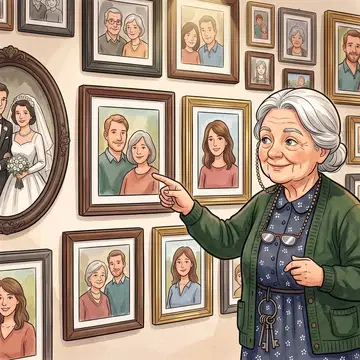
So viele Fotos! Ist das Ihre Familie?So many photos! Is that your family?
So viele Fotos! Ist das Ihre Familie?So many photos! Is that your family?
Fotos an der Wand
Sohnmasc.
son
der Sohn. Plural: die Söhne.
Wie alt ist Ihr Sohn?How old is your son?
Wie alt ist Ihr Sohn?How old is your son?
Fotos an der Wand

Hausaufgabefem.
homework
die Hausaufgabe. Plural: die Hausaufgaben. Usually the plural.
Hallo! Kannst du mir bei den Hausaufgaben helfen?Hi! Can you help me with my homework?
Die Hausaufgabe
Fragefem.
question
die Frage. Plural: die Fragen.
Erste Frage: Wie alt bist du?First question: how old are you?
Die Hausaufgabe
Märzmasc.
March
der März. Plural: die Märze. In March: im März.
Und ich am achtundzwanzigsten März. Diesen Samstag!And mine is on the twenty-eighth of March. This Saturday!
Die Hausaufgabe
interessant
interesting
Mikesch ist eben sehr interessant.Mikesch is very interesting, after all.
Die Hausaufgabe
Brillefem.
glasses
die Brille. Plural: die Brillen. One pair is eine Brille.
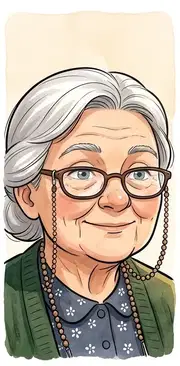
Frau Brandt ist klein, hat eine Brille und weiß einfach alles.Mrs Brandt is short, has glasses and simply knows everything.
Frau Brandt ist klein, hat eine Brille und weiß einfach alles.Mrs Brandt is short, has glasses and simply knows everything.
Ein Anruf von Anna
braun
brown
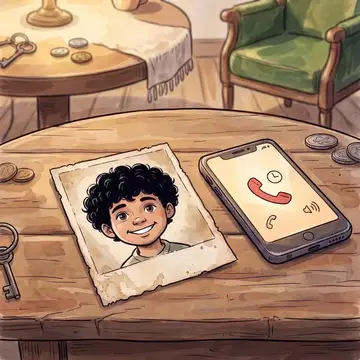
Jonas, ein Musiker. Er ist groß und hat braune Augen und schwarze Locken.Jonas, a musician. He is tall and has brown eyes and black curly hair.
Jonas, ein Musiker. Er ist groß und hat braune Augen und schwarze Locken.Jonas, a musician. He is tall and has brown eyes and black curly hair.
Ein Anruf von Anna
lockig
curly
Schwarze Locken … Moment mal!Black curly hair … Wait a moment!
Schwarze Locken … Moment mal!Black curly hair … Wait a moment!
Ein Anruf von Anna
Spielzeugneut.
toy
das Spielzeug. Plural: die Spielzeuge.
Vielleicht ein Spielzeug? Hier ist eine kleine Katze.Perhaps a toy? Here is a little cat.
Ein Geschenk für Lotte
Malfarbefem.
paints
die Malfarbe. Plural: die Malfarben. Paints for drawing.
Oder Malfarben? Diese hier sind sehr gut.Or paints? These are very good.
Ein Geschenk für Lotte
Herzlichen Glückwunsch
happy birthday
Also, for a birthday: Alles Gute zum Geburtstag.
Herzlichen Glückwunsch! Das ist von Jonas und mir.Happy birthday! This is from Jonas and me.
Herzlichen Glückwunsch! Das ist von Jonas und mir.Happy birthday! This is from Jonas and me.
Zehn Kerzen
verheiratet
married
verheiratet, for a man or a woman.
Mich auch. Und, sind Sie verheiratet?You too. And, are you married?
Zehn Kerzen
Haarschnittmasc.
haircut
der Haarschnitt. Plural: die Haarschnitte. The style is also die Frisur.
Ja. Er hatte einen schrecklichen Haarschnitt. Darum war das Foto umgedreht.Yes. He had a terrible haircut. That is why the photo was turned to the wall.
Zehn Kerzen
schrecklich
terrible
Ja. Er hatte einen schrecklichen Haarschnitt. Darum war das Foto umgedreht.Yes. He had a terrible haircut. That is why the photo was turned to the wall.
Zehn Kerzen

stark
strong
stark: starker Tee, starker Wind.
Oh! Der ist wirklich stark.Oh! This really is strong.
Oh! Der ist wirklich stark.Oh! This really is strong.
Fotos an der Wand
Fotoneut.
photo
das Foto. Plural: die Fotos.
So viele Fotos! Ist das Ihre Familie?So many photos! Is that your family?
So viele Fotos! Ist das Ihre Familie?So many photos! Is that your family?
Fotos an der Wand
Tochterfem.
daughter
die Tochter. Plural: die Töchter.
Fünfzig. Und meine Tochter ist vierundvierzig.Fifty. And my daughter is forty-four.
Fotos an der Wand
Mutterfem.
mother
die Mutter. Plural: die Mütter. Children say Mama.
Ja. Mein Sohn und meine Tochter. Die Frau mit den langen Haaren ist Lottes Mutter.Yes. My son and my daughter. The woman with the long hair is Lotte’s mother.
Fotos an der Wand

jung
young
Und der junge Mann da? Wer ist das?And the young man there? Who is that?
Und der junge Mann da? Wer ist das?And the young man there? Who is that?
Fotos an der Wand
Brudermasc.
brother
der Bruder. Plural: die Brüder. Older or younger, the same word.
Das ist Lotte mit ihrem Bruder. Er ist noch ein Baby.That is Lotte with her brother. He is still a baby.
Fotos an der Wand
Babyneut.
baby
das Baby. Plural: die Babys. A boy or a girl.
Das ist Lotte mit ihrem Bruder. Er ist noch ein Baby.That is Lotte with her brother. He is still a baby.
Fotos an der Wand
Monatmasc.
month
der Monat. Plural: die Monate.
Sechs Monate. Lotte ist neun, fast zehn.Six months. Lotte is nine, almost ten.
Fotos an der Wandfast
almost
fast zehn: almost ten. Quick is schnell.
Sechs Monate. Lotte ist neun, fast zehn.Six months. Lotte is nine, almost ten.
Fotos an der Wand

Jungemasc.
boy
der Junge. Plural: die Jungen. As an object: den Jungen.
Mikesch! Das Foto! Frau Brandt, wer ist der Junge darauf?Mikesch! The photo! Mrs Brandt, who is the boy in it?
Mikesch! Das Foto! Frau Brandt, wer ist der Junge darauf?Mikesch! The photo! Mrs Brandt, who is the boy in it?
Fotos an der Wand
erste
first (ordinal)
der erste, die erste, das erste. Before the noun.
Erste Frage: Wie alt bist du?First question: how old are you?
Die Hausaufgabe
alt
old (of people)
alt of a person. How old: wie alt.
Und wie alt ist Mikesch?And how old is Mikesch?
Die Hausaufgabe
zweite
second (ordinal)
der zweite, die zweite, das zweite. Before the noun. A second of time is eine Sekunde.
Zweite Frage: Hast du Geschwister?Second question: do you have brothers or sisters?
Die Hausaufgabe
Schwesterfem.
sister
die Schwester. Plural: die Schwestern. Older or younger, the same word.
Ja. Einen Bruder und eine Schwester.Yes. One brother and one sister.
Ja. Einen Bruder und eine Schwester.Yes. One brother and one sister.
Die Hausaufgabewann
when (question)
A question: Wann? The conjunction is wenn.
Dritte Frage: Wann hast du Geburtstag?Third question: when is your birthday?
Die Hausaufgabe
Geburtstagmasc.
birthday
der Geburtstag. Plural: die Geburtstage.
Dritte Frage: Wann hast du Geburtstag?Third question: when is your birthday?
Die Hausaufgabe
Julimasc.
July
der Juli. Plural: die Julis. In July: im Juli.
Am zehnten Juli.On the tenth of July.
Am zehnten Juli.On the tenth of July.
Die Hausaufgabe
Samstagmasc.
Saturday
der Samstag. Plural: die Samstage. On Saturday: am Samstag. Sonnabend is northern.
Und ich am achtundzwanzigsten März. Diesen Samstag!And mine is on the twenty-eighth of March. This Saturday!
Die Hausaufgabe

über
about
über a topic. ungefähr is approximately.
Moment! Nur ein Satz über mich und zwei Seiten über die Katze?Wait! Just one sentence about me and two pages about the cat?
Moment! Nur ein Satz über mich und zwei Seiten über die Katze?Wait! Just one sentence about me and two pages about the cat?
Die Hausaufgabe


Septembermasc.
September
der September. Plural: die September. In September: im September.
Die Hausaufgabe


weil
because
The verb goes to the end: weil ich müde bin. denn keeps the verb second.
Ein Anruf von Anna
Berufmasc.
job
der Beruf. Plural: die Berufe. Also der Job, plural die Jobs. The job title after sein takes no article: Ich bin Ingenieurin.
Ein Anruf von Anna
schön
beautiful
Klein, aber schön. Und im Badezimmer steht ein gelbes Sofa.Small, but nice. And there is a yellow sofa in the bathroom.
Klein, aber schön. Und im Badezimmer steht ein gelbes Sofa.Small, but nice. And there is a yellow sofa in the bathroom.
Ein Anruf von Anna
lang
long
Das ist eine lange Geschichte.That is a long story.
Das ist eine lange Geschichte.That is a long story.
Ein Anruf von Anna
Geschichtefem.
story
die Geschichte. Plural: die Geschichten.
Das ist eine lange Geschichte.That is a long story.
Das ist eine lange Geschichte.That is a long story.
Ein Anruf von Anna
Stadtfem.
town
die Stadt. Plural: die Städte.
Wie gefällt dir die Stadt? Ist sie groß?How do you like the town? Is it big?
Ein Anruf von Anna

Flussmasc.
river
der Fluss. Plural: die Flüsse. A river through the town.
Nein. Klein und alt, aber sehr schön. Sie liegt an einem Fluss.No. Small and old, but very nice. It is by a river.
Nein. Klein und alt, aber sehr schön. Sie liegt an einem Fluss.No. Small and old, but very nice. It is by a river.
Ein Anruf von Annaimmer
always
Greta hat das Café. Sie sagt immer: Iss erst mal!Greta has the café. She always says: eat something first!
Greta hat das Café. Sie sagt immer: Iss erst mal!Greta has the café. She always says: eat something first!
Ein Anruf von Anna
groß
tall, high
groß of a person, the same word as big. A high building is hoch.
Jonas, ein Musiker. Er ist groß und hat braune Augen und schwarze Locken.Jonas, a musician. He is tall and has brown eyes and black curly hair.
Jonas, ein Musiker. Er ist groß und hat braune Augen und schwarze Locken.Jonas, a musician. He is tall and has brown eyes and black curly hair.
Ein Anruf von Anna
Augeneut.
eye
das Auge. Plural: die Augen.
Jonas, ein Musiker. Er ist groß und hat braune Augen und schwarze Locken.Jonas, a musician. He is tall and has brown eyes and black curly hair.
Jonas, ein Musiker. Er ist groß und hat braune Augen und schwarze Locken.Jonas, a musician. He is tall and has brown eyes and black curly hair.
Ein Anruf von Anna
Haarneut.
hair (on the head)
das Haar. Plural: die Haare. Hair on the head is usually plural: sie hat lange Haare.
Ein Anruf von Anna
fragen
ask
fragen: to ask for an answer. bitten is to ask someone to do something.
Ein Geschenk für Lotte
suchen
look for
Wir suchen ein Geschenk für Lotte. Sie wird am Samstag zehn.We are looking for a present for Lotte. She turns ten on Saturday.
Ein Geschenk für Lotte
Geschenkneut.
present
das Geschenk. Plural: die Geschenke.
Wir suchen ein Geschenk für Lotte. Sie wird am Samstag zehn.We are looking for a present for Lotte. She turns ten on Saturday.
Ein Geschenk für Lotte


blau
blue
A plain mid blue.
Hier haben wir ein großes und ein kleines. Blau, grün oder gelb?Here we have a large one and a small one. Blue, green or yellow?
Ein Geschenk für Lotte
teuer
expensive
Das ist teuer. Und das kleine?That is expensive. And the small one?
Ein Geschenk für Lotte


bezahlen
pay
bezahlen. In a café: Zahlen, bitte.
Dann geben wir ihr das große. Jeder bezahlt vierzehn Euro.Then we will give her the big one. Each of us pays fourteen euros.
Ein Geschenk für Lotte
Kerzefem.
candle
die Kerze. Plural: die Kerzen.
Mikesch! Die zehnte Kerze!Mikesch! The tenth candle!
Zehn Kerzen
Kindneut.
child
das Kind. Plural: die Kinder. A boy or a girl.
Haben Sie Kinder?Do you have children?
Zehn Kerzen
Eltern
parents
die Eltern. Plural: die Eltern. No singular of its own.
Und Ihre Eltern? Wo wohnen die?And your parents? Where do they live?
Zehn Kerzenwenn
when (at the time that: when it rains)
When it rains: Wenn es regnet, …. The verb goes to the end. One time in the past: als. A question is wann.
Zehn Kerzen
Wandfem.
wall
die Wand. Plural: die Wände. A wall of a room. An outside wall is eine Mauer.
Zehn Kerzen
Additional words

Vatermasc.
father
der Vater. Plural: die Väter. Children say Papa.
Das ist mein Vater.This is my father.
Fotos an der Wand (P)
Großvatermasc.
grandfather
der Großvater. Plural: die Großväter. At home: Opa.
Das ist mein Großvater.This is my grandfather.
Du hast meinen Schlüssel! (P)
Enkelmasc.
grandson
der Enkel. Plural: die Enkel.
Das ist mein Enkel.This is my grandson.
Wer wohnt wo? (P)

klein
little (small and dear)
klein, small and dear: der kleine Jonas. The same word as small.
Fotos an der Wand (P)

Lehrermasc.
teacher
der Lehrer. Plural: die Lehrer. A woman: die Lehrerin. After sein, no article: Ich bin Lehrer. Ich bin Lehrerin.
Noch ein Formular (P)
Studentmasc.
student
der Student. Plural: die Studenten. A woman: die Studentin. After sein, no article: Ich bin Student. Ich bin Studentin. At a university. At school: der Schüler, die Schülerin.
Noch ein Formular (P)
Frühlingmasc.
spring
der Frühling. Plural: die Frühlinge. In spring: im Frühling. Also das Frühjahr.
Im Frühling ist es mild.In spring it is mild.
Die Hausaufgabe (P)
Herbstmasc.
autumn
der Herbst. Plural: die Herbste. In autumn: im Herbst.
Im Herbst ist es kühl.In autumn it is cool.
Die Hausaufgabe (P)
Urlaubmasc.
holiday
der Urlaub. Plural: die Urlaube. Time off work. A public holiday is der Feiertag.
Die Hausaufgabe (P)


Platzmasc.
square (in town)
der Platz. Plural: die Plätze. An open square in town. A seat is also ein Platz.
Ein Anruf von Anna (P)

Haarneut.
hair (a single hair, a cat's hair)
das Haar. Plural: die Haare. One hair, or a cat's: ein Haar, Katzenhaare. The coat is das Fell.
Ein Anruf von Anna (P)


Verkäufermasc.
shop assistant
der Verkäufer. Plural: die Verkäufer. A woman: die Verkäuferin. After sein, no article: Ich bin Verkäufer. Ich bin Verkäuferin.
Noch ein Formular (P)


Practice 1/6 · Pictures
Pictures and words
Match the words to the pictures.
Practice 2/6 · Replies
Answer the moment
Drag each reply onto the moment it answers.
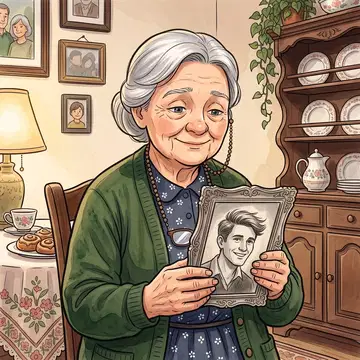
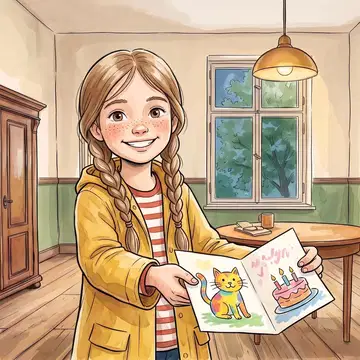
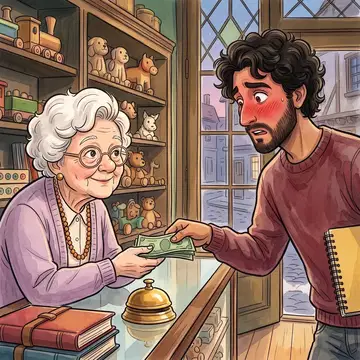
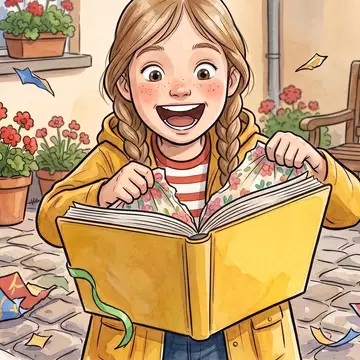
Practice 3/6 · In situations
What do you say?
Listen, then choose your reply.
 Hilde
Das ist meine Tochter Katrin.
That is my daughter Katrin.
You say:
*Tochter* is a daughter: she, not he.
HildeDas ist meine Tochter Katrin.
That is my daughter Katrin.
You say:
*Tochter* is a daughter: she, not he.
 Lotte
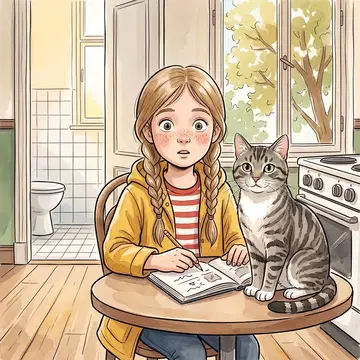
Und wann hast du Geburtstag?
And when is your birthday?
You say:
*Wann* asks for the day, and after *am* the ordinal ends in *-n*.
LotteUnd wann hast du Geburtstag?
And when is your birthday?
You say:
*Wann* asks for the day, and after *am* the ordinal ends in *-n*.
 Anna
Und wie sieht Jonas aus?
And what does Jonas look like?
You say:
*Wie sieht er aus?* asks about his looks; the glasses are Frau Brandt's.
AnnaUnd wie sieht Jonas aus?
And what does Jonas look like?
You say:
*Wie sieht er aus?* asks about his looks; the glasses are Frau Brandt's.
 Inge
Das große kostet achtundzwanzig, das kleine zwölf Euro.
The big one costs twenty-eight, the small one twelve euros.
You say:
*denn* gives the reason, and the reason has to fit: a lot of drawing needs the big one.
IngeDas große kostet achtundzwanzig, das kleine zwölf Euro.
The big one costs twenty-eight, the small one twelve euros.
You say:
*denn* gives the reason, and the reason has to fit: a lot of drawing needs the big one.
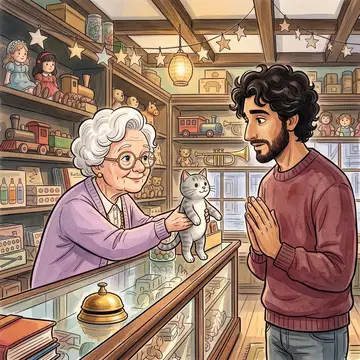 Inge
Ein Spielzeug für das Mädchen? Hier, eine kleine Katze.
A toy for the girl? Here, a little cat.
You say:
Lotte is a girl, so she gets it: *ihr*, not *ihm*.
IngeEin Spielzeug für das Mädchen? Hier, eine kleine Katze.
A toy for the girl? Here, a little cat.
You say:
Lotte is a girl, so she gets it: *ihr*, not *ihm*.
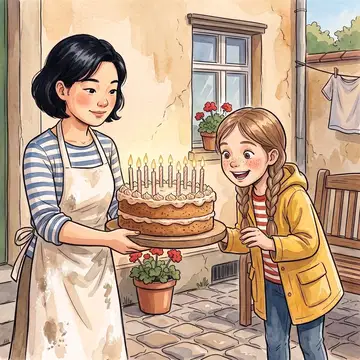 Greta
Zehn Kerzen! Wie alt ist Lotte heute?
Ten candles! How old is Lotte today?
You say:
Age goes with *sein*, and the birthday is today.
GretaZehn Kerzen! Wie alt ist Lotte heute?
Ten candles! How old is Lotte today?
You say:
Age goes with *sein*, and the birthday is today.
Practice 4/6 · Matching
Say it back
Match each line to its reply.
Practice 5/6 · Comic strip
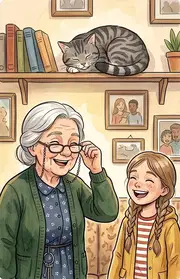
Wo ist meine Brille?
Fill the speech bubbles.
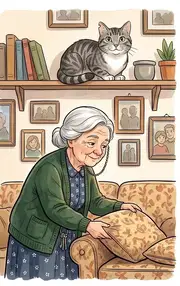 1 Hilde
Lotte, wo ist meine ?
Lotte, where are my glasses?
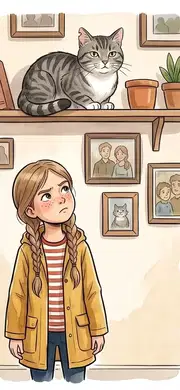 2 Lotte
Vielleicht hat Mikesch sie? Er doch alles!
Maybe Mikesch has them? He takes everything!
 3 Lukas
Frau Brandt, Ihre Brille ist auf Ihrer !
Mrs Brandt, your glasses are on your nose!
 4 Hilde
Oh! Ich bin wirklich schon .
Oh! I really am getting old.
1 HildeLotte, wo ist meine ?
Lotte, where are my glasses?
2 LotteVielleicht hat Mikesch sie? Er doch alles!
Maybe Mikesch has them? He takes everything!
3 LenaFrau Brandt, Ihre Brille ist auf Ihrer !
Mrs Brandt, your glasses are on your nose!
4 HildeOh! Ich bin wirklich schon .
Oh! I really am getting old.
Practice 6/6 · Fill the gaps
Families and a present
Fill the gaps with the words from the box.
Meine ! Meine Mutter heißt Katrin, und mein hat eine Brille. Mein ist noch ein Baby, sechs alt. Meine Hilde war Lehrerin. Ich habe am achtundzwanzigsten Geburtstag. Und Mikesch? Er hat zehn Schlüssel!
My family! My mother is called Katrin, and my father wears glasses. My brother is still a baby, six months old. My grandma Hilde was a teacher. My birthday is on the twenty-eighth of March. And Mikesch? He has at least ten keys!
As Lukas
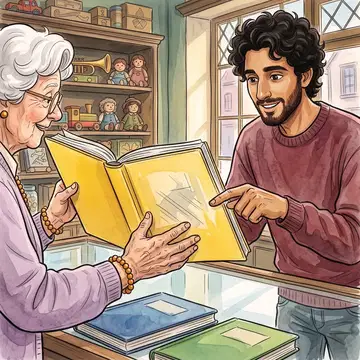
Hallo Anna! Heute waren Jonas und ich bei Frau Lehmann. Wir hatten keine für Lotte. Ein ? Nein, Lotte hat schon eine Katze. Und ? Die hat sie auch, sie malt jeden Tag. Dann ein ! Das große war , achtundzwanzig Euro. Und dann sagt Frau Lehmann: Jonas! Der kleine Junge mit der ! Jonas war ganz rot. Ich bin ja nur sein , aber jetzt habe ich viele Fragen!
Hi Anna! Today Jonas and I were at Mrs Lehmann's shop. We had no idea for Lotte. A toy? No, Lotte already has a cat. And paints? She has those too, she paints every day. Then a sketchbook! The big one was expensive, twenty-eight euros. And then Mrs Lehmann says: Jonas! The little boy with the trumpet! Jonas went all red. I am only his neighbour, but now I have a lot of questions!
As Lena
Hallo Anna! Heute waren Jonas und ich bei Frau Lehmann. Wir hatten keine für Lotte. Ein ? Nein, Lotte hat schon eine Katze. Und ? Die hat sie auch, sie malt jeden Tag. Dann ein ! Das große war , achtundzwanzig Euro. Und dann sagt Frau Lehmann: Jonas! Der kleine Junge mit der ! Jonas war ganz rot. Ich bin ja nur seine , aber jetzt habe ich viele Fragen!
Hi Anna! Today Jonas and I were at Mrs Lehmann's shop. We had no idea for Lotte. A toy? No, Lotte already has a cat. And paints? She has those too, she paints every day. Then a sketchbook! The big one was expensive, twenty-eight euros. And then Mrs Lehmann says: Jonas! The little boy with the trumpet! Jonas went all red. I am only his neighbour, but now I have a lot of questions!
Unit complete
 LernLaterne