Module 6Word reviewPremium
Words of module 6: Around town
Reviews practise both sides: wherever Lukas and Lena would say something differently, you do it once as each.
In this module you learned to
- ask the way and understand simple directions
- buy food at the market in kilos, bottles and pieces, and ask what it costs
- buy a train ticket, ask when and where the train leaves, and understand an announcement
- say where I'm from and where I live now, and how I get somewhere
- say where places are on a map and explain the way
From this module's scenes

Kiloneut.
kilo
das Kilo. As a measure after a number usually unchanged: ein Kilo, zwei Kilo Tomaten. Kilos can also occur when talking about kilos as units.
Zehn Kilo? Das ist aber viel.Ten kilos? That really is a lot.
Zehn Kilo? Das ist aber viel.Ten kilos? That really is a lot.
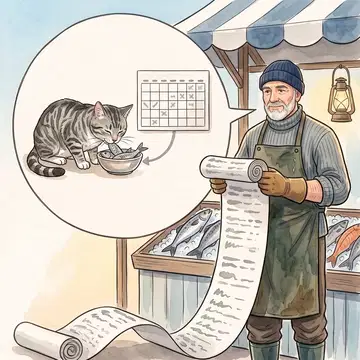
Mikeschs Rechnung
Tomatefem.
tomato
die Tomate. Plural: die Tomaten.
Ein Kilo Tomaten und zwei Kilo Kartoffeln, bitte.A kilo of tomatoes and two kilos of potatoes, please.
Ein Kilo Tomaten und zwei Kilo Kartoffeln, bitte.A kilo of tomatoes and two kilos of potatoes, please.
Mikeschs Rechnung
Kartoffelfem.
potato
die Kartoffel. Plural: die Kartoffeln.
Ein Kilo Tomaten und zwei Kilo Kartoffeln, bitte.A kilo of tomatoes and two kilos of potatoes, please.
Ein Kilo Tomaten und zwei Kilo Kartoffeln, bitte.A kilo of tomatoes and two kilos of potatoes, please.
Mikeschs Rechnung
Flaschefem.
bottle
die Flasche. Plural: die Flaschen.
Ein halbes Kilo Käse und eine Flasche Milch.Half a kilo of cheese and a bottle of milk.
Ein halbes Kilo Käse und eine Flasche Milch.Half a kilo of cheese and a bottle of milk.
Mikeschs Rechnung
Bahnsteigmasc.
platform
der Bahnsteig. Plural: die Bahnsteige. The number on the board is das Gleis.
Gleis zwei
Fahrkartefem.
ticket
die Fahrkarte. Plural: die Fahrkarten. A train ticket. Also das Ticket.
Hier sind unsere Fahrkarten. Hin und zurück.Here are our tickets. Return.
Hier sind unsere Fahrkarten. Hin und zurück.Here are our tickets. Return.
Gleis zwei
Hin- und Rückfahrtfem.
return journey
die Hin- und Rückfahrt: the outward and return journeys. At the counter: Hin und zurück, bitte. A Rückfahrkarte can mean a ticket for the return leg.
Gleis zwei
einfache Fahrtfem.
one-way journey
die einfache Fahrt: one way, without the return. At the counter: Einfach, bitte.
Gleis zwei
Fahrplanmasc.
timetable
der Fahrplan. Plural: die Fahrpläne. For the train or the bus. A school timetable is ein Stundenplan.
Um siebzehn Uhr vierzig. Hier ist der Fahrplan.At seventeen forty. Here is the timetable.
Gleis zwei
ausgefallen
cancelled
ausgefallen: der Zug ist ausgefallen. der Zug fällt aus. An event is abgesagt.
Gleis zwei
Haltestellefem.
stop (bus stop)
die Haltestelle. Plural: die Haltestellen. A bus stop, not the station.
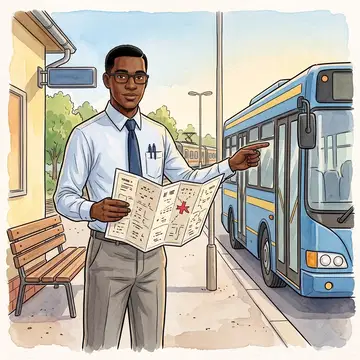
Plan B. Wir nehmen den Bus. Nummer fünf, von dieser Haltestelle.Plan B. We take the bus. Number five, from this stop.
Plan B
spielen
play (a game, a sport)
spielen a game or a sport. An instrument is spielen too.
Aber der Park ist schön. Die Leute gehen spazieren und spielen Fußball.But the park is lovely. People are going for a walk and playing football.
Aber der Park ist schön. Die Leute gehen spazieren und spielen Fußball.But the park is lovely. People are going for a walk and playing football.
Plan B
Fußballmasc.
football
der Fußball. Plural: die Fußbälle. Association football.
Aber der Park ist schön. Die Leute gehen spazieren und spielen Fußball.But the park is lovely. People are going for a walk and playing football.
Aber der Park ist schön. Die Leute gehen spazieren und spielen Fußball.But the park is lovely. People are going for a walk and playing football.
Plan B
Schulefem.
school
die Schule. Plural: die Schulen.
Meine Schule. Genau gegenüber.My school. Right opposite.
Lottes Karte
gegenüber
opposite
gegenüber dem Park.
Meine Schule. Genau gegenüber.My school. Right opposite.
Lottes Karte
Postfem.
post office
die Post. No plural. One office is das Postamt, plural die Postämter.
Dann zeigen Sie uns den Weg. Von hier zur Post.Then show us the way. From here to the post office.
Lottes Karte
zwischen
between
Zwischen der Bank und der Apotheke. Der Supermarkt ist am Bahnhof, an der Ecke.Between the bank and the pharmacy. The supermarket is at the station, on the corner.
Lottes Karte
Bankfem.
bank
die Bank. Plural: die Banken. Money. A seat is die Bank, plural die Bänke.
Zwischen der Bank und der Apotheke. Der Supermarkt ist am Bahnhof, an der Ecke.Between the bank and the pharmacy. The supermarket is at the station, on the corner.
Lottes Karte
Supermarktmasc.
supermarket
der Supermarkt. Plural: die Supermärkte.
Zwischen der Bank und der Apotheke. Der Supermarkt ist am Bahnhof, an der Ecke.Between the bank and the pharmacy. The supermarket is at the station, on the corner.
Lottes Karte

Dachneut.
roof
das Dach. Plural: die Dächer.
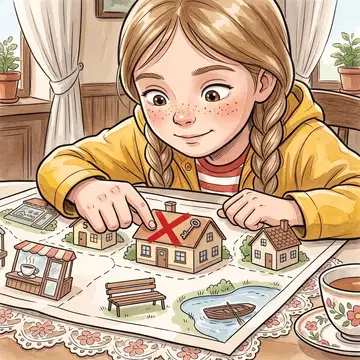
Was ist das rote X auf dem Dach? Und der kleine Schlüssel?What is the red X on the roof? And the little key?
Was ist das rote X auf dem Dach? Und der kleine Schlüssel?What is the red X on the roof? And the little key?
Lottes Karte
Geheimnisneut.
secret
das Geheimnis. Plural: die Geheimnisse.
Was für ein Geheimnis?What sort of secret?
Was für ein Geheimnis?What sort of secret?
Lottes Karte
Bahnhofmasc.
station
der Bahnhof. Plural: die Bahnhöfe. A railway station, not a bus stop.
Jonas, wo ist der Bahnhof?Jonas, where is the station?
Jonas, wo ist der Bahnhof?Jonas, where is the station?
Drei Wege zum Bahnhof
fahren
go (by bus, train or car)
fahren by bus, train or car: ich fahre, du fährst, er fährt. On foot: gehen.
Morgen fahre ich mit Herrn Kühn zum Großen See. Mit dem Zug.Tomorrow I am going to the Great Lake with Mr Kühn. By train.
Morgen fahre ich mit Herrn Kühn zum Großen See. Mit dem Zug.Tomorrow I am going to the Great Lake with Mr Kühn. By train.
Drei Wege zum Bahnhof
Seemasc.
lake
der See. Plural: die Seen. die See is the sea.
Morgen fahre ich mit Herrn Kühn zum Großen See. Mit dem Zug.Tomorrow I am going to the Great Lake with Mr Kühn. By train.
Morgen fahre ich mit Herrn Kühn zum Großen See. Mit dem Zug.Tomorrow I am going to the Great Lake with Mr Kühn. By train.
Drei Wege zum Bahnhof
Zugmasc.
train
der Zug. Plural: die Züge. Not the railway company.
Also zum Bahnhof mit den Zügen. Zuerst links?So to the station with the trains. Left first?
Also zum Bahnhof mit den Zügen. Zuerst links?So to the station with the trains. Left first?
Drei Wege zum Bahnhof
Straßefem.
street
die Straße. Plural: die Straßen.
Der Bahnhof ist weit weg. Gehen Sie zuerst links, dann geradeaus und an der zweiten Straße rechts.The station is a long way away. First go left, then straight on and right at the second street.
Drei Wege zum Bahnhof
links
left
links. To the left: nach links.
Also zum Bahnhof mit den Zügen. Zuerst links?So to the station with the trains. Left first?
Also zum Bahnhof mit den Zügen. Zuerst links?So to the station with the trains. Left first?
Drei Wege zum Bahnhofdann
then
Next: zuerst …, dann …. Not denn.
Weit weg? Nein. Rechts, dann an der Ecke links. Ganz nah!A long way away? No. Right, then left at the corner. Very close!
Drei Wege zum Bahnhof
geradeaus
straight on
Immer geradeaus. Am Fluss, an der Linde. Fünf Minuten zu Fuß.Straight on all the way. By the river, the Linde. Five minutes on foot.
Drei Wege zum Bahnhof
rechts
right
rechts. To the right: nach rechts.
Weit weg? Nein. Rechts, dann an der Ecke links. Ganz nah!A long way away? No. Right, then left at the corner. Very close!
Drei Wege zum Bahnhof
nah
near
nah. Near a place: in der Nähe.
Weit weg? Nein. Rechts, dann an der Ecke links. Ganz nah!A long way away? No. Right, then left at the corner. Very close!
Drei Wege zum Bahnhof
Eckefem.
corner
die Ecke. Plural: die Ecken. An der Ecke.
Weit weg? Nein. Rechts, dann an der Ecke links. Ganz nah!A long way away? No. Right, then left at the corner. Very close!
Drei Wege zum Bahnhof

zu Fuß
on foot
zu Fuß. Ich gehe zu Fuß.
Immer geradeaus. Am Fluss, an der Linde. Fünf Minuten zu Fuß.Straight on all the way. By the river, the Linde. Five minutes on foot.
Drei Wege zum Bahnhof
Wegmasc.
way (route)
der Weg. Plural: die Wege. The route: der Weg zum Bahnhof.
Drei Nachbarn, drei verschiedene Wege.Three neighbours, three different routes.
Drei Nachbarn, drei verschiedene Wege.Three neighbours, three different routes.
Drei Wege zum Bahnhof

Marktmasc.
market
der Markt. Plural: die Märkte.
Hier ist der Markt. Samstags von sieben bis eins.Here is the market. Saturdays from seven until one.
Mikeschs Rechnung


Sonst noch etwas?
anything else
In a shop or at the pharmacy: Sonst noch etwas?
Gern. Sonst noch etwas?Certainly. Anything else?
Mikeschs Rechnung
Jackefem.
jacket
die Jacke. Plural: die Jacken. Not a suit jacket (ein Sakko).
Die Katzenhaare auf Ihrer Jacke! Mikesch kommt jeden Samstag zu mir.The cat hairs on your jacket! Mikesch comes to me every Saturday.
Mikeschs Rechnung

abfahren
leave
abfahren: der Zug fährt ab. Not verlassen.
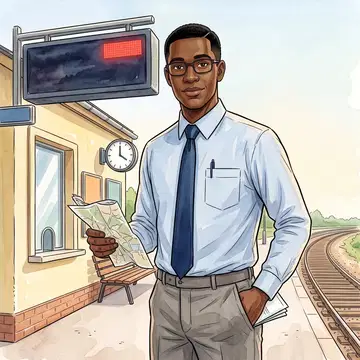
Hinfahrt um neun Uhr zwölf, Rückfahrt um siebzehn Uhr vierzig. Abfahrt von Gleis zwei.Outward journey at nine twelve, return at seventeen forty. Departure from platform two.
Gleis zwei
kommen
come (by vehicle: come to the capital)
By bus, train or car it is still kommen: ich komme mit dem Zug. ankommen is the arrival.
Gleis zweigenau
exactly
genau um neun.
Guten Morgen. Acht Uhr siebenundfünfzig. Genau nach Plan.Good morning. Eight fifty-seven. Exactly according to plan.
Gleis zwei

sicher
sure, real
sicher: bist du sicher? wirklich is real.
Ganz sicher. Das steht auf meiner Liste.Absolutely sure. It is on my list.
Plan B
Parkmasc.
park
der Park. Plural: die Parks.
Ein Park? Auf meiner Liste steht kein Park.A park? There is no park on my list.
Plan B
erzählen
tell (about)
erzählen about something: von etwas erzählen.
Hallo! Oma erzählt mir alles. Sonntag, der See, Mikesch …Hello! Grandma tells me everything. Sunday, the lake, Mikesch …
Lottes Karte
Kartefem.
map
die Karte. Plural: die Karten. A map of the town.
Hier, für dich. Eine Karte von Lindenfurt. Selbst gezeichnet!Here, for you. A map of Lindenfurt. Drawn by me!
Lottes Karte
Apothekefem.
pharmacy
die Apotheke. Plural: die Apotheken.
Zwischen der Bank und der Apotheke. Der Supermarkt ist am Bahnhof, an der Ecke.Between the bank and the pharmacy. The supermarket is at the station, on the corner.
Lottes Karte
Bankfem.
bench
die Bank. Plural: die Bänke. A seat. The money bank has plural die Banken.
Und das sind Mikeschs Lieblingsplätze: der Markt, Gretas Fenster, die Bank im Park und der See.And these are Mikesch’s favourite places: the market, Greta’s window, the bench in the park and the lake.
Lottes Karte
Additional words


Grammneut.
gram
das Gramm. As a measure after a number unchanged: hundert Gramm Käse.
Mikeschs Rechnung (P)

Urlaubmasc.
holiday
der Urlaub. Plural: die Urlaube. Time off work. A public holiday is der Feiertag.
Die Hausaufgabe (P)


Lehrermasc.
teacher
der Lehrer. Plural: die Lehrer. A woman: die Lehrerin. After sein, no article: Ich bin Lehrer. Ich bin Lehrerin.
Noch ein Formular (P)
Practice 1/6 · Pictures
Pictures and words
Match the words to the pictures.
Practice 2/6 · Replies
Answer the moment
Drag each reply onto the moment it answers.
Practice 3/6 · In situations
What do you say?
Listen, then choose your reply.
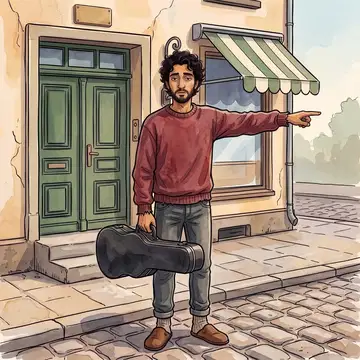 Jonas
Der Alte Bahnhof? Der ist am Fluss. Da spiele ich heute Abend.
The Old Station? It is by the river. I am playing there this evening.
You say:
Jonas plays at the Old Station tonight: ask when he plays, not when a train leaves.
JonasDer Alte Bahnhof? Der ist am Fluss. Da spiele ich heute Abend.
The Old Station? It is by the river. I am playing there this evening.
You say:
Jonas plays at the Old Station tonight: ask when he plays, not when a train leaves.
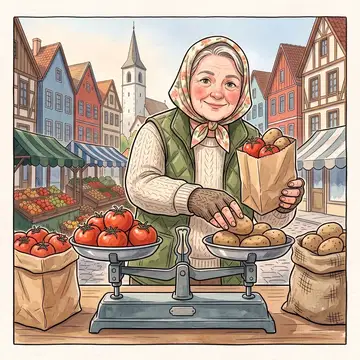 Petra
Und Käse? Möchten Sie ein Kilo?
And cheese? Would you like a kilo?
You say:
*Nur ein halbes Kilo* is less than a kilo. Cheese comes by the kilo, not by the bottle.
PetraUnd Käse? Möchten Sie ein Kilo?
And cheese? Would you like a kilo?
You say:
*Nur ein halbes Kilo* is less than a kilo. Cheese comes by the kilo, not by the bottle.
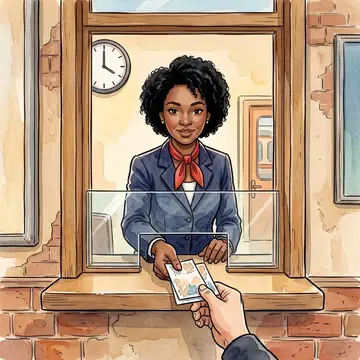 Amina
Und wann fahren Sie zurück?
And when are you coming back?
You say:
*Wann* asks when: the answer is a time.
AminaUnd wann fahren Sie zurück?
And when are you coming back?
You say:
*Wann* asks when: the answer is a time.
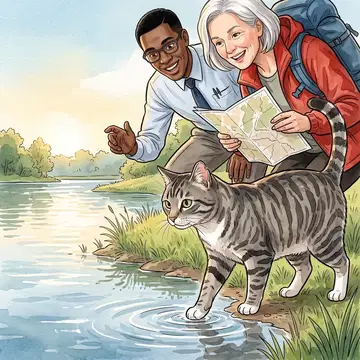 Marta
Schön hier! Aber wie komme ich jetzt zum Bahnhof? Mit dem Bus?
Lovely here! But how do I get to the station now? By bus?
You say:
After plan B, nobody takes the bus. Herr Kühn lives by the station, so he knows the way.
MartaSchön hier! Aber wie komme ich jetzt zum Bahnhof? Mit dem Bus?
Lovely here! But how do I get to the station now? By bus?
You say:
After plan B, nobody takes the bus. Herr Kühn lives by the station, so he knows the way.
 Lotte
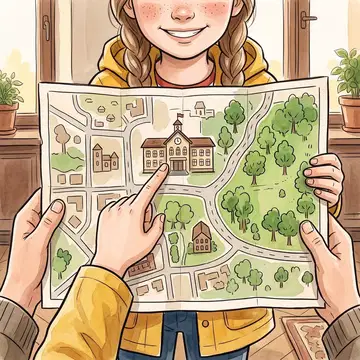
Meine Schule ist genau gegenüber vom Park. Kennst du den Park?
My school is right opposite the park. Do you know the park?
You say:
*der Park* becomes *den*. People play football in the park, but no train leaves from there.
LotteMeine Schule ist genau gegenüber vom Park. Kennst du den Park?
My school is right opposite the park. Do you know the park?
You say:
*der Park* becomes *den*. People play football in the park, but no train leaves from there.
 Uwe
Zweiundvierzig Euro. Bezahlen Sie das wirklich für den Kater?
Forty-two euros. Are you really paying that for the tomcat?
Greta says:
Greta pays because Mikesch sits in her café window every morning, and people come in.
Practice 4/6 · Matching
Say it back
Match each line to its reply.
Practice 5/6 · Comic strip
Wo ist die Post?
Fill the speech bubbles.
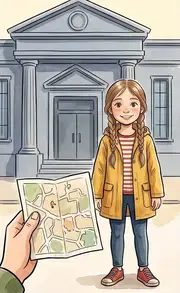 1 Lukas
Lotte, wo ist die ? Das ist eine Bank!
Lotte, where is the post office? This is a bank!
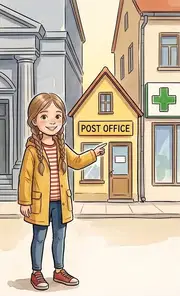 2 Lotte
Die Post ist der Bank und der Apotheke. Da!
The post office is between the bank and the pharmacy. There!
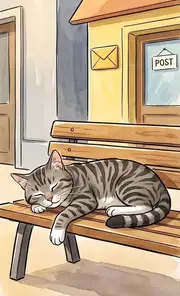 3 Lukas
Und wer schläft da auf der ?
And who is sleeping there on the bench?
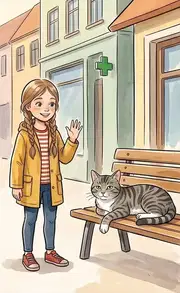 4 Lotte
Mikesch! Das ist sein .
Mikesch! That is his spot.
1 LenaLotte, wo ist die ? Das ist eine Bank!
Lotte, where is the post office? This is a bank!
2 LotteDie Post ist der Bank und der Apotheke. Da!
The post office is between the bank and the pharmacy. There!
3 LenaUnd wer schläft da auf der ?
And who is sleeping there on the bench?
4 LotteMikesch! Das ist sein .
Mikesch! That is his spot.
Practice 6/6 · Fill the gaps
A weekend in Lindenfurt
Fill the gaps with the words from the box.
Samstags ist . Greta kauft zehn Äpfel für den Apfelkuchen. Ich brauche ein Kilo , zwei Kilo Kartoffeln und eine Milch. Und Mikesch? Er hat auf dem Markt eine lange für Fisch, und Greta bezahlt sie!
On Saturdays there is a market. Greta buys ten kilos of apples for the apple cake. I need a kilo of tomatoes, two kilos of potatoes and a bottle of milk. And Mikesch? He has a long bill for fish, and Greta pays it!
As Lukas
Am Sonntag fahre ich mit Herrn Kühn zum Großen . Ich bin sein neuer Kollege. Ich kaufe zwei , hin und . Der Zug fährt um neun Uhr zwölf von zwei. Aber dann der Zug aus! Herr Kühn hat einen Plan B, den . Und am Ende kennt Mikesch den .
On Sunday I am going to the Great Lake with Mr Kühn. I am his new colleague. I buy two tickets, return. The train leaves at nine twelve from platform two. But then the train is cancelled! Mr Kühn has a plan B, the bus. And in the end Mikesch knows the way.
As Lena
Am Sonntag fahre ich mit Herrn Kühn zum Großen . Ich bin seine neue Kollegin. Ich kaufe zwei , hin und . Der Zug fährt um neun Uhr zwölf von zwei. Aber dann der Zug aus! Herr Kühn hat einen Plan B, den . Und am Ende kennt Mikesch den .
On Sunday I am going to the Great Lake with Mr Kühn. I am his new colleague. I buy two tickets, return. The train leaves at nine twelve from platform two. But then the train is cancelled! Mr Kühn has a plan B, the bus. And in the end Mikesch knows the way.
Unit complete
 LernLaterne