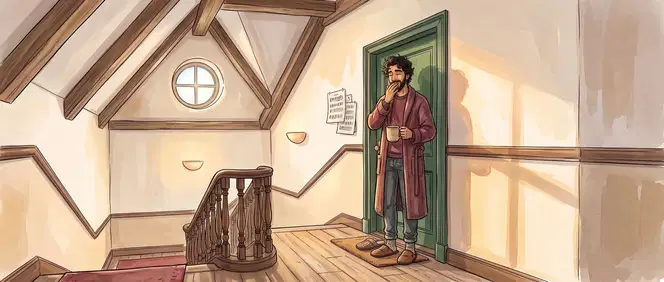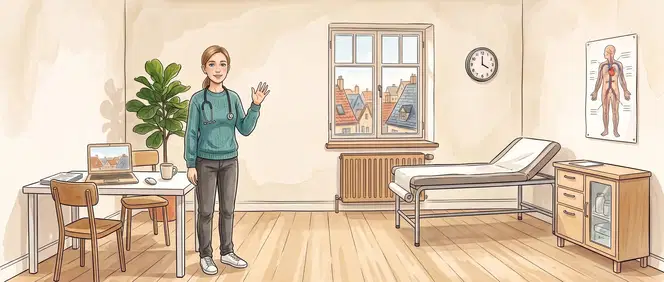
Scene 38 of 50
Wo tut es weh?
Where does it hurt?
Your goalI can say what hurts, understand a doctor's instructions and ask how to say a word.

Prepare the wordsPremium
Meet the 8 words of this scene before you read. You can also go straight to the story.
 Katrin
Guten Tag. Kommen Sie rein und setzen Sie sich.
Good afternoon. Come in and sit down.
- Katrin
Wo tut es Ihnen weh?
Where does it hurt?
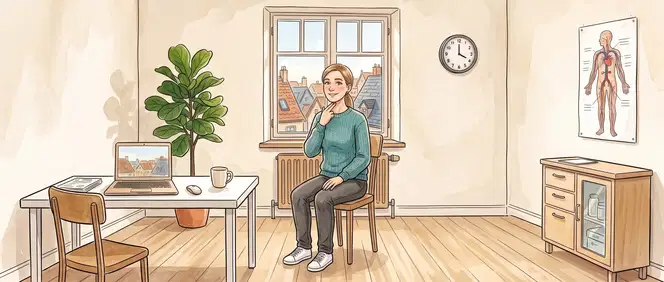
You point at your throat. She touches hers, slowly. Hier. Wie heißt das auf Deutsch?
Here. What is that called in German?
Hier. Wie heißt das auf Deutsch?
Here. What is that called in German?
- Katrin
Der Hals. Tut Ihnen der Hals weh?
The throat. Does your throat hurt?
Ja. Und ich habe Kopfschmerzen.
Yes. And I have a headache.
Ja. Und ich habe Kopfschmerzen.
Yes. And I have a headache.
- Katrin
Seit wann?
Since when?
Seit Samstag. Am Freitag war die Probe draußen. Im Regen.
Since Saturday. On Friday the rehearsal was outside. In the rain.
Seit Samstag. Am Freitag war die Probe draußen. Im Regen.
Since Saturday. On Friday the rehearsal was outside. In the rain.
 Katrin
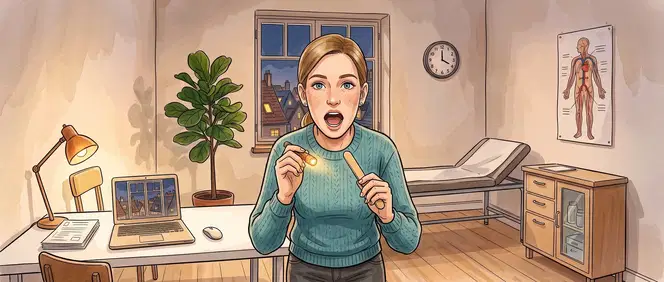
Machen Sie bitte den Mund auf. Sagen Sie ah.
Please open your mouth. Say ah.
Aaah.
Aaah.
Aaah.
Aaah.
- Katrin
Und jetzt tief atmen. Noch einmal, bitte.
And now breathe deeply. Once more, please.
- Katrin
Tut Ihnen auch der Rücken weh? Oder die Ohren?
Does your back hurt too? Or your ears?
Der Rücken nicht. Aber ein Ohr tut ein bisschen weh.
Not my back. But one ear hurts a little.
Der Rücken nicht. Aber ein Ohr tut ein bisschen weh.
Not my back. But one ear hurts a little.
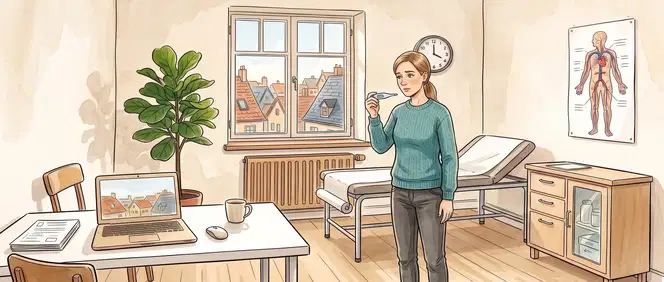
She reads a thermometer and raises her eyebrows. - Katrin
Siebenunddreißig Komma fünf. Etwas erhöhte Temperatur.
Thirty-seven point five. A slightly raised temperature.
Ist das schlimm?
Is that serious?
Ist das schlimm?
Is that serious?
- Katrin
Im Moment nicht. Wie viel schlafen Sie?
Not at the moment. How much do you sleep?
Zu wenig. Nachts höre ich immer eine Trompete.
Too little. I always hear a trumpet at night.
Zu wenig. Nachts höre ich immer eine Trompete.
Too little. I always hear a trumpet at night.
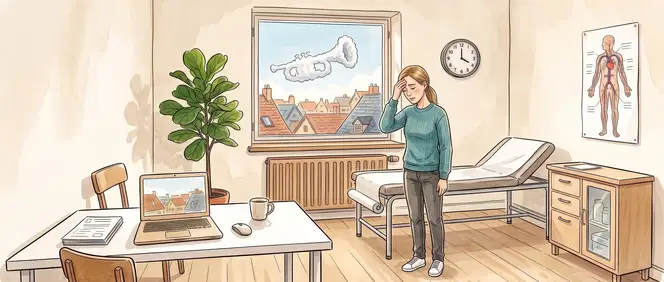
She sighs. Outside the window, a cloud looks like a trumpet. - Katrin
Die Trompete kenne ich.
I know that trumpet.
- Katrin
Sie brauchen vor allem Ruhe. Und etwas zu essen.
Above all you need rest. And something to eat.
So ähnlich sagt Lotte das über Mikesch: Er ist nicht böse, nur hungrig.
Lotte says something similar about Mikesch: He is not bad, just hungry.
So ähnlich sagt Lotte das über Mikesch: Er ist nicht böse, nur hungrig.
Lotte says something similar about Mikesch: He is not bad, just hungry.
- Katrin
Ja. Meine Tochter kennt sich aus.
Yes. My daughter knows her stuff.
- Katrin
Sie sollen sich ausruhen und genug trinken. Zum Beispiel Tee.
You should rest and drink enough. Tea, for example.
- Katrin
Essen Sie auch etwas. Bei Halsschmerzen hilft Ihnen die Apotheke.
Have something to eat too. The pharmacy can help you with the sore throat.
Danke, Frau Doktor Vogel. Darf ich am Samstag zum Fest?
Thank you, Dr Vogel. May I go to the festival on Saturday?
Danke, Frau Doktor Vogel. Darf ich am Samstag zum Fest?
Thank you, Dr Vogel. May I go to the festival on Saturday?
- Katrin
Nur ohne Fieber und mit genug Kraft. Bis dahin ruhen Sie sich aus.
Only without a fever and with enough energy. Rest until then.
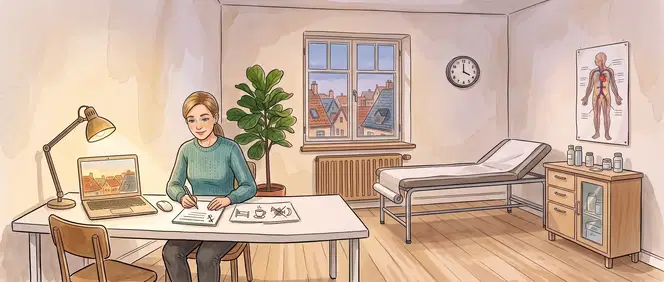
Who says this?
Guten Tag. Kommen Sie rein und setzen Sie sich.
Guten Tag. Kommen Sie rein und setzen Sie sich.
What does it mean?
Der Hals. Tut Ihnen der Hals weh?
Which line do you hear?
And now breathe deeply. Once more, please.
Put the words in order.
Thirty-seven point five. A slightly raised temperature.
Who says this?
Im Moment nicht. Wie viel schlafen Sie?
Im Moment nicht. Wie viel schlafen Sie?
What does it mean?
Zu wenig. Nachts höre ich immer eine Trompete.
Zu wenig. Nachts höre ich immer eine Trompete.
Which line do you hear?
Yes. My daughter knows her stuff.
Put the words in order.
Where does it hurt?
What happens first?
Put the lines in the order they come in the scene.
Scene complete
Wo tut es weh?
Goal reachedI can say what hurts, understand a doctor's instructions and ask how to say a word.