You're browsing as a guest. A free account gives you 4 free texts: each opens one dialog with every exercise.
Where Are You Really From?
Woher kommst du wirklich?
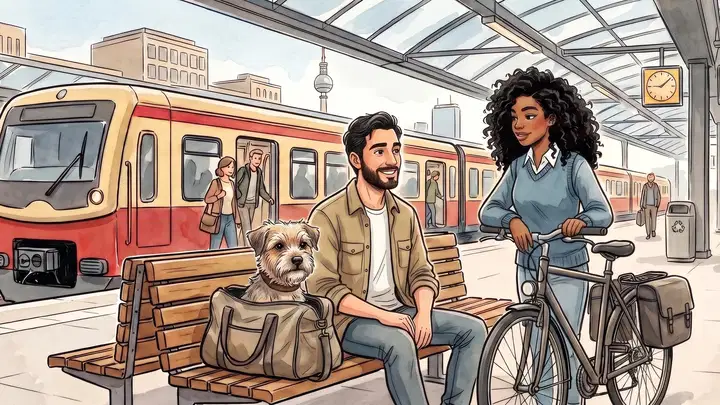
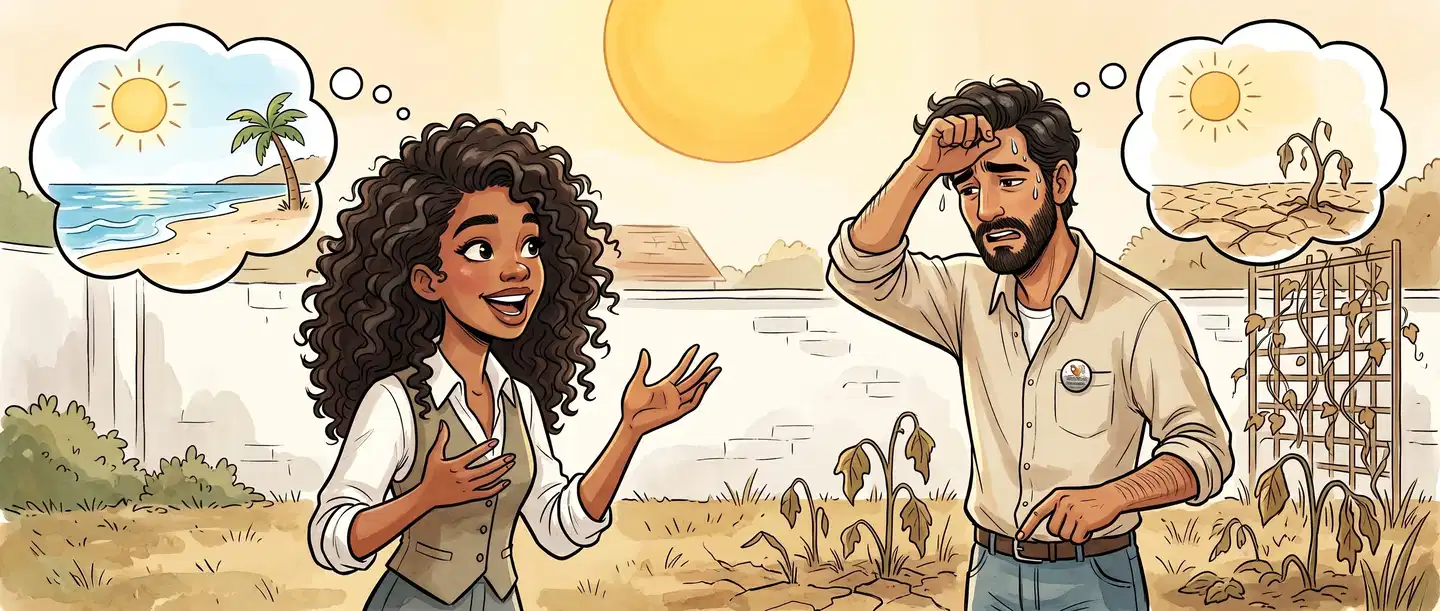
Mathilde and Fridolin were both born in Berlin and are still constantly asked where they come from. Is home a place or a feeling?
 Mathilde
 FridolinMathildeFridolinMathildeFridolinMathildeFridolinMathildeFridolinMathildeFridolinMathildeFridolinMathildeFridolinMathildeFridolinMathildeFridolin
Exercises
Hören
Hören
Listen to the sentence and answer the question.
Was wollte die Frau im Zug wissen, nachdem Mathilde „Aus Berlin“ gesagt hatte?
Wie oft wird Fridolin diese Frage gestellt?
Warum glaubt nicht jeder, dass Fridolin in Kreuzberg geboren ist?
Was ist Kamerun für Mathilde?
Wonach fragen die Leute Fridolin, wenn ihnen „Berlin“ als Antwort reicht?
All done.Almost there!Let's practise this againTry the questions
right first time
Richtig oder falsch?
Richtig oder falsch?
Read the sentence. Is it true or false?
Bei seinen Stadtführungen fragt Fridolin die Gäste nie, woher sie kommen.
In Izmir war Fridolin für die Leute „der Türke“.
Mathilde sagt, ihre Heimat wäre dann die gemeinsame Küche am Sonntagabend.
In der Küche am Sonntag fragt man Fridolin oft, warum er kein Fleisch isst.
Mathilde wünscht sich, dass mit der Antwort „Berlin“ irgendwann alles gesagt ist.
All done.Almost there!Let's practise this againTry the questions
right first time
Mehr Fragen
Mehr Fragen
Choose the correct answer.
Wie meint Mathilde die Frage „Und, warum sprichst du so gut Deutsch?“
Was ärgert Mathilde an der Frage „Woher kommen Sie wirklich?“
Was meint Mathilde mit „dann hat er mir gar nicht zugehört“?
Warum sagt Fridolin „Siehst du, genau das meine ich“?
Was zeigt Fridolins letzter Satz?
All done.Almost there!Let's practise this againTry the questions
right first time
Wörter
Wörter
Match the pairs.
All done.Almost there!Let's practise this againTry the questions
right first time
Was sagst du?
Was sagst du?
What do you say?
People keep asking you where you are "really" from. A friend thinks their curiosity annoys you. It doesn't: what annoys you is that they doubt your answer. What do you say?
A friend asks you: "So is it rude to ask people where they come from?" You think it is not always rude: it depends on how and when you ask. What do you say?
Someone asks if the question "Where are you from?" bothers you. As a way to start a conversation it is fine with you; as doubt about your answer it is not. What do you say?
Someone asks you where home is for you. For you, home is not so much a place as a feeling. What do you say?
All done.Almost there!Let's practise this againTry the questions
right first time
Baue den Satz
Baue den Satz
Tap the words in the right order to build the sentence.
What annoys me about it isn't the question at all, it's the tone.
It depends on who's asking and why.
As a question I think it's fine; as an insinuation, I don't.
To me, home is less a city than a language.
All done.Almost there!Let's practise this againTry the questions
right first time
Gespräch
Gespräch
Where are you really from?
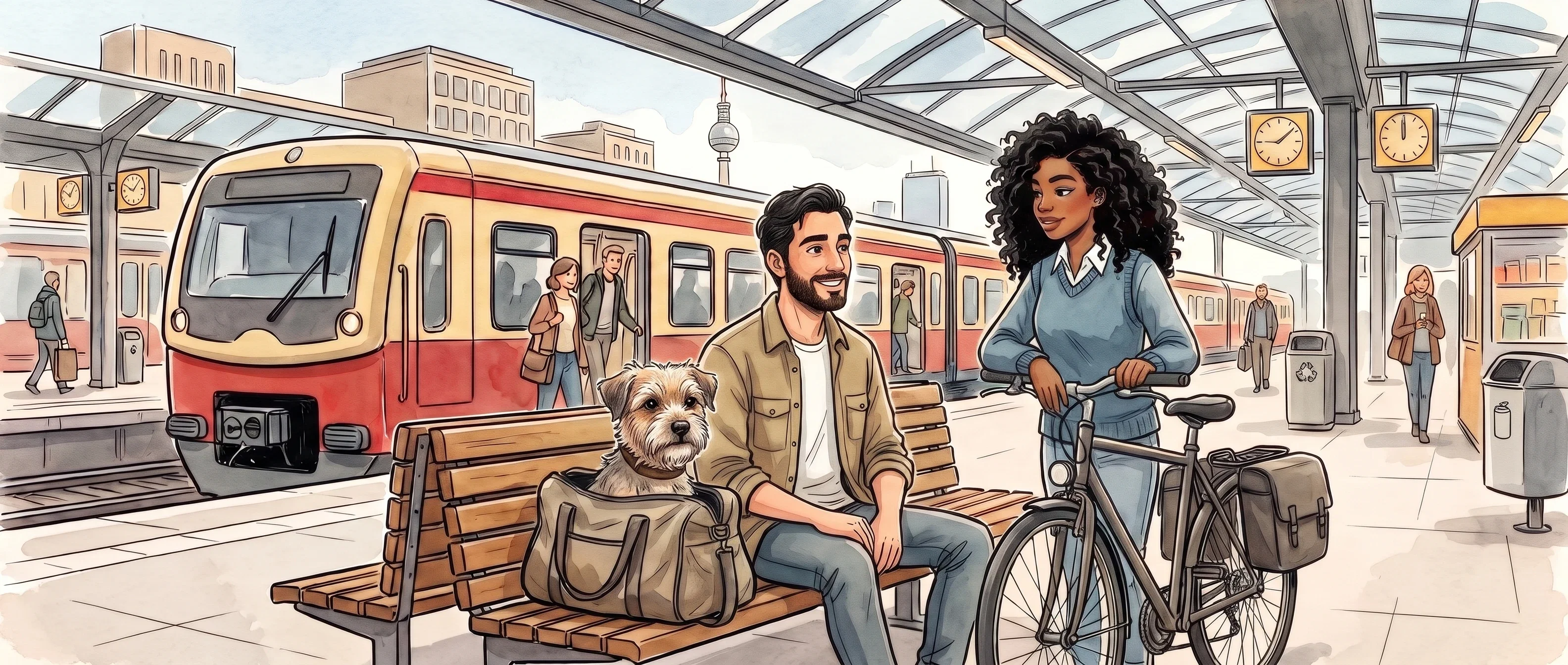
You are on a regional train to Berlin. A friendly woman next to you asks where you are from, and then where you are "really" from. Answer her the way you want to: you were born and grew up in a German city.
You are on a regional train to Berlin. A friendly woman next to you asks where you are from, and then where you are "really" from. Answer her the way you want to: you were born and grew up in a German city.
Say where you are from: you were born and grew up there.
Die Frau im Zug
Entschuldigung, fahren Sie auch bis Berlin? Woher kommen Sie denn, wenn ich fragen darf?
Excuse me, are you going to Berlin too? Where are you from, if I may ask?
Ja, bis Berlin. Ich komme …. Da bin ich geboren und aufgewachsen.
Ich komme …
The conversation is over.

All done.Almost there!Let's practise this againTry the questions
right first time
Well done!
You have finished “Woher kommst du wirklich?”.
 Part of the topicGesellschaft und ZusammenlebenDialog 4 of 7
- The dialog as a PDF
Recommended for you
You might enjoy these stories or dialogs.

 Part of the topicGesellschaft und ZusammenlebenSociety and living together