LernLaterne

Welcome back

Unit 14 · ου and αι · Meet

ου and αι

Read the u team and the second spelling of e.

About this unit

Some vowels are written with two letters that make one sound. Read the pair together: ου is u and αι is e.

  • ΟΥουtail
    oo, as in “moon”
    ουρά · tail
    i

    Two letters, one u vowel; a team tile in the builder.

  • ΑΙαι
    e, as in “bed”
    παιδί · child
    i

    Same vowel as ε; learn the printed spelling.

Read the team as one soundWord
κ + ου + τ + ίκουτί · kutí
π + αι + δ + ίπαιδί · pedhí

One-syllable words such as και and ναι have no tonos.

More words to read

box

κουτί

boxkutí

ναι

yesne

και

andke
Reading tips

Ου reads u. Αι reads e, not a + i. When a two-vowel team is stressed, its tonos is written on the second letter. Ναι and και are one-syllable words and normally have no tonos.

Reading practice

Hear the written stress

Listen and choose the stressed syllable, counting from the start.

Clip 1

Letters in words

Match each sign to the same sign in its example.

Read with support

Match the words to their pictures.

Read without a sound cue

Match the words to their pictures.

Sound to spelling

Listen. Choose the spelling.

Spelling to sound

Read the word. Choose its sound.

ναι

Sound to spelling

Listen. Choose the spelling.

Spelling to sound

Read the word. Choose its sound.

ουρά

Build the word

Listen and build the word in typing order.
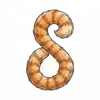
tail

Build the word

Listen and build the word in typing order.

box

Build the word

Listen and build the word in typing order.

Recall the spelling

Listen and build the word without its picture.

Recall the spelling

Listen and build the word without its picture.

Finish practice to save this unit.

You can read and write this

Read the u team and the second spelling of e.

Next unit
tail

ουρά

tail
box

κουτί

box

παιδί

child

ναι

yes

και

and
Use a Greek keyboard

Use the Greek layout or the course tiles. On a common Greek keyboard the ; key is a dead key for tonos: press it, then the vowel. Final ς has its own key. Keep the accent in ordinary lowercase words; normalise Unicode rather than removing tonos.

All letters

Α α
i

a

Ε ε
i

e

Κ κIn κα
i

ka

Μ μIn μα
i

ma

Ο ο
i

o

Τ τIn τα
i

ta

Ν νIn να
i

na. Ν is n; small ν is not Latin v.

Ρ ρIn ρα
i

ra. Ρ/ρ is r, not Latin p.

Ι ι
i

i

Η η
i

i. Η is i, not Latin H. It shares its sound with ι.

Υ υ
i

i. Υ/υ is i in ordinary vowel use, not Latin y or German ü.

Σ σIn σα
i

sa. Use σ before the end of a word.

Σ ςIn σα
i

sa. Use ς only at the end; it is the same letter and sound.

Λ λIn λα
i

la

Π πIn πα
i

pa

Ζ ζIn ζα
i

za

Β βIn βα
i

va. Β is v, not b.

Δ δth as in “this”: a buzzIn δα
i

dha. Δ is the voiced th of English this.

Γ γgh: air rubs, with a buzzIn γα
i

gha. Γ is voiced back friction before a/o/u, not a g stop.

Θ θth as in “thin”: air rubsIn θα
i

tha. The th of English thin, not t+h.

Φ φIn φα
i

fa

Χ χkh, as in German “Bach”In χα
i

kha. Χ is back friction before a/o/u; before e/i it moves forward, like German ich.

Ψ ψIn ψα
i

psa. One letter writes the consonant sequence ps.

Ξ ξIn ξα
i

ksa. One letter writes ks.

Ω ω
i

o. Ω and ο have the same modern vowel sound.

ΟΥ ουIn ουρά
i

u. Two letters, one u vowel; a team tile in the builder.

ΑΙ αιIn παιδί
i

e. Same vowel as ε; learn the printed spelling.

ΕΙ ειIn κλειδί
i

i. Same i sound as ι, η and υ.

ΟΙ οιIn οικονομία
i

i. Same i sound; read the team together.

ΥΙ υιIn υιός
i

i. A rarer i spelling, for recognition.

ΜΠ μπIn μπανάνα
i

ba. Word-initial μπ is b; inside words many speakers keep an m before b.

ΝΤ ντIn ντομάτα
i

da. Word-initial ντ is d; medial pronunciation can include n.

ΓΚ γκIn γκολ
i

ga. Γκ supplies the g stop that γ alone does not.

ΓΓ γγIn φεγγάρι
i

nga / ga. Inside words γγ commonly has a nasal plus g; some speakers reduce the nasal.

ΤΣ τσIn τσάι
i

tsa

ΤΖ τζIn τζάμι
i

dza

ΑΥ αυIn αυγό
i

av / af. Av before vowels and voiced consonants; af before voiceless consonants.

ΕΥ ευIn ευρώ
i

ev / ef. Ev before vowels and voiced consonants; ef before voiceless consonants.

Ϊ ϊIn μαϊμού
i

separate i. The diaeresis tells you not to combine with the previous vowel.

Ϋ ϋIn αϋπνία
i

separate i. Υ still has its ordinary i sound, separated from the preceding vowel.