α, ε, κ, μ, ο and τ
Read six familiar shapes in your first whole words.
About this unit
Six letters look and sound much like their Latin partners. Read your first Greek words and follow the accent mark.
- Ααa, as in “father”κακάο · cocoa
- Εεe, as in “bed”εκατό · one hundred
- Κκ
 k, as in “skin”κότα · hen
- Μμ
 m, as in “mother”μαμά · mum
- Οοa plain oάτομο · person
- Ττ
 t, as in “stop”τομάτα · tomato
| Word | Say it | The tonos sits on |
|---|---|---|
| μαμά | ma-MA | the last syllable |
| κότα | KO-ta | the first syllable |
| τομάτα | to-MA-ta | the middle syllable |
Every word with two or more syllables has a tonos on its strong vowel.
Reading tips
Read the tonos from the first word: μαμά ends strong; κότα begins strong. The six shapes are familiar, but the accent is a real part of Greek spelling. Capitals Α Ε Κ Μ Ο Τ appear on the cards.
Reading practice
Hear the written stress
Listen and choose the stressed syllable, counting from the start.
Hear the written stress
Listen and choose the stressed syllable, counting from the start.
Letters in words
Match each sign to the same sign in its example.
Letters in words
Match each sign to the same sign in its example.
Find the sound
Match the sounds to the signs. Tap a sign to check.
Find the sound
Match the sounds to the signs. Tap a sign to check.
Read with support
Match the words to their pictures.
Read without a sound cue
Match the words to their pictures.
Sound to spelling
Listen. Choose the spelling.
Spelling to sound
Read the word. Choose its sound.
Sound to spelling
Listen. Choose the spelling.
Spelling to sound
Read the word. Choose its sound.
Build the word
Listen and build the word in typing order.
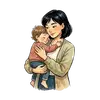
Build the word
Listen and build the word in typing order.
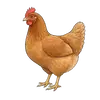
Build the word
Listen and build the word in typing order.
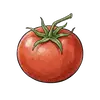
Recall the spelling
Listen and build the word without its picture.
Recall the spelling
Listen and build the word without its picture.
Recall the spelling
Listen and build the word without its picture.
Finish practice to save this unit.
You can read and write this
Read six familiar shapes in your first whole words.

μαμά
mumεκατό
one hundred
κότα
henάτομο
person
τομάτα
tomatoκακάο
cocoaUse a Greek keyboard
Use the Greek layout or the course tiles. On a common Greek keyboard the ; key is a dead key for tonos: press it, then the vowel. Final ς has its own key. Keep the accent in ordinary lowercase words; normalise Unicode rather than removing tonos.
 LernLaterne