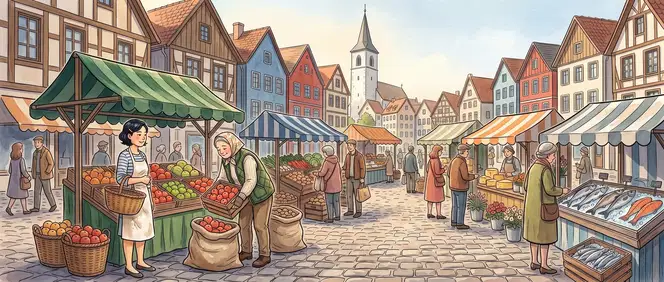
Scene 26 of 50
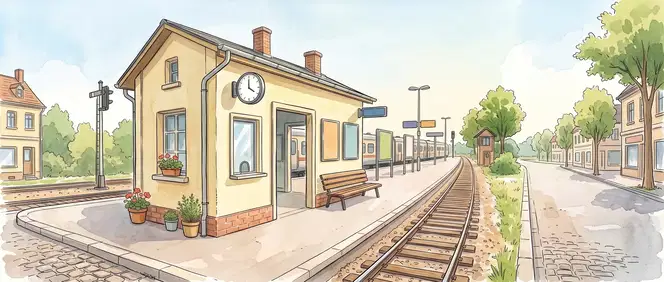
Dov’è la stazione?
Where is the station?
Your goalI can ask the way and understand simple directions.


Prepare the wordsPremium
Meet the 15 words of this scene before you read. You can also go straight to the story.
Buongiorno, signora Rossi! Mi scusi, dov’è la stazione?
Good morning, Mrs Rossi! Excuse me, where is the station?
Buongiorno, signora Rossi! Mi scusi, dov’è la stazione?
Good morning, Mrs Rossi! Excuse me, where is the station?
 Maria
MariaLa stazione? E perché Le serve la stazione?
The station? And why do you need the station?
Domani Tommaso e io andiamo al lago in treno.
Tomorrow Tommaso and I are going to the lake by train.
Domani Tommaso e io andiamo al lago in treno.
Tomorrow Tommaso and I are going to the lake by train.
- Maria
Lo so, lo so. So tutto.
I know, I know. I know everything.
- Maria
La stazione è lontana. Prima la prima strada a sinistra, poi sempre dritto, poi la seconda strada a destra.
The station is far. First street on the left, then straight on, then the second street on the right.
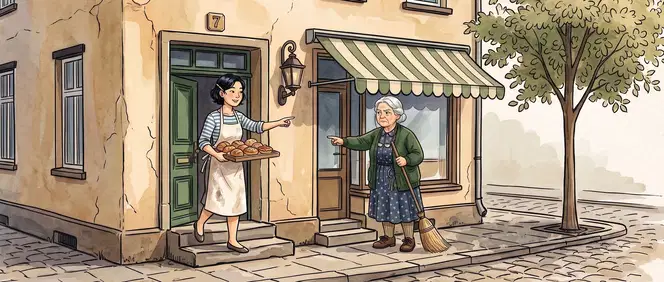
Chiara comes out of the café with a tray.  Chiara
No, no! La stazione è vicina. A destra, poi a sinistra all’angolo.
No, no! The station is close. Right, then left at the corner.
Vicina? La signora Rossi dice che è lontana.
Close? Mrs Rossi says it's far.
Vicina? La signora Rossi dice che è lontana.
Close? Mrs Rossi says it's far.
- Chiara
Per la signora Rossi, tutto è lontano.
For Mrs Rossi, everything is far.
- Maria
Sento tutto!
I can hear everything!
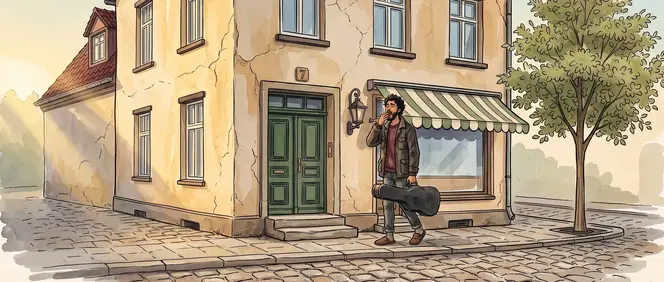
Marco comes home with his trumpet case, after a night of jazz.  Marco
MarcoBuonanotte... No, buongiorno.
Good night... No, good morning.
Marco, dov’è la stazione?
Marco, where is the station?
Marco, dov’è la stazione?
Marco, where is the station?
- Marco
La stazione? Sempre dritto, vicino al fiume. Cinque minuti a piedi.
The station? Straight on, by the river. Five minutes on foot.
Tre vicini, tre strade!
Three neighbours, three ways!
Tre vicine, tre strade!
Three neighbours, three ways!
- Maria
La mia stazione è la stazione dei treni. È lontana.
My station is the train station. It's far.
- Chiara
E la mia è la stazione degli autobus. È vicina.
And mine is the bus station. It's close.
 Marco
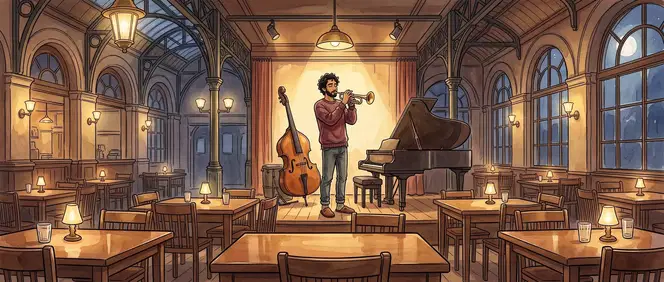
MarcoE la mia è la Stazione Vecchia. Io suono lì nei fine settimana.
And mine is the Old Station. I play there at weekends.
Mi serve la stazione dei treni. Allora, a sinistra?
I need the train station. So, left?
Mi serve la stazione dei treni. Allora, a sinistra?
I need the train station. So, left?
- Maria
A sinistra. E domani non faccia tardi!
Left. And don't be late tomorrow!
Who says this?
La stazione? E perché Le serve la stazione?
La stazione? E perché Le serve la stazione?
What does it mean?
Domani Tommaso e io andiamo al lago in treno.
Domani Tommaso e io andiamo al lago in treno.
Which line do you hear?
Close? Mrs Rossi says it's far.
Close? Mrs Rossi says it's far.
Put the words in order.
For Mrs Rossi, everything is far.
Who says this?
Buonanotte... No, buongiorno.
Buonanotte... No, buongiorno.
What does it mean?
Tre vicini, tre strade!
Tre vicine, tre strade!
Which line do you hear?
Left. And don't be late tomorrow!
Put the words in order.
I know, I know. I know everything.
What happens first?
Put the lines in the order they come in the scene.
Scene complete
Dov’è la stazione?
Goal reachedI can ask the way and understand simple directions.