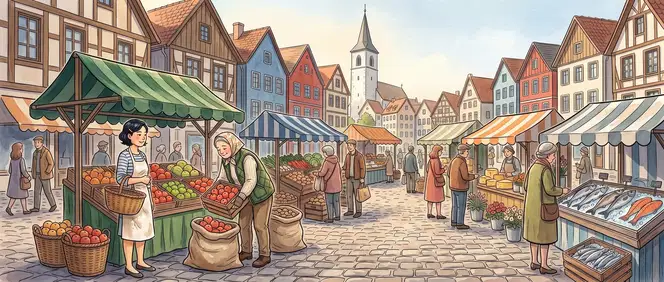
Scene 26 of 50
Kairėn, dešinėn, tiesiai
Left, right, straight on
Your goalI can ask the way and understand simple directions.


Prepare the wordsPremium
Meet the 15 words of this scene before you read. You can also go straight to the story.
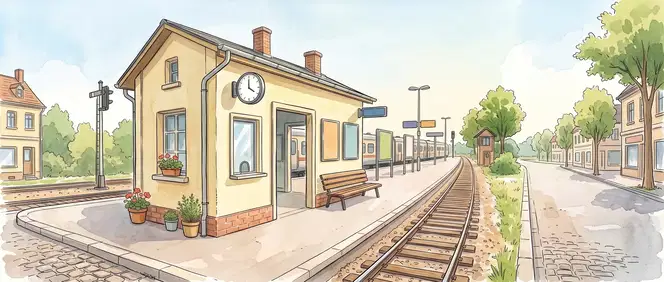
Saturday morning outside number 7. Ona is sweeping the steps.
Labas rytas, ponia Ona! Atsiprašau, kur yra stotis?
Good morning, Mrs Ona! Excuse me, where is the station?
Labas rytas, ponia Ona! Atsiprašau, kur yra stotis?
Good morning, Mrs Ona! Excuse me, where is the station?
 Ona
OnaStotis? O kodėl jums reikia stoties?
The station? And why do you need the station?
Rytoj su Tomu važiuojame traukiniu prie ežero.
Tomorrow Tomas and I are going to the lake by train.
Rytoj su Tomu važiuojame traukiniu prie ežero.
Tomorrow Tomas and I are going to the lake by train.
- Ona
Žinau, žinau. Aš viską žinau.
I know, I know. I know everything.
- Ona
Stotis toli. Pirma gatve kairėn, paskui tiesiai, paskui antra gatve dešinėn.
The station is far. First street on the left, then straight on, then the second street on the right.
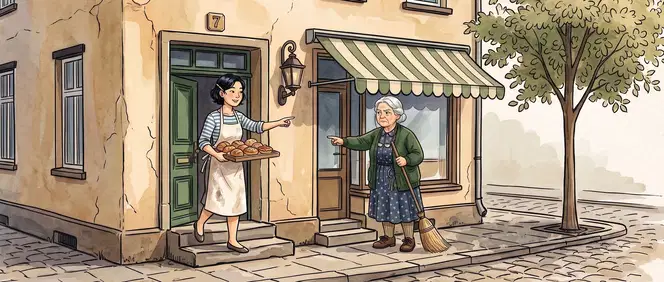
Rūta comes out of the café with a tray.  Rūta
RūtaNe, ne! Stotis arti. Dešinėn, o ties kampu – kairėn.
No, no! The station is close. Right, then left at the corner.
Arti? Ponia Ona sako, kad toli.
Close? Mrs Ona says it's far.
Arti? Ponia Ona sako, kad toli.
Close? Mrs Ona says it's far.
- Rūta
Onai viskas toli.
For Ona, everything is far.
- Ona
Aš viską girdžiu!
I can hear everything!
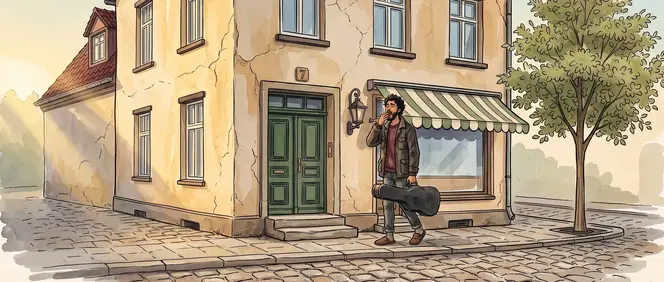
Jonas comes home with his trumpet case, after a night of jazz.  Jonas
JonasLabanakt... Ne, labas rytas.
Good night... No, good morning.
Jonai, kur yra stotis?
Jonas, where is the station?
Jonai, kur yra stotis?
Jonas, where is the station?
- Jonas
Stotis? Tiesiai, prie upės. Penkios minutės pėsčiomis.
The station? Straight on, by the river. Five minutes on foot.
Trys kaimynai – trys keliai!
Three neighbours, three ways!
Trys kaimynai – trys keliai!
Three neighbours, three ways!
- Ona
Mano stotis – traukinių stotis. Ji toli.
My station is the train station. It's far.
- Rūta
O mano – autobusų stotis. Ji arti.
And mine is the bus station. It's close.
 Jonas
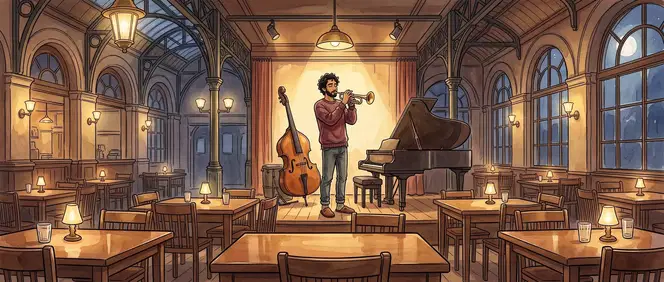
JonasO mano – Senoji stotis. Ten aš groju savaitgaliais.
And mine is the Old Station. I play there at weekends.
Man reikia traukinių stoties. Tai kairėn?
I need the train station. So, left?
Man reikia traukinių stoties. Tai kairėn?
I need the train station. So, left?
- Ona
Kairėn. Ir rytoj nevėluokite!
Left. And don't be late tomorrow!
Who says this?
Stotis? O kodėl jums reikia stoties?
Stotis? O kodėl jums reikia stoties?
What does it mean?
Rytoj su Tomu važiuojame traukiniu prie ežero.
Rytoj su Tomu važiuojame traukiniu prie ežero.
Which line do you hear?
Close? Mrs Ona says it's far.
Close? Mrs Ona says it's far.
Put the words in order.
Good night... No, good morning.
Who says this?
Stotis? Tiesiai, prie upės. Penkios minutės pėsčiomis.
Stotis? Tiesiai, prie upės. Penkios minutės pėsčiomis.
What does it mean?
Trys kaimynai – trys keliai!
Trys kaimynai – trys keliai!
Which line do you hear?
My station is the train station. It's far.
Put the words in order.
And mine is the Old Station. I play there at weekends.
What happens first?
Put the lines in the order they come in the scene.
Scene complete
Kairėn, dešinėn, tiesiai
Goal reachedI can ask the way and understand simple directions.