The person a verb is done to, its object, can be an ending on the verb, the same endings as on and : Ċikku helps me. See you on Saturday!, literally I see you. After a consonant the endings are -ni me, -ek you, -u him, -ha her, -na us, -kom you, -hom them. After a vowel, -ek is only -k, and -u becomes -h: , he sees you · , he sees him.
He helps me, he sees me
| Object | Meaning | ||
|---|---|---|---|
| Singular | |||
| he helps me · he sees me | |||
| he helps me · he sees me | |||
| he helps you · he sees you | |||
| he helps you · he sees you | |||
| he helps him · he sees him | |||
| he helps him · he sees him | |||
| he helps her · he sees her | |||
| he helps her · he sees her | |||
| Plural | |||
| he helps us · he sees us | |||
| he helps us · he sees us | |||
| he helps you · he sees you | |||
| he helps you · he sees you | |||
| he helps them · he sees them | |||
| he helps them · he sees them | |||
The front of the verb still says who does it: , he helps me · , she helps me, you help me · , I help you. So Sharon's is How can I help you? can also be they help: the sentence tells you which.
To tell or say something to someone, the ending has an in front: , he tells me · , he tells him. The order works the same: Tell me! Call him and tell him! And , give, takes the plain ending: Give me a piece of paper. Give him some, Grandma.
To me, to him: -li, -lu
| Person | Meaning | ||
|---|---|---|---|
| Singular | |||
| he tells me · tell me! | |||
| he tells me · tell me! | |||
| — | he tells you | ||
| he tells you | |||
| he tells him · tell him! | |||
| he tells him · tell him! | |||
| he tells her · tell her! | |||
| he tells her · tell her! | |||
| Plural | |||
| he tells us · tell us! | |||
| he tells us · tell us! | |||
| — | he tells you | ||
| he tells you | |||
| he tells them · tell them! | |||
| he tells them · tell them! | |||
Before -lha, -lna, -lkom and -lhom an comes in, to make them easy to say: , tell her. It is the of , to: Don't tell anyone!
Ċikku hu l-infermier tiegħi. Hu jgħinni.Ċikku is my nurse. He helps me.
Mela, fejn juġgħek? Għidli.So, where does it hurt? Tell me.
Ċempillu u għidlu!Call him and tell him!
Narak is-Sibt, fil-festa!See you on Saturday, at the festa!
Kif nista' ngħinek?How can I help you?
Ġorġ jgħidilna storja.Ġorġ tells us a story.
Practice 1/5 · Finding words
Find the words
Tap the verbs with an ending for the person.
.
Ċikku helps me and sees me every day.
, .
Tonio tells you everything, and helps you too.
? .
Ella? Ġorġ sees her and says good morning to her.
? .
Ċikku? Ġorġ sees him on the sofa and says good evening to him.
, .
Ġorġ helps us, and tells us a story.
? .
Lina and Marija? Ġorġ sees them and says good morning to them.
, ? .
So, where does it hurt? Tell me.
Practice 2/5 · The right form
Who is helped, who is seen?
Choose the right word for the gap.
Ċikku hu l-infermier tiegħi. Hu .
Ċikku is my nurse. He helps me.
Ella, Ċikku ?
Ella, does Ċikku help you?
Ella, Ċikku ?
Ella, does Ċikku help you?
Ċikku għandu bżonn xi ħaġa? Ġorġ .
Does Ċikku need something? Ġorġ helps him.
Lina? Ġorġ fil-kafetterija.
Lina? Ġorġ helps her in the café.
In-nanna u jien? Ġorġ .
Grandma and me? Ġorġ helps us.
Ella u Marija, Ġorġ ?
Ella and Marija, does Ġorġ help you?
Ella u Marija, Ġorġ ?
Ella and Marija, does Ġorġ help you?
Lina u Marija? Tonio .
Lina and Marija? Tonio helps them.
Ella? Ġorġ fil-festa.
Ella? Ġorġ sees her at the festa.
Ċikku? Ġorġ fuq is-sufan.
Ċikku? Ġorġ sees him on the sofa.
Ċikku mit-tieqa.
Ċikku sees me from the window.
Seeing and telling
Choose the right word for the gap.
Ella, Ċikku ?
Ella, can Ċikku see you?
Ella, Ċikku ?
Ella, can Ċikku see you?
Ġorġ kull filgħodu.
Ġorġ sees us every morning.
Ella u Marija, Ġorġ ?
Ella and Marija, can Ġorġ see you?
Ella u Marija, Ġorġ ?
Ella and Marija, can Ġorġ see you?
Lina u Ella? Tonio fil-festa.
Lina and Ella? Tonio sees them at the festa.
Ċikku kollox!
Ċikku tells me everything!
Tonio kollox?
Does Tonio tell you everything?
Tonio kollox?
Does Tonio tell you everything?
Ċikku? Ġorġ bonswa.
Ċikku? Ġorġ says good evening to him.
Ella? Ġorġ storja.
Ella? Ġorġ tells her a story.
Ġorġ storja kull lejl.
Ġorġ tells us a story every night.
Ella u Marija, Ġorġ bonġu?
Ella and Marija, does Ġorġ say good morning to you?
Ella u Marija, Ġorġ bonġu?
Ella and Marija, does Ġorġ say good morning to you?
Tell me!
Choose the right word for the gap.
Fejn juġgħek? .
Where does it hurt? Tell me.
Tonio? Ċempillu u !
Tonio? Call him and tell him!
Ella? bonġu.
Ella? Say good morning to her.
Nanna, storja!
Grandma, tell us a story!
Lina u Ġorġ? grazzi.
Lina and Ġorġ? Say thank you to them.
Lina u Marija? Ġorġ bonġu.
Lina and Marija? Ġorġ says good morning to them.
Practice 3/5 · Fill the gaps
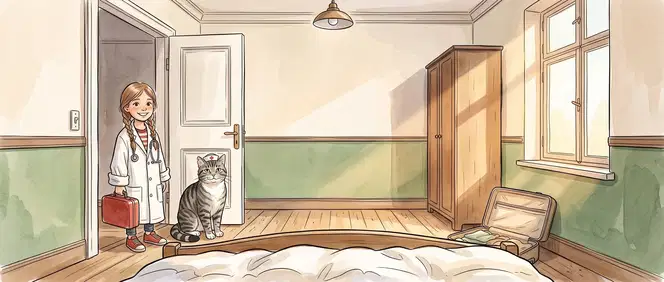
Doctor Ella's patients
Fill the gaps with the words from the box.
Ċikku hu l-infermier tiegħi. Hu .
Ċikku is my nurse. He helps me.
Mela, fejn juġgħek? .
So, where does it hurt? Tell me.
Tonio? Ċempillu u !
Tonio? Call him and tell him!
Ġorġ u bonġu.
Ġorġ sees us and says good morning to us.
Lina? Ġorġ , u hi grazzi.
Lina? Ġorġ helps her, and she says thank you to him.
Ella u Marija? Tonio u bonswa.
Ella and Marija? Tonio sees them and says good evening to them.
Ella u Marija, Ġorġ ? kuljum?
Ella and Marija, does Ġorġ help you? Does he see you every day?
Ella u Marija, Ġorġ ? kuljum?
Ella and Marija, does Ġorġ help you? Does he see you every day?
Practice 4/5 · Building sentences
Put the words in order
Put the words in order.
Ċikku is my nurse, and he helps me.
Where does it hurt? Tell me.
Ġorġ sees him on the sofa.
Ella, can Ċikku see you?
Ella, can Ċikku see you?
Ella and Marija, does Tonio help you?
Ella and Marija, does Tonio help you?
Lina and Marija? Ġorġ helps them.
Ella? Ġorġ sees her and says good morning to her.
Grandma, tell us a story!
Tonio tells you everything.
Lina and Ġorġ? Say thank you to them.
Ċikku? Ġorġ helps him, and says good evening to him.
Ella and Marija, does Ġorġ tell you a story?
Ella and Marija, does Ġorġ tell you a story?
Practice 5/5 · In situations
The right words
Choose the right words for the situation.
You are playing doctor with Ella. Ask her to tell you where it hurts.
You say:
You are playing doctor with Ella. Ask her to tell you where it hurts.
You say:
Ella tells you what Ċikku does as her nurse.
Ella says:
Ask Ella if Ġorġ tells her stories.
You say:
Ask Ella if Ġorġ tells her stories.
You say:
Ella wants you to call Tonio and tell him about the prescription.
Ella says:
Ella leaves. She'll see you on Saturday.
Ella says:
Sharon answers the phone at the practice.
Sharon says:
Unit complete