Scene 34 of 50
Preparativos para la fiesta
Preparing for the festival
Your goalI can say what I can and can't do, and understand simple rules.


Tap a word to see what it means.
 Elvira
¡Pase! La fiesta es el sábado. Necesitamos ayuda.
Come in! The festival is on Saturday. We need help.
- Elvira
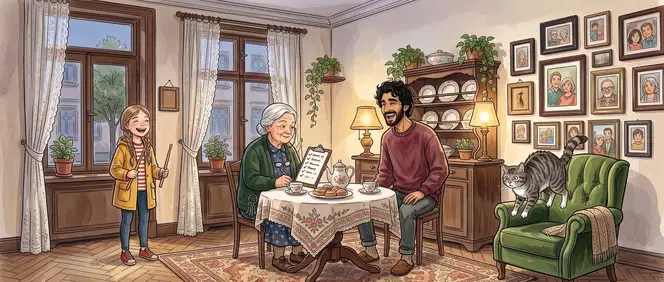
Aquí está mi lista.
Here is my list.
 Lucía
LucíaLa abuela siempre tiene una lista. Como Tomás.
Grandma always has a list. Like Tomás.
Entonces estamos en buenas manos.
Then we are in good hands.
Entonces estamos en buenas manos.
Then we are in good hands.
- Elvira
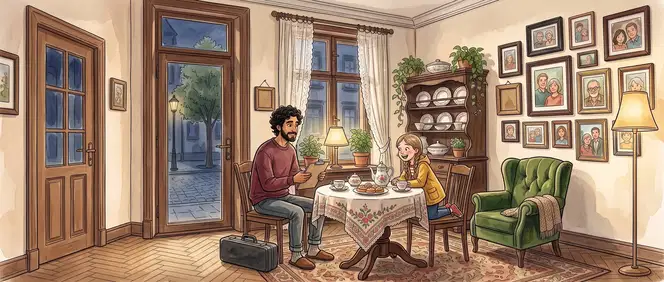
¿Sabe cocinar?
Can you cook?
Un poco. Sopa y huevos.
A little. Soup and eggs.
Un poco. Sopa y huevos.
A little. Soup and eggs.
- Elvira
¿Y cantar?
And sing?
No muy bien.
Not very well.
No muy bien.
Not very well.
 Javier
Yo sí. Toco y canto.
I can. I play and sing.
- Lucía
¿Y bailar? ¿Sabes bailar?
And dance? Can you dance?
No mucho.
Not much.
No mucho.
Not much.
Javier, tú bailas mejor que yo.
Javier, you dance better than I do.
Javier, tú bailas mejor que yo.
Javier, you dance better than I do.
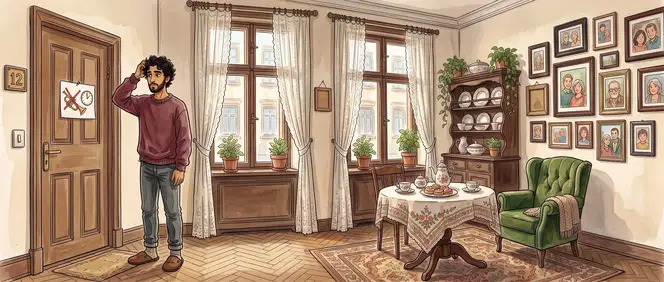
Javier stands at the inside of the door and reads a new notice: a crossed-out trumpet beside a clock. He scratches his head.
- Javier
Nada de trompeta después de las diez. Los sábados, hasta medianoche. ¿Qué es esto?
No trumpet after ten. Saturdays, until midnight. What is this?
- Elvira
Una norma nueva de la casa.
A new house rule.
- Javier
¿Por qué?
Why?
- Elvira
Algunos tienen que trabajar por la mañana. Necesitan dormir.
Some people have to work in the morning. They need sleep.
Gracias, señora Martín.
Thank you, Mrs Martín.
Gracias, señora Martín.
Thank you, Mrs Martín.
Mañana tengo que madrugar. Por eso hoy me acuesto pronto.
Tomorrow I have to get up early. That is why I am going to bed early today.
Mañana tengo que madrugar. Por eso hoy me acuesto pronto.
Tomorrow I have to get up early. That is why I am going to bed early today.
- Javier
¿Y el sábado, después de medianoche?
And Saturday, after midnight?
- Elvira
No. Hasta medianoche. Nada más.
No. Until midnight. No later.
- Elvira
Clara hace los bizcochos. Javier, la música. Lucía canta con los niños.
Clara makes the cakes. Javier, the music. Lucía sings with the children.
- Elvira
Usted ayuda en el puesto de la cafetería. Y vigila a Michi.
You help at the café stall. And watch Michi.
¿A Michi?
Michi?
¿A Michi?
Michi?
- Elvira
Sí. Le encanta el escenario.
Yes. He loves the stage.
 Lucía
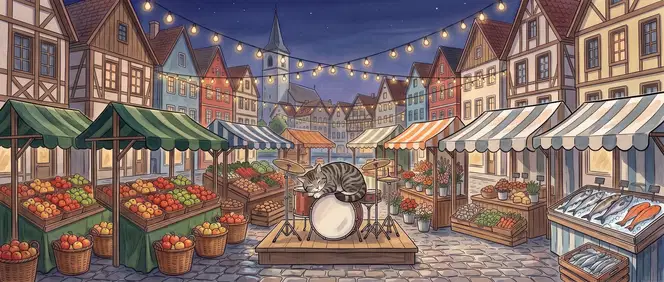
Lucía¡Mira esta foto! ¡Está encima del tambor! ¡Dormido!
Look at this photo! He is on the drum! Asleep!
Entonces, mejor lejos del concierto.
Then he had better stay far from the concert.
Entonces, mejor lejos del concierto.
Then he had better stay far from the concert.
¿Y Tomás? ¿Qué hace?
And Tomás? What is he doing?
¿Y Tomás? ¿Qué hace?
And Tomás? What is he doing?
- Elvira
Baila con el grupo.
He dances with the group.
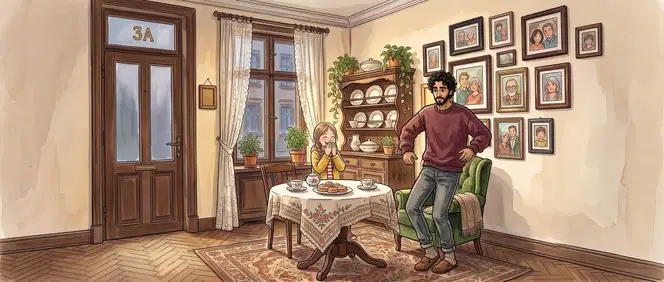 Javier
¿Tomás? ¡No sabe bailar!
Tomás? He cannot dance!
Seguro que no tiene un plan para eso.
I am sure he has no plan for that.
Seguro que no tiene un plan para eso.
I am sure he has no plan for that.
- Elvira
Puede aprender. Le viene bien.
He can learn. It will do him good.
- Lucía
¿Ya lo sabe?
Does he know yet?
- Elvira
Todavía no.
Not yet.
Entonces, mejor no digo nada.
Then I had better say nothing.
Entonces, mejor no digo nada.
Then I had better say nothing.
Words from the scene
Every new word from this scene, grouped with its family.
Doing things Acciones
- sabercan (know how to: can you swim?)
- cantarsing
- bailardance
- cuidarlook after
People around you Personas
- el ayudantehelper
Places in town Lugares
- el puestostall (at a market or festival)
- el escenariostage
What things and people are like Descripciones
- útiluseful, good for you
Here and there Aquí y allí
- después deafter
- exceptoexcept
Everyday things Everyday things
- el tambordrum
Dates and events Dates and events
- el conciertoconcert
- el año pasadolast year
Who says this?
¡Pase! La fiesta es el sábado. Necesitamos ayuda.
¡Pase! La fiesta es el sábado. Necesitamos ayuda.
What does it mean?
La abuela siempre tiene una lista. Como Tomás.
Which line do you hear?
A little. Soup and eggs.
A little. Soup and eggs.
Put the words in order.
I can. I play and sing.
Who says this?
Una norma nueva de la casa.
Una norma nueva de la casa.
What does it mean?
Algunos tienen que trabajar por la mañana. Necesitan dormir.
Which line do you hear?
And Saturday, after midnight?
Put the words in order.
No. Until midnight. No later.
Who says this?
Sí. Le encanta el escenario.
Sí. Le encanta el escenario.
What does it mean?
Entonces, mejor lejos del concierto.
Entonces, mejor lejos del concierto.
Which line do you hear?
Tomás? He cannot dance!
Put the words in order.
Then I had better say nothing.
Then I had better say nothing.
What happens first?
Put the lines in the order they come in the scene.
Scene complete
Preparativos para la fiesta
Goal reachedI can say what I can and can't do, and understand simple rules.