Bonus storyPremium
Tomás nunca llega tarde
Tomás is never late
Module 5 · The first week at workGet to know the neighbours and practise what you've learned in a new story.
The storyA week in the life of Tomás, who has a list for everything: his mornings, his mother's Sunday phone call, and the one Monday when nothing goes to plan.
New words in the story
- el despertador alarm clock
- roto broken
- incluso even
- la infancia childhood
- imagínese / imaginar imagine (polite)
- no se preocupe do not worry (polite)
- cuídate / cuidar take care (familiar)
- cenar have dinner
Tap a word to see what it means.
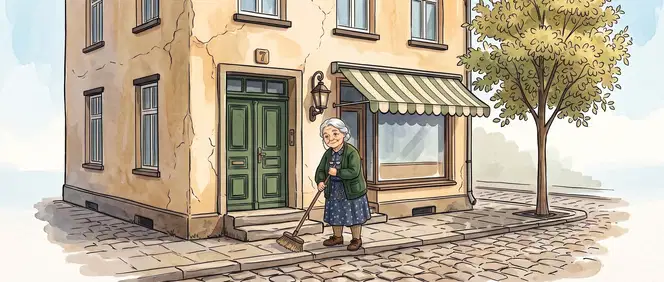
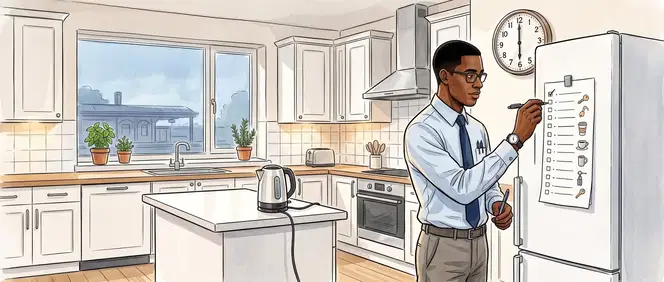
A brand-new flat near the station. Monday, six o'clock in the morning. On the fridge door hangs a long list.
Tomás vive cerca de la estación. Hay listas por todas partes.
Tomás lives near the station. There are lists everywhere.
Una para el trabajo y otra para la compra. Y una lista de sus listas.
One for work and another for shopping. And a list of his lists.
 Tomás
TomásLunes. Me levanto a las seis. Me ducho a las seis y cuarto.
Monday. I get up at six. I shower at quarter past six.
- Tomás
A las siete desayuno. Dos huevos y pan.
At seven I have breakfast. Two eggs and bread.
- Tomás
A las siete y media, cafetería. Mesa tres. Café sin azúcar.
At half past seven, café. Table three. Coffee without sugar.
 Tomás
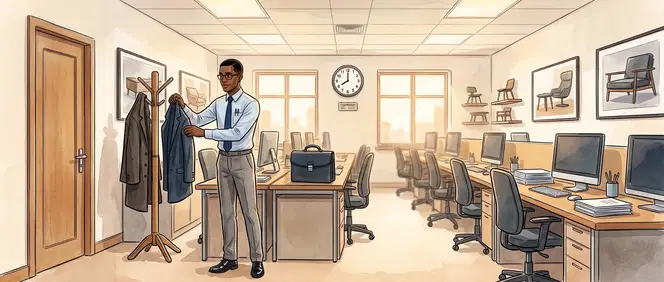
TomásA las nueve menos cuarto, oficina. ¡A las nueve no!
At quarter to nine, office. Not at nine!
Tomás se levanta a las seis todos los días. Incluso los domingos.
Tomás gets up at six every day. Even on Sundays.
Sunday evening. At seven o'clock exactly, Tomás's phone rings.
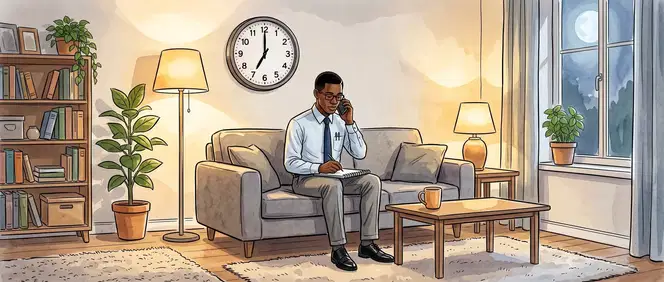
Todos los domingos, su madre llama a las siete de la tarde.
Every Sunday, his mother calls at seven in the evening.
- Mamá
¡Buenas tardes, Tomás! ¿Qué tal? ¿Comes bien?
Good evening, Tomás! How are you? Do you eat well?
- Tomás
Sí, mamá. Desayuno a las siete, como a las doce y media y ceno a las seis.
Yes, Mum. Breakfast at seven, lunch at half past twelve and dinner at six.
- Mamá
Bien. Papá y yo nos levantamos a las cinco. ¿Qué tal el trabajo?
Good. Dad and I get up at five. How is work?
- Tomás
Bien. Tengo un compañero nuevo. Vive en la casa del gato.
Good. I have a new colleague. They live in the house with the cat.
TomásBien. Tengo una compañera nueva. Vive en la casa del gato.
Good. I have a new colleague. They live in the house with the cat.
- Mamá
¿Del gato? ¡Pero tú tienes miedo de los gatos!
With the cat? But you are afraid of cats!
- Tomás
No de todos. Solo un poco.
Not of all of them. Just a little.
- Mamá
Cuídate. Y no llegues tarde. Buenas noches.
Take care. And do not be late. Good night.
- Tomás
Mamá, nunca llego tarde.
Mum, I am never late.
That night at three the old bedside clock stops.
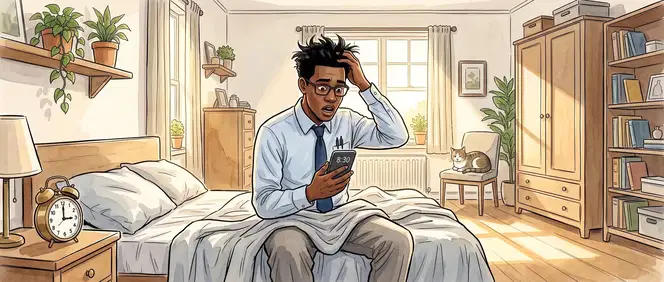
El lunes, Tomás duerme todavía a las seis. Su despertador no suena.
On Monday, Tomás is still asleep at six. His alarm does not ring.
 Tomás
Tomás¿Las ocho y media? ¡El despertador está roto!
Half past eight? The alarm is broken!
El móvil dice 08:30. Faltan treinta minutos para las nueve.
The mobile says 08:30. Thirty minutes until nine.
- Tomás
¡No! ¡Voy muy tarde!
No! I am very late!
Hoy Tomás no se ducha. No desayuna ni va a la cafetería.
Today Tomás does not shower. He neither has breakfast nor goes to the café.
The café. Clara looks at the empty window table.
 Clara
ClaraLas ocho. La mesa tres está vacía. ¿Dónde está mi Café Solo?
Eight o’clock. Table three is empty. Where is my Black Coffee?
The office. Your desk, and Tomás's desk, still empty.
Las nueve y diez. Tomás no está.
Ten past nine. Tomás is not here.
Las nueve y diez. Tomás no está.
Ten past nine. Tomás is not here.
The door flies open.
Buenos días, Tomás. Hoy llega tarde.
Good morning, Tomás. You are late today.
Buenos días, Tomás. Hoy llega tarde.
Good morning, Tomás. You are late today.
- Tomás
¡Lo sé! El despertador está roto. Y mi lista está en casa.
I know! The alarm is broken. And my list is at home.
- Tomás
¿Cuándo es la reunión? ¿Qué tengo que hacer?
When is the meeting? What do I have to do?
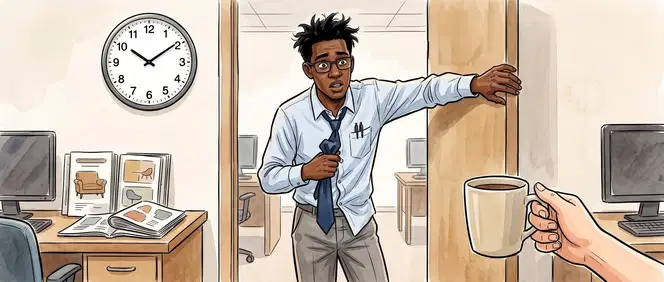
No se preocupe. Aquí está su café.
Do not worry. Here is your coffee.
No se preocupe. Aquí está su café.
Do not worry. Here is your coffee.
Hoy es lunes. La reunión es el jueves.
Today is Monday. The meeting is on Thursday.
Hoy es lunes. La reunión es el jueves.
Today is Monday. The meeting is on Thursday.
- Tomás
Es verdad. Gracias. Es un buen compañero.
That is right. Thank you. You are a good colleague.
TomásEs verdad. Gracias. Es una buena compañera.
That is right. Thank you. You are a good colleague.
Michi jumps onto the desk.
- Tomás
¿Tú también, Michi? Buenos días.
You too, Michi? Good morning.
Tomás, ¿por qué tiene miedo de los gatos?
Tomás, why are you afraid of cats?
Tomás, ¿por qué tiene miedo de los gatos?
Tomás, why are you afraid of cats?
- Tomás
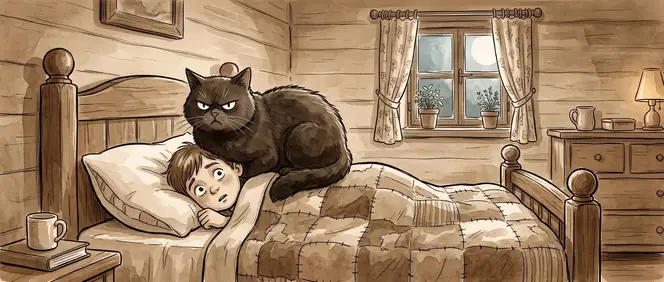
Por un gato de mi infancia. El gato de mi abuela.
Because of a cat from my childhood. My grandmother’s cat.
- Tomás
Grande, negro y muy poco simpático.
Big, black and not at all friendly.
 Tomás
TomásImagínese: tengo cinco años, estoy en la cama… ¡y el gato en mi cara!
Imagine: I am five, I am in bed… and the cat is on my face!
¿En su cara?
On your face?
¿En su cara?
On your face?
- Tomás
Sí. Por eso no me gustan mucho los gatos.
Yes. That is why I do not like cats very much.
Michi mira a Tomás. No es negro ni malo. Solo tiene hambre.
Michi looks at Tomás. He is neither black nor mean. Just hungry.
- Tomás
Bueno. Puedes sentarte aquí. Pero no en el ordenador.
All right. You can sit here. But not on the computer.
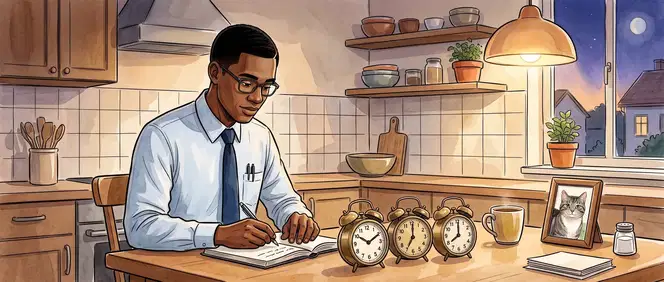
Evening. Three alarm clocks stand on the kitchen table.
Por la noche, Tomás escribe una lista nueva.
At night, Tomás writes a new list.
- Tomás
Uno: tres despertadores. Dos: ¡Tomás, no llegues tarde!
One: three alarms. Two: Tomás, do not be late!
Tomás mira a Michi. Escribe la tercera norma.
Tomás looks at Michi. He writes the third rule.
 Tomás
TomásTres: Michi es gris. No negro.
Three: Michi is grey. Not black.
Practice 1/3 · Who says it
Who says it?
¡Buenas tardes, Tomás! ¿Qué tal? ¿Comes bien?
¡Buenas tardes, Tomás! ¿Qué tal? ¿Comes bien?
Mamá, nunca llego tarde.
Mamá, nunca llego tarde.
Buenos días, Tomás. Hoy llega tarde.
Buenos días, Tomás. Hoy llega tarde.
Practice 2/3 · True or false
A different morning
True or false?
Tomás normalmente se levanta a las seis.
Tomás normally gets up at six.
Hoy desayuna en la cafetería.
Today he has breakfast in the café.
La reunión es el jueves.
The meeting is on Thursday.
Practice 3/3 · Questions
The problem and the help
Answer the questions.
¿Por qué llega tarde Tomás?
Why is Tomás late?
¿Qué recibe en la oficina?
What does he get at the office?
Unit complete