
Przeglądasz jako gość. Darmowe konto daje ci 4 darmowe teksty: każdy otwiera jeden dialog ze wszystkimi ćwiczeniami.
Pfannkuchen, Berliner czy Krapfen?
Pfannkuchen, Berliner oder Krapfen?
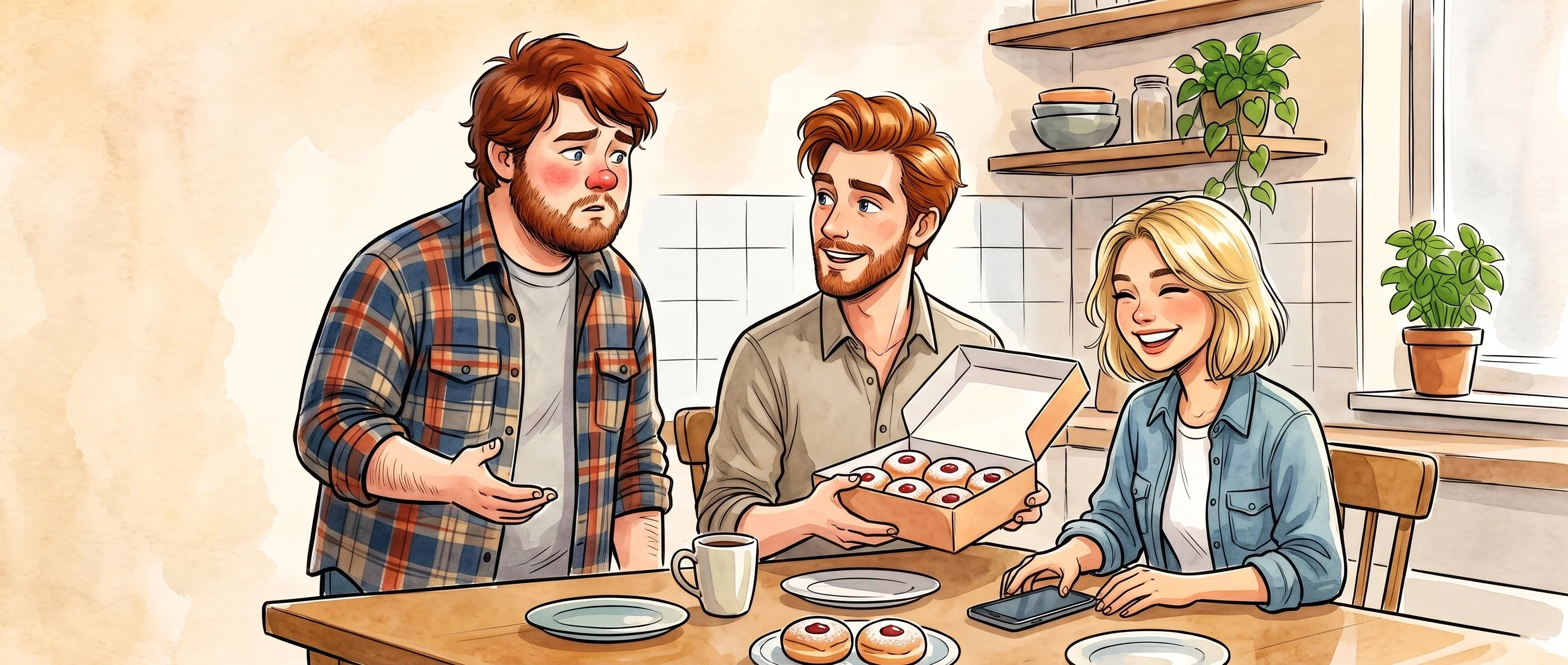
Gwara z Allgäu, Turyngczyk i Westfalczyk, który myśli, że mówi czystym niemieckim. Cała trójka rozmawia o tym, dlaczego tak wielu ludzi oducza się swojego dialektu.
 Heinz
 Maria
 HerbertMariaHerbertMariaHeinzMariaHerbertHeinzMariaHeinzHerbertMariaHeinzHerbertHeinzMariaHerbertHeinzHerbertMaria
Ćwiczenia
Hören
Hören
Posłuchaj zdania i odpowiedz na pytanie.
Mit wem hat Maria eben telefoniert?
Was heißt „Pfiat di“?
Was hat ein Kunde Maria bei ihrem ersten Nebenjob am Telefon gefragt?
Was ist Herbert im Büro passiert, als er nach Berlin kam?
Wie gut kann Heinz Platt?
Wszystko gotowe.Prawie!Poćwiczmy to jeszcze razSpróbuj odpowiedzieć na pytania
Poprawne za pierwszym razem
Richtig oder falsch?
Richtig oder falsch?
Przeczytaj zdanie. Czy jest prawdziwe, czy fałszywe?
Nach der Frage des Kunden hat sich Maria furchtbar geschämt.
Heinz findet es gut, wenn Dialekte verschwinden.
Maria glaubt, in Westfalen spricht man praktisch Hochdeutsch.
Mit ihren Kunden spricht Maria Allgäuerisch.
Heinz hat gehört, dass Kinder mit Dialekt und Hochdeutsch später leichter Sprachen lernen.
Wszystko gotowe.Prawie!Poćwiczmy to jeszcze razSpróbuj odpowiedzieć na pytania
Poprawne za pierwszym razem
Mehr Fragen
Mehr Fragen
Wybierz poprawną odpowiedź.
Was meint Maria mit „Es hält sich hartnäckig“?
Was meint Heinz mit „Das glauben wir Westfalen auch, bis wir den Mund aufmachen“?
Worin sind sich Herbert und Maria nicht einig?
Was bedeutet Herberts „Wie auch immer“?
Was ist am Ende komisch?
Wszystko gotowe.Prawie!Poćwiczmy to jeszcze razSpróbuj odpowiedzieć na pytania
Poprawne za pierwszym razem
Wörter
Wörter
Match the pairs.
Wszystko gotowe.Prawie!Poćwiczmy to jeszcze razSpróbuj odpowiedzieć na pytania
Poprawne za pierwszym razem
Was sagst du?
Was sagst du?
What do you say?
You want to say that many people think people who speak dialect are less educated. What do you say?
Heinz says it is a pity when people give up their dialect. But where he comes from, people speak almost standard German anyway. Tell him that is easy for him to say.
You speak dialect at home and standard German at work. Say that it is like having two pairs of shoes for different weather.
You have read that children who grow up with dialect find it easier to learn languages later. Pass it on without claiming it as a sure fact.
Wszystko gotowe.Prawie!Poćwiczmy to jeszcze razSpróbuj odpowiedzieć na pytania
Poprawne za pierwszym razem
Baue den Satz
Baue den Satz
Dotykaj słów we właściwej kolejności, aby ułożyć zdanie.
Many people think people with an accent are less clever.
That's easy for you to say, you grew up here.
It's like having two keys for two doors.
They say dialect is bad for your career.
Wszystko gotowe.Prawie!Poćwiczmy to jeszcze razSpróbuj odpowiedzieć na pytania
Poprawne za pierwszym razem
Gespräch
Gespräch
Your dialect at work
TabelleOne pastry, four names Wie heißt das Gebäck?
Gemeint ist immer dasselbe: ein Gebäck aus Hefeteig mit Marmelade. Wo? Wie? Berlin und große Teile des Ostens Pfannkuchen der Westen und der Norden Berliner der Süden Krapfen Hessen, Teile Thüringens Kreppel oder Kräppel You grew up with a dialect and have just started a new job in a Berlin office, where everybody says du. Your colleague Torsten, a Berliner, has just heard you on the phone to your family. Answer him the way you want to, and stand up for both ways of speaking.
You grew up with a dialect and have just started a new job in a Berlin office, where everybody says du. Your colleague Torsten, a Berliner, has just heard you on the phone to your family. Answer him the way you want to, and stand up for both ways of speaking.
Your colleague heard you on the phone. Say who it was, where you are from and what you speak at home.
Torsten
Sag mal, mit wem hast du eben telefoniert? Ich habe kein einziges Wort verstanden.
Tell me, who were you on the phone to just now? I didn't understand a single word.
…
Ty
The conversation is over.

Wszystko gotowe.Prawie!Poćwiczmy to jeszcze razSpróbuj odpowiedzieć na pytania
Poprawne za pierwszym razem
Świetnie!
Ukończono „Pfannkuchen, Berliner oder Krapfen?”.
 Część tematuGesellschaft und ZusammenlebenDialog 5 z 7
- Dialog w PDF
Polecane dla ciebie
Te historie lub dialogi mogą ci się spodobać.



 Część tematuGesellschaft und ZusammenlebenSpołeczeństwo i życie razem