Scene 27 of 50
En el mercado
At the market
Your goalI can buy food at the market in kilos, bottles and pieces, and ask what it costs.


Tap a word to see what it means.
 Clara
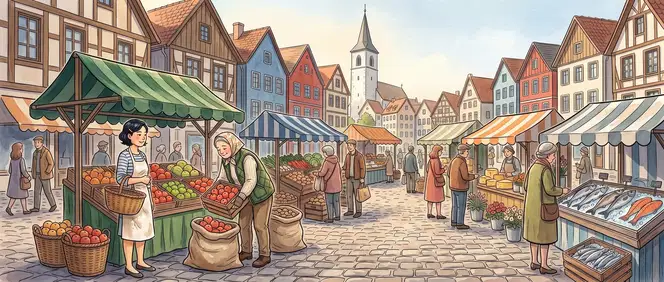
ClaraEste es el mercado. Los sábados, de siete a una.
This is the market. Saturdays, from seven until one.
- Clara
Necesito diez kilos de manzanas para la cafetería.
I need ten kilos of apples for the café.
¿Diez kilos? ¡Qué cantidad!
Ten kilos? That is a lot!
¿Diez kilos? ¡Qué cantidad!
Ten kilos? That is a lot!
- Clara
Para el bizcocho de manzana. ¿Y tú? ¿Qué necesitas?
For apple cake. And you? What do you need?
Tomates, patatas, leche y queso. Hoy cocino en casa.
Tomatoes, potatoes, milk and cheese. Today I am cooking at home.
Tomates, patatas, leche y queso. Hoy cocino en casa.
Tomatoes, potatoes, milk and cheese. Today I am cooking at home.
 Pilar
PilarBuenos días. ¿Qué te pongo?
Good morning. What can I get you?
Un kilo de tomates y dos kilos de patatas, por favor.
A kilo of tomatoes and two kilos of potatoes, please.
Un kilo de tomates y dos kilos de patatas, por favor.
A kilo of tomatoes and two kilos of potatoes, please.
- Pilar
Claro. ¿Algo más?
Of course. Anything else?
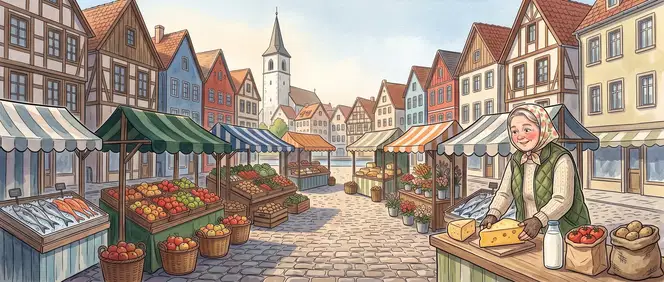
Medio kilo de queso y una botella de leche.
Half a kilo of cheese and a bottle of milk.
Medio kilo de queso y una botella de leche.
Half a kilo of cheese and a bottle of milk.
- Pilar
Aquí tienes. Doce euros cincuenta.
Here you are. Twelve euros fifty.
 Manuel
Buenos días. Vives en el número siete, ¿verdad?
Good morning. You live at number seven, right?
Sí. ¿Cómo lo sabes?
Yes. How do you know?
Sí. ¿Cómo lo sabes?
Yes. How do you know?
- Manuel
¡Los pelos de tu chaqueta! Michi viene todos los sábados.
The hairs on your jacket! Michi comes every Saturday.
Pero no es mío.
But he is not mine.
Pero no es mío.
But he is not mine.
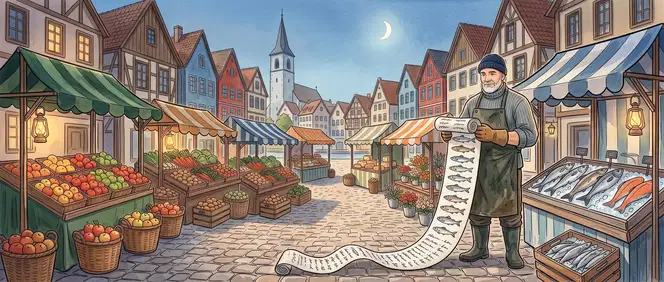
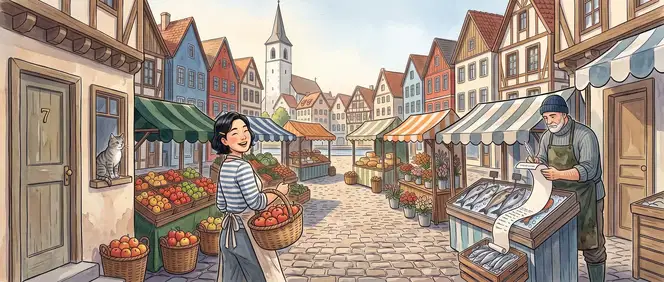
At the fish stall he unrolls a very long paper bill, down to the cobbles, with a little fish drawn on every line.
- Manuel
Vive contigo. Aquí está su cuenta de este mes.
He lives with you. Here is his bill for this month.
¿Tanto pescado? ¿Cuánto cuesta todo?
So much fish? How much is it all?
¿Tanto pescado? ¿Cuánto cuesta todo?
So much fish? How much is it all?
- Manuel
Cuarenta y dos euros.
Forty-two euros.
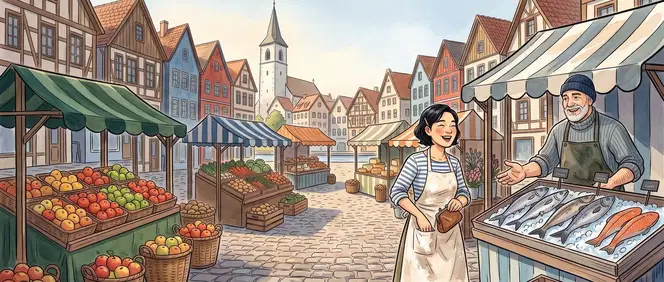
Clara laughs and takes out her purse. The fish seller grins and holds out his hand.
- Clara
No tienes que pagar. Pago yo. Como todos los meses.
You do not have to pay. I will pay. Like every month.
¿Tú? ¿Por qué pagas su pescado?
You? Why do you pay for his fish?
¿Tú? ¿Por qué pagas su pescado?
You? Why do you pay for his fish?
- Clara
Se sienta en mi ventana. La gente lo ve y entra. Es bueno para el negocio.
He sits in my window. People see him and come in. It is good for business.
Words from the scene
Every new word from this scene, grouped with its family.
Doing things Acciones
- comprarbuy
Clothes Clothes
- la chaquetajacket
Greetings and courtesy Saludos
- ¿Algo más?anything else
Food Comida
- la cenadinner
- el tomatetomato
- la patatapotato
Money and shopping Money and shopping
- el kilokilo
Places in town Lugares
- el mercadomarket
Everyday things Everyday things
- la botellabottle
Who says this?
Este es el mercado. Los sábados, de siete a una.
Este es el mercado. Los sábados, de siete a una.
What does it mean?
¿Diez kilos? ¡Qué cantidad!
¿Diez kilos? ¡Qué cantidad!
Which line do you hear?
Good morning. What can I get you?
Put the words in order.
Here you are. Twelve euros fifty.
Who says this?
Buenos días. Vives en el número siete, ¿verdad?
Buenos días. Vives en el número siete, ¿verdad?
What does it mean?
¡Los pelos de tu chaqueta! Michi viene todos los sábados.
Which line do you hear?
So much fish? How much is it all?
So much fish? How much is it all?
Put the words in order.
You? Why do you pay for his fish?
You? Why do you pay for his fish?
What happens first?
Put the lines in the order they come in the scene.
Scene complete
En el mercado
Goal reachedI can buy food at the market in kilos, bottles and pieces, and ask what it costs.