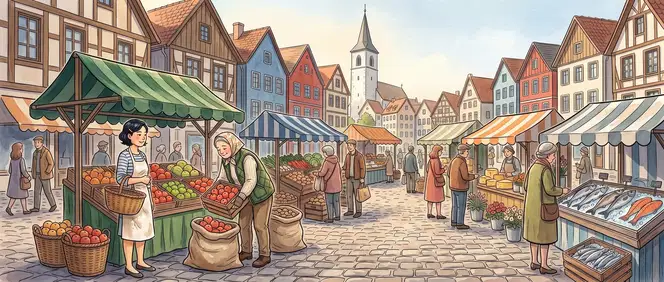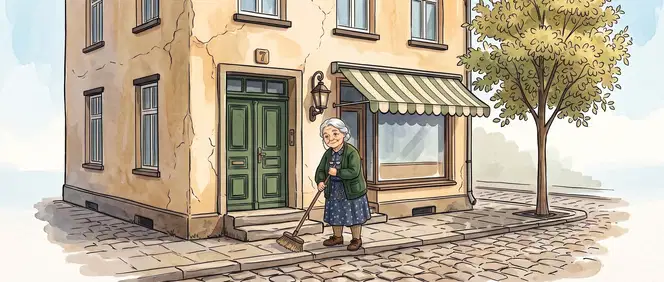
Scene 26 of 50
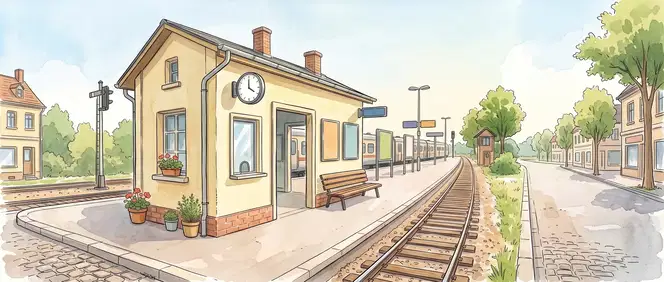
¿Dónde está la estación?
Where is the station?
Your goalI can ask the way and understand simple directions.


Tap a word to see what it means.
Buenos días, señora Martín. ¿Dónde está la estación?
Good morning, Mrs Martín. Where is the station?
Buenos días, señora Martín. ¿Dónde está la estación?
Good morning, Mrs Martín. Where is the station?
 Elvira
¿La estación? ¿Adónde va?
The station? Where are you going?
Mañana voy al lago Grande con Tomás. En tren.
Tomorrow I am going to the Great Lake with Tomás. By train.
Mañana voy al lago Grande con Tomás. En tren.
Tomorrow I am going to the Great Lake with Tomás. By train.
- Elvira
Sí, ya lo sé. No se me escapa nada.
Yes, I already know. I never miss a thing.
- Elvira
Está lejos. Primero a la izquierda, luego todo recto y la segunda calle a la derecha.
It is far. First left, then straight on and the second street on the right.
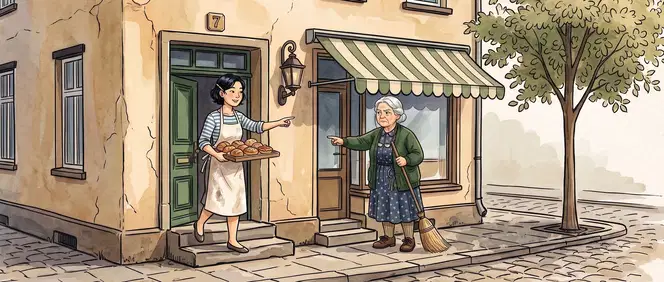
Clara comes out of the café with a tray and points one way. Elvira, broom in hand on the steps, points the other way.
 Clara
Clara¿Lejos? No. A la derecha y luego a la izquierda, en la esquina. ¡Está cerca!
Far? No. Right and then left at the corner. It is close!
La señora Martín dice que está lejos.
Mrs Martín says it is far.
La señora Martín dice que está lejos.
Mrs Martín says it is far.
- Clara
Para Elvira, todo está lejos.
Everything is far for Elvira.
- Elvira
¡Te oigo!
I can hear you!
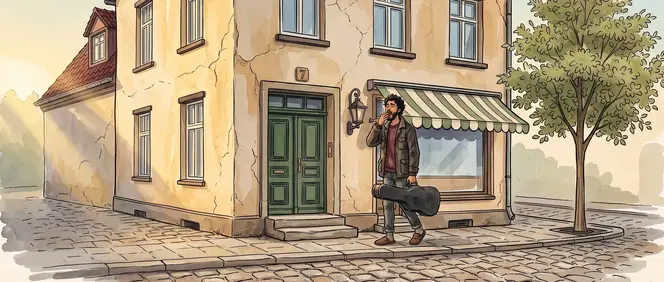
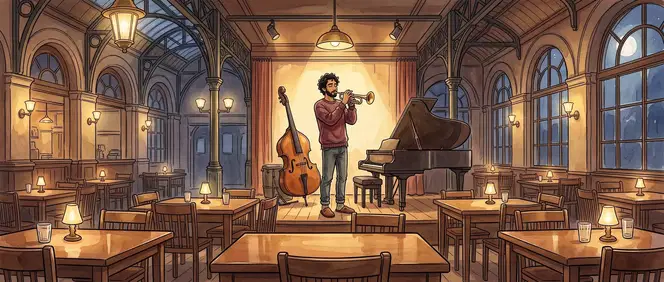
Javier comes along the street with his trumpet case, yawning in the morning sun.
 Javier
Buenas noches. No, buenos días.
Good night. No, good morning.
Javier, ¿dónde está la estación?
Javier, where is the station?
Javier, ¿dónde está la estación?
Javier, where is the station?
- Javier
Todo recto. Junto al río. Cinco minutos a pie.
Straight on. By the river. Five minutes on foot.
Tres vecinos, tres caminos diferentes.
Three neighbours, three different routes.
Tres vecinos, tres caminos diferentes.
Three neighbours, three different routes.
- Elvira
Yo digo la estación de tren. Esa está lejos.
I mean the train station. That one is far.
- Clara
¡Ah! Yo digo la estación de autobuses. Está a la vuelta de la esquina.
Ah! I mean the bus station. It is around the corner.
 Javier
Y yo, la Antigua Estación. Toco allí los fines de semana.
And I mean the Old Station. I play there at weekends.
Entonces, a la estación de tren. ¿Primero a la izquierda?
To the train station, then. Left first?
Entonces, a la estación de tren. ¿Primero a la izquierda?
To the train station, then. Left first?
- Elvira
Exactamente. ¡Y mañana no llegue tarde!
Exactly. And do not be late tomorrow!
Words from the scene
Every new word from this scene, grouped with its family.
Doing things Acciones
- ir engo (by bus, train or car)
- oírhear
Small words Palabras pequeñas
- luegothen
Finding the way Finding the way
- la izquierdaleft
- todo rectostraight on
- la derecharight
- cercanear
- la esquinacorner
Places in town Lugares
- la estaciónstation
- el centrocentre
- el lagolake
- la callestreet
- el caminoway (route)
Getting around Getting around
- el trentrain
- a pieon foot
- el autobúsbus
Who says this?
¿La estación? ¿Adónde va?
¿La estación? ¿Adónde va?
What does it mean?
Mañana voy al lago Grande con Tomás. En tren.
Mañana voy al lago Grande con Tomás. En tren.
Which line do you hear?
Mrs Martín says it is far.
Mrs Martín says it is far.
Put the words in order.
Everything is far for Elvira.
Who says this?
Buenas noches. No, buenos días.
Buenas noches. No, buenos días.
What does it mean?
Todo recto. Junto al río. Cinco minutos a pie.
Which line do you hear?
Exactly. And do not be late tomorrow!
Put the words in order.
Good morning, Mrs Martín. Where is the station?
Good morning, Mrs Martín. Where is the station?
What happens first?
Put the lines in the order they come in the scene.
Scene complete
¿Dónde está la estación?
Goal reachedI can ask the way and understand simple directions.